The question buyers ask most is whether we print in house or pass the work along. This page shows the press floor, the cutting machines, the inspection line and the warehouse: what happens between a roll of stock arriving and a carton of labels leaving.
- 01Printing
- 02Die cutting
- 03Inspection
- 04Slitting
- 05Warehouse
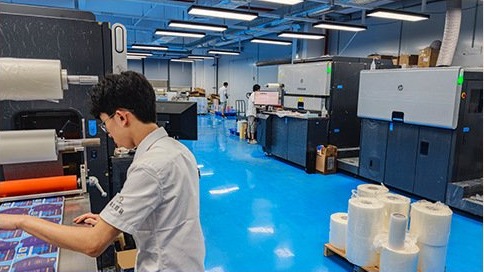
01Printing
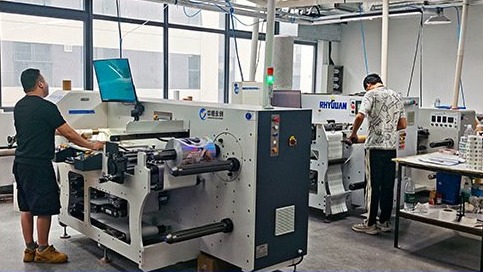
The web goes straight onto the press and runs through every colour in one pass without leaving the machine. The PS rotary press suits medium and long runs: once the cylinders are set the job runs continuously, colour is fixed by the signed first-off sheet and then checked roll by roll.
Every plate change starts with a first-off. Registration, colour and cleanliness are confirmed before the run continues, and any artwork change means a new first-off.
02Die cutting
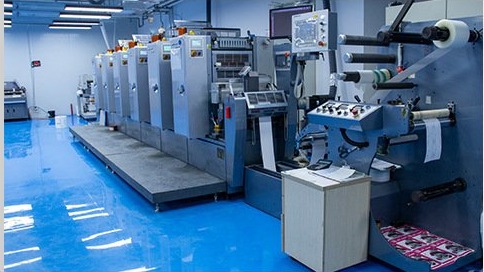
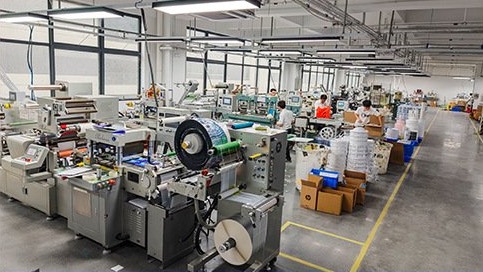
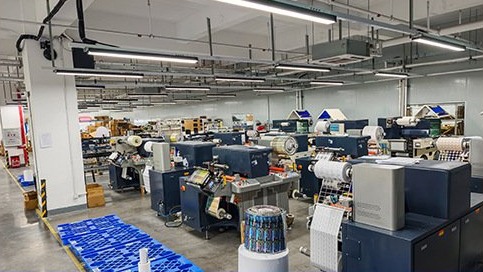
Which machine a job runs on comes down to three things: quantity, shape, and whether a cutting die has to be made. The PS rotary cutter runs web to web and holds long runs without stopping, cutting in a single pass. High-speed die cutting takes standard shapes at volume. Digital die cutting needs no die at all, so unusual shapes, small quantities and late size changes come off here first.
The die decision changes both the lead time and the cost of a first sample. Volume justifies a die; small quantities run digital until the layout is settled, and making the die later often costs less than making it early.
03Inspection
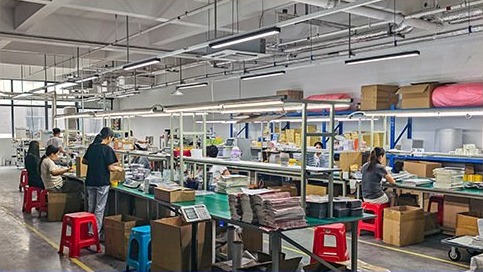
Finished rolls pass an automatic inspection machine before they leave. It scans label by label against set spacing and defect parameters; dirty spots, missing print, die-cut drift and incomplete matrix stripping are flagged, then reviewed and removed by hand.
After this stage a batch has a record you can check, rather than problems surfacing at the customer's applicator.
04Slitting and packing
Rolls are slit to the core size, unwind direction and length the order calls for, with splices marked and counted.
Quantity, roll diameter and label content are checked again before packing, and the inspection record travels with the goods. Cartons are chosen for the shipping method, whether parcel, LTL or pallet.
05Warehouse and dispatch
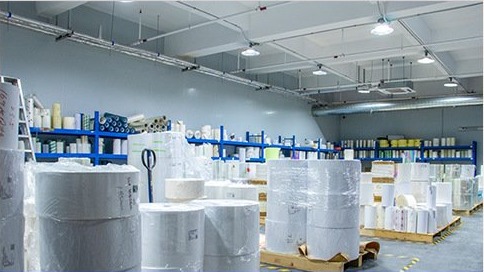
Finished goods sit in marked areas by order, with cartons and pallets kept off the floor to stay dry.
Label content, quantity and packing list are checked against the order before dispatch. Local and nearby deliveries usually leave the same day; other provinces follow the freight schedule.
Five control points on every roll
Premises and sample room
The showroom holds samples of work we have run: food, household care, spirits, electronics, cold chain. Visitors usually handle the materials here before settling on a construction.
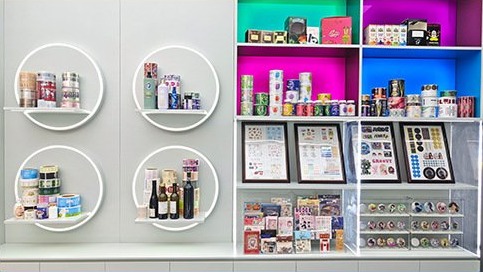
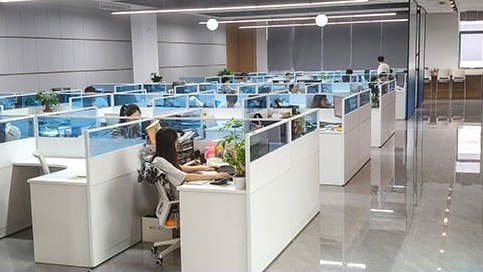
Offices sit in the same building as the machines, so sampling, quoting and order follow up do not have to trade messages with the press floor.
If you want to see the machines, look at samples, or test a roll on your own applicator first, get in touch to arrange a time.