

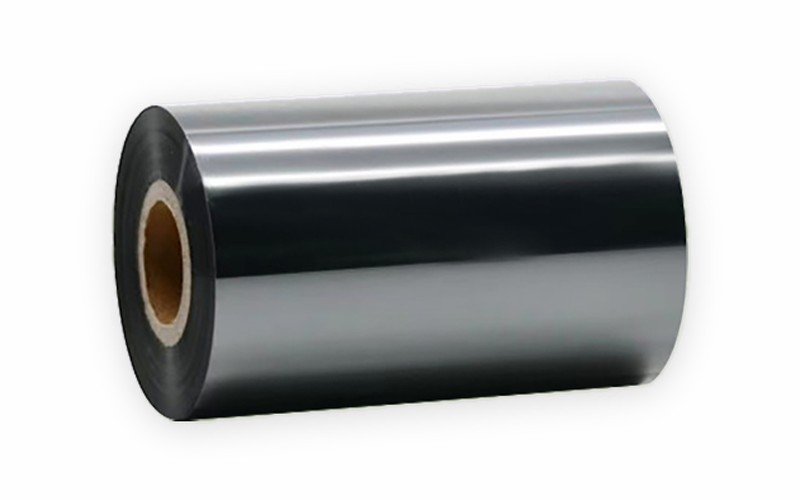
The standard wax ribbon is the entry point of the range. The roll runs 110mm x 300m on a 4.5±0.3 micron film with 6.9±0.3 micron total thickness, and it prints on the cool side. Coated paper labels, uncoated paper and garment tags all come out with solid black density and clean barcode edges that scan on the first pass.
Where it fits
Any label that lives on a shelf for a few weeks or in a warehouse for a few months is a wax job. Name plates, price tags, packaging labels, garment tags, freight and logistics labels all fall in that group. Below a few thousand labels a day, this ribbon is the cheapest way to get the job done.
The other side of that: cold storage, alcohol contact, oil contact or synthetic paper will defeat a wax ribbon. Those jobs need a hybrid or a resin.
Specifications
- Type: standard wax ribbon
- Ink type: wax
- Colour: black
- Standard size: 110mm x 300m
- Film thickness: 4.5±0.3 micron
- Ribbon thickness: 6.9±0.3 micron
- Print density: 1.9-2.2
- Print speed: 6-8 ips
- Substrates: coated paper, uncoated paper, tags
- Printer type: flat-head
Print behaviour
On coated paper, fine Chinese strokes and small barcodes transfer cleanly with no feathering at the edges. Density holds above 1.9 up to 8 ips; push past that and it starts to drop off, so for volume work 6 ips is the safer setting.
Wax coatings melt at low temperature, which keeps head temperature settings modest and puts less stress on the printhead. The back coating is anti-static, so long continuous runs are less likely to pick up dust and leave white spots.
Use and storage
Operating range is -10 to 40 degrees C at 20 to 85 percent relative humidity, and storage conditions match. Printed content holds for roughly three months on the label in normal conditions. Beyond that, or if the label goes into a freezer or meets solvents, move up to a hybrid or resin ribbon.
Reseal partly used rolls and keep them out of direct sunlight and damp. Check the wind direction before loading; the standard wax ribbon is normally ink-out.
Choosing within the range
If the job involves synthetic paper, high-gloss stock or a bit more scuff resistance, step up to the economy or enhanced hybrid. For everyday coated paper with a short service life, standard wax is enough.