

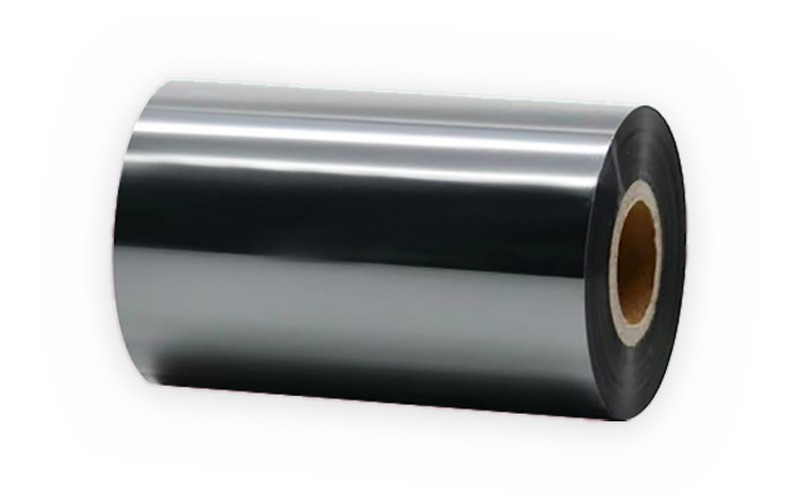
The general purpose hybrid is the balanced option. Total thickness is 6.8±0.3 micron, print density holds at 1.9-2.1, and friction and scuff resistance are clearly better than the economy grade. It runs steadily at 4, 6 or 8 ips.
Where it sits
Across the hybrid line, the economy grade handles the budget end, the enhanced grade handles broad compatibility, the super duty grade trades density for maximum abrasion resistance, and the general purpose grade keeps both density and durability. The manufacturer describes friction and scuff resistance as very good while leaving print density unchanged, which is the practical difference from the super duty grade.
Specifications
- Type: general purpose hybrid ribbon
- Ink type: hybrid
- Origin: domestic
- Colour: black
- Film thickness: 4.5±0.3 micron
- Ribbon thickness: 6.8±0.3 micron
- Print density: 1.9-2.1
- Print speed: 4 / 6 / 8 ips
- Substrates: coated paper, coated stock, uncoated paper, high-gloss and semi-gloss label paper, synthetic paper, tags
- Printer type: flat-head
Typical jobs
Outdoor signage on synthetic paper, premium product labels on high-gloss stock and logistics labels that must scan reliably share one requirement: the barcode stays readable and the print does not rub off in handling. This grade compromises on neither.
It also prints ordinary name plates and price tags on coated paper perfectly well, though the economy grade is the cheaper choice there.
Use and storage
Operate and store at -10 to 40 degrees C and 20 to 85 percent relative humidity. Reseal partly used rolls and keep them dry and out of sunlight; the general purpose hybrid ribbon is normally ink-out.
Selection note
With matching thickness and density figures, decide on substrate: mixed materials point to the enhanced grade, harder materials with heavy friction point to the general purpose grade. If density is not critical and abrasion resistance comes first, the super duty grade costs less.