Label Performance by Environment: A Selection Guide
High heat, cold chain, humidity, outdoor UV and oily plant floors each break a label differently. What to change in face stock and adhesive.
The usage scenarios of labels vary widely, ranging from supermarket shelves at room temperature and dry conditions, to cold chain warehouses with low temperatures, and even to industrial workshops with high temperatures and humidity, as well as outdoor environments with strong ultraviolet radiation. Different environments have a direct impact on the label's surface material, adhesive layer, and printing effect. Many people encounter similar issues during use: "The label of frozen food falls off as soon as it's taken out", "The label of outdoor equipment fades and becomes illegible after being exposed to the sun for several months", and "The label in the workshop warps when it gets oily". In fact, the core of these issues lies in the mismatch between the label material and the usage environment. Today, we will delve into the specific performance of labels in different environments and how to choose the right label that is suitable for the environment.
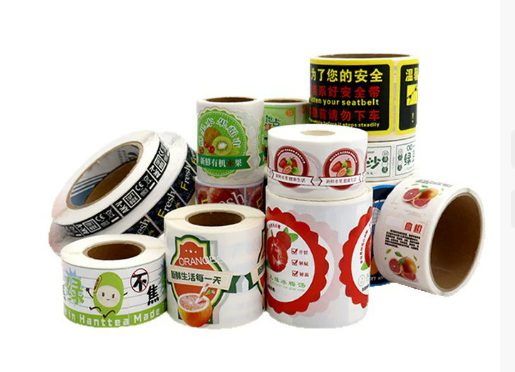
1. High-temperature environment: sticky and prone to softening, with a fear of deformation in the surface material
High-temperature environments are commonly found in industrial production workshops (such as injection molding workshops, baking workshops), outdoor exposure scenarios in summer, and high-temperature storage environments, with temperatures typically exceeding 50°C, and in some industrial scenarios, reaching over 100°C.
Typical behaviors of labels under high-temperature conditions include: ① softening and loss of adhesive layer, sharp decrease in viscosity, and even "flowing" phenomenon, leading to rapid detachment of the label; ② ordinary paper materials are prone to yellowing, embrittlement, and even curling and deformation, while film materials (such as ordinary PP) may experience shrinkage and wrinkling; ③ printing inks are prone to diffusion and fading, especially ordinary water-based inks, which may directly detach under high temperatures, resulting in loss of information; ④ label edges are prone to lifting, with extremely poor bonding stability.
Adaptation Features and Cases: It is suitable to choose high-temperature resistant PET surface material + silicone high-temperature adhesive, paired with UV-curable ink. For example, in the labeling of automotive parts production workshops, which require resistance to baking processes at around 150°C, the high-temperature resistance of PET surface material can prevent deformation, silicone adhesive maintains stable viscosity at high temperatures, and UV ink prevents the printed information from fading.
II. Low temperature/cold chain environment: The adhesive layer is prone to cracking, making bonding challenging
Low-temperature/cold chain environments primarily encompass scenarios such as freezer rooms (-20°C to -40°C), refrigerated trucks, and fresh cold chain transportation. The core challenges lie in the hardening of adhesive layers and condensation on surfaces caused by low temperatures.
Typical behaviors of labels in low temperature environments: ① Ordinary adhesive layers will become hard and brittle, losing their stickiness, and even if they were previously firmly attached, they are prone to detachment at low temperatures; ② Condensation may form on the surface of the adherend, and bubbles are easily generated when the label is applied. These bubbles become more pronounced after the temperature subsequently rises, causing the label to lift; ③ Paper-based materials become brittle at low temperatures, and minor impacts can result in damage, making the printed information prone to blurring; ④ Labeling is challenging, as the flexibility and toughness of labels decrease at low temperatures, leading to wrinkles and tears during manual or automated labeling.
Adaptability Features and Cases: Synthetic paper or low-temperature resistant PET surface material should be selected, along with a low-temperature-specific adhesive, to ensure that the adhesive layer maintains flexibility and tackiness at -40°C. For example, in the packaging labels for frozen foods, the low-temperature resistance of synthetic paper prevents cracking, and the low-temperature adhesive achieves effective adhesion even on condensed surfaces. It can be firmly fixed to the packaging even after repeated freeze-thaw cycles, maintaining clear printing information.
III. Damp/High Humidity Environment: Susceptible to mold growth and warping, with information prone to blurring
Humid/high-humidity environments are commonly found in food processing workshops (such as aquatic product processing and slaughtering workshops), cold storage rooms (high humidity and low temperature), outdoor rainy scenes, and bathrooms, where the relative humidity is usually above 85%. In some scenarios, there is direct water vapor immersion.
The typical performance of labels in humid environments is as follows: ① Paper surface materials are prone to absorbing water, softening, mildewing, and even dissolving directly, leading to label damage and detachment; ② The adhesive layer of ordinary labels becomes less sticky when exposed to water, exhibiting a "whitening" phenomenon, making it unable to adhere firmly to the adherend, and prone to lifting and detachment; ③ Printing inks, especially those on paper labels, spread when exposed to water, resulting in "bleeding" and unrecognizable information; ④ Moisture tends to accumulate between the label and the adherend, forming bubbles, which further exacerbates detachment.
Adaptability Features and Cases: Preferred options include fully waterproof BOPP or PET film facestock paired with waterproof acrylic adhesive, complemented by water-resistant ink. For instance, in equipment labeling for aquatic product processing workshops, the BOPP facestock is completely waterproof, resisting softening due to water absorption. The waterproof adhesive maintains stable adhesion on damp surfaces, ensuring no mold growth or peeling even after prolonged exposure to moisture, while the printed information remains clear and legible.
IV. Outdoor strong UV environment: prone to fading and aging, weather resistance is key
Outdoor environments with strong ultraviolet radiation include scenarios such as outdoor advertising, open-air equipment signage, and traffic signs. The core challenges lie in label aging and fading caused by ultraviolet exposure, as well as erosion from wind and rain.
Typical performance of labels in outdoor UV environments: ① Printed information fades quickly, especially for colored patterns, which usually become blurred or even disappear completely within 1-3 months; ② Surface materials age, with paper surface materials prone to yellowing and cracking, and ordinary film surface materials experiencing powdering and cracking; ③ Adhesive layers age and lose effectiveness, with viscosity decreasing, making labels prone to curling and detachment under the influence of wind and rain; ④ Label surfaces are prone to dust accumulation and contamination, which are difficult to clean, affecting information recognition.
Adaptation Features and Cases: It is recommended to choose UV-resistant PET or synthetic paper surface materials paired with weather-resistant acrylic adhesive, and to use UV-resistant ink. If necessary, a laminating process can be added. For example, for the labeling of outdoor charging stations, UV-resistant PET surface materials can withstand UV exposure, the weather-resistant adhesive layer maintains its adhesiveness even under exposure to wind and rain, UV-resistant ink ensures that printed information does not fade for more than 3 years, and the laminating process facilitates the cleaning of surface stains.
V. Harsh industrial environment: prone to contamination and damage, sufficient protection is required
Industrial harsh environments are often characterized by a combination of adverse factors, such as oil contamination in mechanical processing workshops, acid and alkali corrosion in chemical workshops, and friction and collision of mining equipment. These factors impose stringent requirements on the protective properties and durability of labels.
Typical performance of labels in harsh industrial environments: ① Oil contaminates the adhesive layer, causing it to lose its tackiness and resulting in label detachment; ② Acidic and alkaline substances corrode the face material and adhesive layer, leading to label damage and dissolution; ③ Mechanical friction wears down the surface of the label, erasing printed information and even causing the face material to tear; ④ Collisions and vibrations can cause the edges of the label to lift, subsequently leading to scratching and detachment.
Adaptability Features and Cases: It is necessary to choose a chemically resistant PET surface material paired with oil-resistant and acid-alkali resistant adhesive, combined with wear-resistant ink, and enhanced with laminating or localized UV processing for protection. For example, in the case of pipeline identification labels in chemical workshops, the chemically resistant PET surface material can withstand acid and alkali erosion, the oil-resistant adhesive layer can remain firmly attached even in oily environments, and the laminating process can improve surface wear resistance, ensuring that the information remains clear and does not fall off even after long-term exposure to chemicals and mechanical friction.
VI. Core Principles for Selection of Different Environmental Labels
1. First, identify the core environmental challenges: whether it is high temperature, low temperature, humidity, ultraviolet radiation, or oil corrosion. Address the core issues with targeted solutions. For example, for low temperature, priority should be given to the low temperature resistance of the adhesive layer; for outdoor applications, priority should be given to UV resistance;
2. Priority should be given to the matching of surface materials and adhesive layers: Different environments correspond to different combinations of surface materials and adhesive layers. For example, PET and silicone adhesive are selected for high temperatures, while synthetic paper and low-temperature adhesive are chosen for low temperatures, to avoid the failure of the combination due to the compliance of a single material;
3. The printing process cannot be overlooked: In harsh environments, UV ink is preferred. If necessary, protective processes such as laminating and spot UV should be added to ensure that the printed information remains durable and clear;
4. Pre-testing and validation: Before bulk usage, conduct sample testing in the actual environment and observe its performance for 1-3 months. Only after confirming that the labels do not fall off and the information is not blurred, can bulk procurement be carried out.
In fact, the performance of labels in different environments fundamentally hinges on the compatibility between material characteristics and environmental requirements. Choosing the right type of label can prevent issues such as detachment, fading, and damage; conversely, even the highest-quality label struggles to function stably in an incompatible environment. If you're unsure about which label to choose for your specific usage environment, you can also seek customization from a professional manufacturer. For instance, XuZhou HuaiShi will first analyze core factors like temperature, humidity, and the presence of oil/corrosion in the environment. They will then recommend specific face materials, adhesive layers, and printing processes accordingly. Samples will be provided for environmental testing to ensure the label's stability and reliability in real-world usage scenarios. If you have any related customization needs, feel free to contact us for a detailed proposal.