

Blurry or Faded Label Print: Tracing the Causes
Blur and fade usually trace back to ribbon matching, print head pressure or storage. A step by step check before the print file gets blamed.
Many enterprises encounter a headache-inducing problem when using self-adhesive labels: the printed characters, barcodes, and patterns are clear and bright when the labels are just finished, but soon after being put into use, the printed content becomes blurry and smudged, with colors fading and peeling. This not only affects the labeling function of the labels but also degrades the overall quality of the product, and may even lead to barcodes being unscannable and product information being missing, delaying warehouse circulation and market sales. Many people would directly blame the poor printing quality for the problem, but based on the years of production and after-sales troubleshooting experience of Xuzhou Huaishi Electronic Technology Co., Ltd., the blurring and fading of label printing is never caused by a single factor. Instead, it is the cumulative result of mismatches between material selection, printing process, and usage environment. Only by investigating the core causes one by one and making targeted adjustments can such problems be solved at their root, ensuring that the labels remain clear and intact for a long time.
Printing blur is the most common label printing fault. It may seem like a minor issue, but it directly affects the use value of the label. The core causes are mainly concentrated in three aspects: print adaptation, equipment status, and resolution, each of which is crucial to the final printing effect. Many companies overlook the compatibility between materials and printing methods, which is the most basic and easily made mistake. Thermal paper labels require dedicated thermal printing, while materials such as copperplate paper and synthetic paper need to be paired with thermal transfer printing. If the material and printing method are mismatched, such as using thermal transfer printing for thermal paper or thermal printing for ordinary materials, content blurring and illegibility will inevitably occur. At the same time, a mismatch between the thermal transfer ribbon and the label surface material can also lead to insufficient printing adhesion, making the content blurry and difficult to read. For example, using a rough surface material paired with an inferior thermal transfer ribbon cannot achieve uniform coloring.
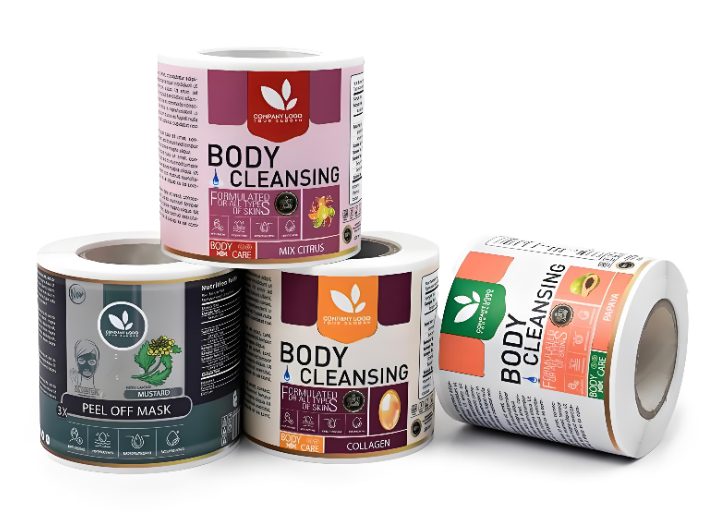
The status of the print head also directly determines the printing clarity. Long-term use of the print head can lead to issues such as aging, dust accumulation, and uneven pressure, resulting in inconsistent print depth and blurred edges. If daily cleaning and maintenance are not properly performed, dust and ink residue can accumulate on the surface of the print head, significantly affecting the printing quality. Furthermore, insufficient printing resolution is a core reason for blurring small fonts, precise barcodes, and fine patterns. The conventional 203dpi resolution is suitable for ordinary large font logos. However, when printing small fonts or high-density barcodes, a high resolution of 300dpi or above must be used to ensure sharp and legible content edges. This is also the key reason why precision electronic labels and small food labels have higher resolution requirements.
The issue of label fading and discoloration is more persistent than blurring, and it mostly occurs in long-term use or special environments. The core reasons are mainly focused on three aspects: lack of surface protection, erosion of the usage environment, and incorrect selection of thermal transfer ribbon types, which are also the details that enterprises are most likely to overlook. Most ordinary labels are not subjected to any surface protection treatment after printing, without lamination or UV processing. The printing layer is directly exposed and completely lacks resistance, which is the main cause of fading. Especially in scenarios where the label is exposed to outdoor sunlight for a long time, frequently rubbed, or comes into contact with alcohol or oil stains, the printing layer is easily eroded, and fading, discoloration, or even complete blurring can occur in a short period of time.
The selection of the wrong ribbon type can also lead to frequent color fading issues. There are three main types of ribbons available on the market: wax-based, hybrid-based, and resin-based, each with significant performance differences. Wax-based ribbons are low in cost but have poor adhesion and wear resistance, making them suitable only for indoor, normal temperature, and friction-free general scenarios. They fade easily upon slight contact or friction. Hybrid-based ribbons balance cost and wear resistance, making them suitable for conventional general scenarios. Resin-based ribbons have strong adhesion, wear resistance, solvent resistance, and excellent weatherability, making them suitable for outdoor, industrial, daily chemical, food, and other special scenarios. They are also the preferred type to avoid color fading. Many companies, in an effort to reduce costs, uniformly choose wax-based ribbons. However, when used in special scenarios, these ribbons frequently cause color fading issues, ultimately increasing rework costs.
To thoroughly solve the issues of blurry and faded self-adhesive label printing, there is no need to blindly switch manufacturers. By achieving precise matching and controlling details, such failures can be effectively avoided. For the issue of blurry printing, it is crucial to prioritize matching the printing method with the label material. Thermal paper should be paired with thermal printers, while copperplate paper, PET, and other materials should be matched with thermal transfer printers. Additionally, select the appropriate thermal transfer ribbon model. Regularly clean and maintain the print head, and promptly replace aging components to ensure the equipment is in good operating condition. When printing small fonts and precise barcodes, directly use a high resolution of 300dpi or higher to ensure clarity from the hardware perspective.
Regarding the issue of fading, surface protection should be implemented according to the usage scenario. For outdoor, abrasive, and solvent-contact scenarios, it is essential to add glossy or matte film lamination processes, or UV curing treatment, to isolate the label from external erosion. The type of thermal transfer ribbon should be carefully selected based on the scenario. For special weather-resistant scenarios, resin-based thermal transfer ribbons should be directly used, rather than blindly pursuing low-cost wax-based thermal transfer ribbons. When storing labels on a daily basis, avoid prolonged exposure to sunlight, moisture, and high temperatures to reduce the erosion of the printing layer from external factors.
Xuzhou Huaishi Electronic Technology Co., Ltd. has been deeply engaged in custom self-adhesive label printing for many years, familiarizing itself with the matching logic of various materials, processes, and scenarios. It can accurately recommend surface materials, ribbons, and process solutions based on customers' usage environments and printing needs. At the same time, it strictly controls printing equipment and production processes to avoid issues such as blurring and fading from the source. In fact, label printing failures are essentially caused by improper matching. Choosing the right materials, using the right processes, and adapting to the environment can ensure that labels remain clear and intact for a long time, eliminating the trouble of frequent rework and replacement, and truly achieving worry-free durability.