

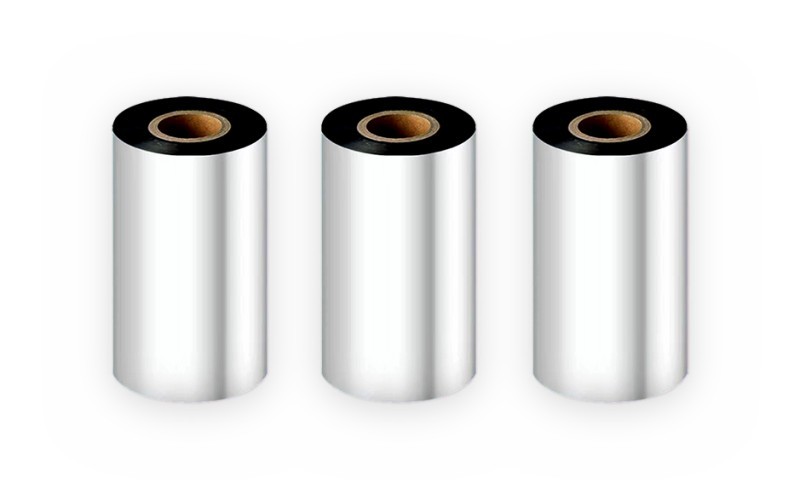
The enhanced hybrid is the broadest in the range. Compared with the economy grade, its substrate list adds high-gloss paper, semi-gloss label stock and synthetic paper. Total thickness is 6.8±0.3 micron, print density 1.9-2.1, and it runs at 4, 6 or 8 ips.
Why shops standardise on it
A single production floor rarely runs one substrate. Coated paper today, synthetic paper tomorrow, a batch of high-gloss name plates the day after. Swapping ribbons for each change costs time and invites mistakes. This grade covers all of them, so one roll runs the whole line.
That is what the manufacturer means by describing general compatibility as high.
Specifications
- Type: enhanced hybrid ribbon
- Ink type: hybrid
- Origin: domestic
- Colour: black
- Film thickness: 4.5±0.3 micron
- Ribbon thickness: 6.8±0.3 micron
- Print density: 1.9-2.1
- Print speed: 4 / 6 / 8 ips
- Substrates: coated paper, coated stock, uncoated paper, high-gloss and semi-gloss label paper, synthetic paper, tags
- Printer type: flat-head
How it prints
On high gloss stock it avoids the smearing and wiping off that a wax ribbon produces. Synthetic paper has a tighter surface, and the resin share is enough to hold the ink, so small characters and 2D codes come out with firm edges.
Heat and friction resistance are rated strong. Normal storage, transport and handling are fine. Long outdoor exposure or chemical solvents call for a resin.
Use and storage
Operate and store at -10 to 40 degrees C and 20 to 85 percent relative humidity. Keep rolls sealed, dry and out of sunlight; the enhanced hybrid ribbon is normally ink-out.
Enhanced hybrid or general purpose hybrid
Thickness, density and speed figures are essentially the same, and so are the substrate lists. The enhanced grade leads on versatility across materials; the general purpose grade leads on friction and scuff resistance. If printed labels face hard abrasion in sorting or handling, the general purpose grade is the better fit; if the issue is simply mixed substrates, the enhanced grade is enough.