

Cold Chain Labels: What Adaptability Really Requires
Low temperature, condensation and handling decide whether a cold chain label holds. Face stock, adhesive and process points that matter.
The low temperature, humidity, and temperature shock experienced in cold chain transportation often lead to the embrittlement, detachment, and blurring of ordinary self-adhesive labels, thereby affecting the traceability and compliance of goods.Adaptability of self-adhesive labels in cold chain transportationAnalyze the core challenges posed by the cold chain environment on labels, share adaptation solutions for materials, adhesive layers, and processes, assist enterprises in selecting labels that are resistant to low temperatures and moisture, and mitigate the risk of information loss during logistics.
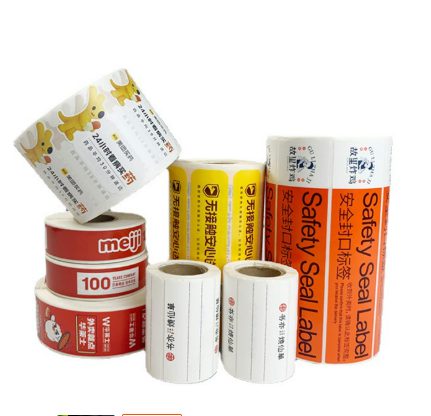
1. Multiple challenges posed by the cold chain environment to self-adhesive labels
The cold chain transportation involves a complex environment across the entire supply chain, from warehousing to distribution, which places stringent requirements on the adaptability of labels. These challenges directly determine whether the labels can stably perform their information-carrying function and avoid failure.
1. Low temperature invasion: testing the toughness and adhesiveness of labels
In the common cold chain environment of -18℃ to -40℃, ordinary label materials are prone to cracking, and the adhesive layer loses its tackiness, leading to issues such as detachment and warping. This is especially true for quick-frozen food and pharmaceutical cold chains, where prolonged exposure to low temperatures demands higher resistance from labels.
Data indicates that labels not adapted to low temperatures can have a detachment rate exceeding 60% within 24 hours in an environment of -18℃, significantly impacting cargo sorting and traceability.
2. Moisture and condensation: Threat to information integrity
In cold chain transportation, frequent temperature fluctuations are prone to cause condensation, leading to moisture on the label surface and blurring of the handwriting. Some cold chain goods may also be accompanied by moisture and frost, further eroding the labels and causing information to become illegible.
This issue is particularly prominent in the fresh food cold chain. If label information is lost, it may lead to confusion in goods batches, inability to trace shelf life, and pose compliance risks.
3. Friction impact: testing the fastness of labels
During the sorting, stacking, and transportation of goods, friction and collision are inevitable. In the cold chain environment, the toughness of the material decreases, making it more prone to damage and edge curling, which can lead to premature label failure.
II. Adaptability Implementation Path of Cold Chain Self-adhesive labels
The adaptability of labels must be achieved through precise matching of "material + adhesive layer + process", specifically addressing issues such as low temperature, humidity, and friction, to ensure stability throughout the entire process.
1. Selection of surface material: Prioritize materials that are resistant to low temperatures and moisture
The surface material serves as the first line of defense for labels against environmental erosion. It is necessary to abandon ordinary paper materials and opt for synthetic surface materials.Low-temperature resistant PET and PP synthetic paperIt is the mainstream choice for cold chain labeling, capable of withstanding temperatures as low as -40°C. It exhibits strong toughness, resists cracking, and boasts excellent waterproof and moisture-proof properties.
For the demanding pharmaceutical cold chain, UV-resistant PET surface material can be selected, balancing low temperature adaptability and long-term information retention, to avoid aging caused by the combined effects of light exposure and low temperature.
2. Adhesive layer compatibility: A low-temperature dedicated adhesive layer is crucial
The adhesive stability of the adhesive layer directly determines the labeling effect. In cold chain scenarios, it is necessary to use low-temperature-specific adhesive layers. Common low-temperature acrylic adhesives and silicone adhesives can maintain strong adhesion even at -40°C, and exhibit good compatibility with packaging materials such as plastic, carton, and metal.
It is important to distinguish between normal temperature adhesives and low temperature adhesives. Normal temperature adhesives experience a sharp decrease in viscosity below -10°C, whereas low temperature adhesives can bond quickly in low temperature environments and are less likely to leave adhesive residue, balancing both strength and aesthetics.
3. Process optimization: Enhancing information resilience
Printing and post-processing must align with material characteristics to enhance the resilience of information. It is recommended to adopt thermal transfer printing technology, which boasts strong ink adhesion and is less prone to fading due to moisture and friction. Additionally, laminating the labels creates a waterproof protective layer, further insulating them from condensation and moisture.
Furthermore, the die-cutting process requires precise control to avoid sharp edges and edges that are prone to curling, thereby enhancing the resistance to friction during transportation.
III. Practical Suggestions for Cold Chain Label Selection
Selection should be precisely matched with specific cold chain scenarios: PP synthetic paper + low-temperature acrylic adhesive is recommended for the quick-freezing food cold chain (-18℃); for the deep-freezing cold chain (-40℃), PET surface material + silicone adhesive is preferred; for the pharmaceutical cold chain, laminating and UV resistance processes must be added to ensure compliance and traceability.
At the same time, it is necessary to test the adaptability of the tags in the actual cold chain environment in advance to avoid failure issues after batch use.
The adaptability of self-adhesive labels in cold chain transportation is directly related to cargo traceability compliance, logistics efficiency, and brand reputation. Choosing the right adaptation plan can effectively avoid the risk of label failure and reduce the cost of repeated replacement.Cold Chain Self-adhesive labelFor customization and selection needs, please consult our professional team. We will provide highly adaptable labeling solutions based on your cold chain temperature and cargo characteristics, ensuring smooth operation of cold chain logistics.