

Pharmaceutical Traceability: The Label's Real Role
Drug traceability rests on a label that survives handling and stays readable. Compliance fields, material pairing and serialised data.
Drug circulation traceability serves as the core defense line for ensuring public medication safety, encompassing the entire chain from drug production, warehousing, transportation to terminal sales. The traceability of information at every link is crucial for maintaining medication safety. Within this critical system, self-adhesive labels have evolved from simple product identifiers to the nerve center of the drug traceability system, carrying the precise transmission of unique drug identity information, temperature trajectories, and compliance data. They are the core medium connecting physical drugs with the digital traceability system. Their application not only enhances the efficiency of drug circulation but also serves as a crucial step in adhering to the legal bottom line of drug safety and reinforcing the technical foundation, profoundly influencing the effectiveness of drug traceability across the entire chain.
Self-adhesive labels are the core physical carriers of the pharmaceutical traceability system and serve as the "unique entry point" for traceability data. The entire process of pharmaceutical circulation traceability relies on the unique machine-readable identifiers carried by the labels, which is also the core value of labels in pharmaceutical circulation traceability. According to the "Guidelines for the Construction of the Pharmaceutical Information Traceability System" issued by China's NMPA and core regulations such as the US FDA 21 CFR Part 11, self-adhesive labels used for pharmaceutical circulation traceability must meet three core conditions, none of which can be omitted.
First, uniqueness: Each drug needs to be associated with a unique traceability code (such as a GS1 Data Matrix QR code), truly achieving "one item, one code" and ensuring that each drug has its own "digital ID card", thereby eliminating the risks of confusion and counterfeiting from the source. Second, readability: The QR code on the label must meet the ISO/IEC 15415 Grade A standard, with high-precision scanning performance. Even on high-speed logistics sorting lines, the recognition rate must reach over 99.9% to ensure efficient collection of traceability data. Third, compliance: The label content must mandatorily include key information such as the drug batch number, expiration date, manufacturer, storage conditions, etc., with font height not less than 2mm, effectively avoiding human misreading and ensuring accurate information transmission.
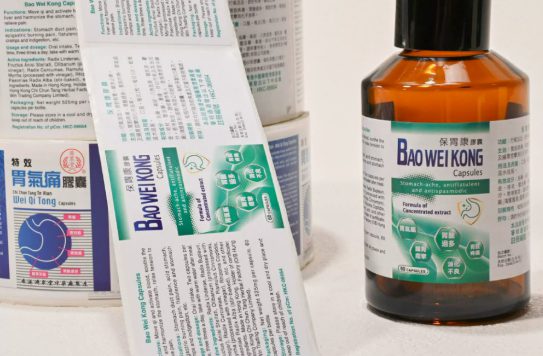
Industry pain point data reveals that a 2023 FDA report indicated that 43% of drug traceability failures stemmed from illegible label printing or adhesion failure, directly disrupting the traceability chain and posing significant risks to drug safety. By adopting a professional self-adhesive label solution for drug circulation traceability, such risks can be reduced to below 0.5%, effectively ensuring the integrity and stability of the traceability chain.
The pharmaceutical circulation process is complex and ever-changing, with scenarios such as high-temperature transportation, temperature and humidity fluctuations, transportation vibration and friction, and frequent disinfection and wiping, all posing extremely high demands on the durability of self-adhesive labels. The combination of high-quality label materials is like an "invisible armor" that withstands complex environments, ensuring that labels remain effective and information is not lost throughout the entire circulation process. To address different environmental challenges, corresponding material solutions need to be paired, while meeting relevant verification standards to fully adapt to the entire pharmaceutical circulation scenario.
In high-temperature transportation environments exceeding 30°C, conventional labels are prone to issues such as adhesive layer softening and label detachment. By selecting acrylic high-temperature adhesive paired with heat-resistant PET face material, the label can effectively resist high-temperature erosion, meeting the ISO 11470 high-temperature adhesion test standard. In scenarios involving temperature and humidity fluctuations where humidity exceeds 70%RH, paper labels are susceptible to moisture absorption, deformation, and blurring of handwriting. By using synthetic paper face material paired with waterproof ink, the label's moisture resistance can be enhanced, meeting the ASTM D5728 humidity stability requirements. Vibration and friction during transportation can easily cause wear to the label's ink layer and blur the QR code. Resin thermal transfer ribbon printing paired with BOPP laminating protection can strengthen the label's wear resistance, meeting the ISO 15415 wear resistance test standard. In scenarios where terminal pharmacies and hospitals frequently use 75% alcohol for disinfection and wiping, the ink layer is prone to swelling and information distortion. By adopting a solvent-resistant adhesive system paired with a UV blocking coating, the label's resistance to wiping can be improved, passing the ISO 15415 wiping resistance test.
Empirical data reveals that after adopting a professional traceability label consisting of acrylic adhesive and PET material, a leading pharmaceutical company consistently maintained a QR code recognition rate of 99.8% during extreme temperature cycling tests ranging from -20℃ to 40℃. This rate significantly surpasses the 82% recognition benchmark of ordinary labels, fully meeting the environmental requirements across all scenarios of pharmaceutical distribution.
As the core bridge connecting physical pharmaceuticals with the digital traceability system, self-adhesive labels possess technical integration capabilities that are crucial for facilitating seamless data flow throughout the entire pharmaceutical circulation chain. This enables seamless traceability from production to the end-user, ensuring that information from every link is traceable, verifiable, and verifiable. At the production end, label printing is synchronized with drug batch data, including core information such as batch number, production date, and expiration date, which is uploaded in real-time to the GMP production management system. This facilitates traceability to the source of production, ensuring that information for each batch of drugs is traceable. At the circulation end, during logistics and transportation, staff scan labels via PDA, automatically recording the temperature and humidity curve of the drugs (especially for cold chain drugs), generating electronic traceability reports, and uploading them synchronously to the traceability platform. This enables full monitoring of the transportation process. At the terminal end, pharmacy and hospital staff can quickly verify the authenticity, expiration date, circulation trajectory, and other information of the drugs by scanning the codes. The data is synchronized to the medical insurance traceability platform (such as the China Medical Insurance Traceability System), achieving a closed-loop terminal traceability.
Practical cases have confirmed the value of label technology integration. In 2023, a multinational pharmaceutical company achieved remarkable results after deploying Data Matrix QR code traceability labels in the circulation of COVID-19 vaccines: scanning efficiency increased by 40%, manual verification time was reduced from 30 seconds per item to 18 seconds per item, significantly improving the efficiency of drug circulation; traceability response time was shortened from 24 hours to 15 minutes, enabling rapid recalls once risky batches were identified, reducing safety hazards; the annual risk of counterfeit drug infiltration was reduced by 37%, avoiding potential economic losses exceeding 8 million yuan, fully demonstrating the core enabling role of self-adhesive labels in drug circulation traceability.
Compliance is the core bottom line of pharmaceutical circulation traceability self-adhesive labels. Each link in the design, production, and application of the labels must strictly comply with relevant domestic and international regulations; otherwise, severe regulatory penalties will be imposed, causing huge losses to the enterprise. Regulatory requirements vary from country to country and region. China's NMPA explicitly requires that pharmaceutical traceability codes must be completely consistent with packaging information, and products that fail to meet the standards shall not be marketed and circulated. The US FDA's DSCSA Act mandates full-chain traceability of pharmaceuticals, and fines of up to $5 million can be imposed for missing or non-compliant labels. The EU's Falsified Medicines Directive (FMD) requires that pharmaceutical labels include a security seal and a unique serial number to enhance anti-counterfeiting and traceability.
The error case serves as a warning to us. A pharmaceutical company was fined RMB 1.2 million for failing to label the storage condition "refrigerated" on the drug circulation labels, which did not meet the compliance requirements of the National Medical Products Administration (NMPA). Simultaneously, the products were completely removed from shelves, resulting in direct economic losses of RMB 2 million. This fully demonstrates that a compliant labeling scheme is crucial for enterprises to avoid regulatory risks and ensure normal operations.
With the continuous improvement of the drug traceability system, self-adhesive labels are evolving from passive information recording to active early warning and intelligent empowerment, gradually iterating into new forms that better meet the needs of drug circulation and traceability, further safeguarding drug safety. Temperature-sensing labels have become the mainstream direction for upgrading. The labels incorporate thermosensitive materials that can display the real-time storage status of drugs. For example, a change from green to red indicates that the storage temperature exceeds the standard. Without the need for manual inspection piece by piece, temperature anomalies can be quickly detected, prompt measures can be taken, and drug failure due to temperature exceeding the standard can be avoided. Blockchain-integrated labels are gradually being promoted. The QR code on the label links to blockchain certification, allowing users to view the entire temperature control records, quality inspection reports, and circulation trajectories of drugs by scanning the code. The information is tamper-proof and fully meets the EU MDR compliance requirements, enhancing the credibility of drug traceability. At the same time, environmentally friendly material labels have become a consensus in industry development. The application of degradable PET surface materials meets the EU EC 1935/2004 regulatory requirements, reducing medical waste and promoting the green and sustainable development of the drug circulation industry.
In the pharmaceutical circulation traceability system, self-adhesive labels serve as dual guardians of safety and efficiency. They have transcended mere "paper identification" and become a "digital lifeline" that spans the entire lifecycle of pharmaceuticals. From factory production to hospital terminals, from cold chain transportation to pharmacy sales, every label precisely conveys pharmaceutical safety information, fulfilling the commitment to public medication safety.
The annual global circulation of pharmaceuticals exceeds 500 billion units, and every small self-adhesive label is silently safeguarding human life and health. For pharmaceutical companies, investing in a highly stable and compliant pharmaceutical circulation traceability self-adhesive label solution is essentially investing in the certainty of pharmaceutical safety - it makes traceability no longer a paper requirement, but an executable, verifiable, and reliable daily practice, ensuring that the flow of every pharmaceutical product is clearly traceable, and every aspect of medication safety is well documented.
When the precision of labeling resonates with the safety of pharmaceuticals, and when the traceability chain is seamlessly connected, the foundation of human health defense becomes the most solid. And self-adhesive labels are an indispensable and crucial component of this defense line.