

Outdoor Labels: How Long They Really Last
Service life outdoors is set by UV dose, rain, temperature swing and substrate. Realistic expectations, and what to specify to reach them.
When used in indoor environments, self-adhesive labels typically maintain good stability, with clear information and secure attachment, meeting daily identification needs. However, once applied to outdoor scenarios, prolonged exposure to complex environments such as direct sunlight, rain wash, diurnal temperature variations, and wind-blown dust and sand can easily cause issues such as fading, edge warping, detachment, and blurred information if materials with suitable weather resistance are not selected. This directly results in the loss of identification functionality, affecting product traceability, equipment management, and brand presentation.
Therefore, when applying self-adhesive labels in outdoor scenarios, "weather resistance" becomes a core consideration, as it directly determines the outdoor service life, information stability, and application effect of the label. It is a key indicator for selecting outdoor labels.
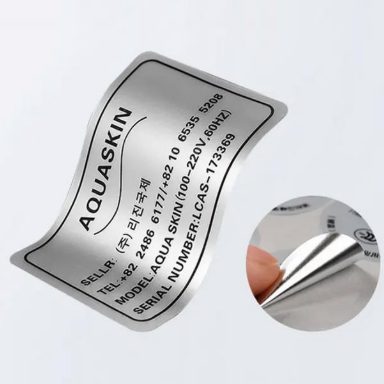
1. Core Definition of Weather Resistance of Outdoor Self-adhesive labels
The so-called weather resistance of self-adhesive labels refers to the ability of the labels to maintain their physical properties, adhesive properties, and information integrity even after enduring various environmental factors in natural outdoor environments for an extended period. Simply put, the stronger the weather resistance, the longer the service life of the label outdoors and the more stable its performance.
There are primarily four core factors that contribute to the erosion of self-adhesive labels in outdoor environments, which are also crucial to weather resistance and require special attention:
1. Strong ultraviolet radiation: Ultraviolet rays from outdoor sunlight are the primary factor accelerating the aging and damage of labels;
2. Rainwater and moisture erosion: Prolonged rainfall and high humidity environments are prone to damaging the stability of label face materials and adhesive layers;
3. Diurnal temperature variation: Significant diurnal temperature differences outdoors can lead to thermal expansion and contraction of labels and the adhered substrates, affecting the adhesion of the adhesive layer;
4. Sand and dust abrasion: Long-term exposure to sand and dust outdoors can cause wear and tear on the label printing layer, affecting the readability of the information.
These factors will have a lasting and irreversible impact on the label's face material, adhesive layer, and printing layer. If the weather resistance is insufficient, the label will lose its original function within a few days to several months, depending on its length, and thus cannot meet the long-term outdoor identification needs.
II. Core Impact of Ultraviolet Radiation on Outdoor Self-adhesive labels
Ultraviolet rays in sunlight are the primary factor affecting the lifespan of outdoor self-adhesive labels. Their erosion on labels is persistent and irreversible, especially for labels made of ordinary materials.
Ordinary paper labels or synthetic paper labels with low weather resistance will exhibit noticeable aging after prolonged exposure to outdoor sunlight, primarily manifesting as:
1. Fading and discoloration of printing: The text and pattern colors on the label gradually become lighter or even fade completely, losing their identification significance;
2. Yellowing and embrittlement of the surface material: The label surface appears yellowed and aged, and the material becomes brittle and prone to damage, cracking even with gentle touch;
3. Decreased contrast between text and barcode: The clarity of the text and barcode on the label decreases, resulting in insufficient contrast, which prevents scanning devices from recognizing them, thereby affecting product traceability, equipment management, and other processes.
Therefore, for self-adhesive labels used in outdoor scenarios, it is essential to select surface materials and inks that are resistant to ultraviolet rays and have strong lightfastness. This approach reduces the erosion of labels from ultraviolet rays at the source, thereby extending their outdoor service life.
III. The Challenges of Rain and Humidity to Outdoor Self-adhesive Labels
In outdoor environments, rainwater scouring and high humidity air are common occurrences, which impose basic requirements on the waterproof performance of self-adhesive labels and constitute an important part of weather resistance.
If the label material has strong water absorption (such as ordinary paper material), prolonged exposure to rainwater or humid air can lead to a series of issues: wrinkling, deformation, and even breakage and delamination of the label surface. Simultaneously, moisture will gradually penetrate into the adhesive layer, compromising its adhesive stability, resulting in label edges lifting and detaching. In severe cases, the entire label may fall off, rendering it unable to perform its identification function.
For labels that are exposed to the outdoors for extended periods and frequently come into contact with rainwater (such as outdoor equipment labels, outdoor advertising labels, and outdoor product identification labels), waterproof performance is fundamental. It is necessary to select surface materials and adhesive layers that are waterproof, moisture-resistant, and non-absorbent to ensure that the labels remain stable in humid environments.
IV. Impact of Temperature Variations on the Adhesive Layer of Outdoor Self-adhesive Labels
In outdoor environments, diurnal and seasonal temperature variations are typically pronounced. During the day, temperatures can soar above 30°C under direct sunlight, while at night, they may plummet below 0°C. Such drastic temperature fluctuations pose significant challenges to the adhesive layer of self-adhesive labels.
If the temperature tolerance range of the label adhesive layer is narrow and its adaptability to temperature differences is insufficient, significant issues with decreased adhesion may occur: in high-temperature environments, the adhesive layer may soften and overflow, leading to label displacement and detachment; in low-temperature environments, the adhesive layer may harden and become brittle, losing its adhesiveness and resulting in edge warping and detachment.
Furthermore, the substrates (such as metal and plastic) to which outdoor labels are affixed undergo slight expansion or contraction with changes in temperature, further exacerbating the instability of the labels. This necessitates higher requirements for the toughness and adhesion of the label adhesive layer.
V. Long-term Effects of Friction and Dust on Outdoor Self-adhesive Labels
In outdoor settings, tags are often exposed to windblown sand and dust, and some outdoor equipment tags may also be subject to human friction. These factors can cause long-term wear and tear on the surface of the tags, affecting their information readability and service life.
If the wear resistance of the label material is poor, the printing layer will gradually wear and fall off after prolonged exposure to sand and dust friction and human touch, resulting in blurry and unrecognizable text, patterns, and barcodes on the label. For outdoor labels that require long-term retention of information (such as equipment identification and product traceability labels), this wear will directly lead to label failure, affecting management processes.
Therefore, the face material of outdoor self-adhesive labels must possess excellent wear resistance, capable of withstanding long-term friction from windblown sand and dust, ensuring the printing layer remains intact and the information remains clearly visible at all times.
VI. Core Selection Key for Outdoor Self-adhesive labels: Choosing the Right Weather-Resistant Material
The outdoor environment is complex and ever-changing, and the requirements for the weather resistance of self-adhesive labels are much higher than those for indoor settings. Therefore, material selection becomes the core of determining the outdoor service life of labels. It is necessary to comprehensively consider various factors to ensure that the material is compatible with the outdoor environment.
When selecting a model, it is crucial to pay close attention to the following four points, none of which can be overlooked:
1. Light resistance of surface material: Preferably choose surface materials that are resistant to ultraviolet rays and have strong light resistance (such as PET, PP synthetic paper, and outdoor-specific weather-resistant paper) to avoid fading and yellowing caused by ultraviolet rays;
2. Waterproofing ability of the surface material and adhesive layer: Select waterproof, moisture-proof, and non-absorbent surface materials and adhesive layers to resist the erosion of rainwater and moisture, preventing wrinkling and detachment of the label;
3. Temperature tolerance range of adhesive layer: Based on outdoor temperature variations, select an adhesive layer that is resistant to both high and low temperatures to ensure stable adhesion in both high and low temperature environments, avoiding edge warping and detachment;
4. Abrasion resistance of the printing layer: Select abrasion-resistant ink and pair it with abrasion-resistant surface materials to withstand the friction from windblown sand and dust, ensuring that the label information remains clear for a long time.
Only when the weather resistance of the face material, adhesive layer, and ink are mutually compatible can the self-adhesive label maintain stable use for an extended period in outdoor environments, meeting the core requirements of outdoor signage.
The damage to outdoor self-adhesive labels is not a sudden occurrence, but rather the result of long-term erosion by environmental factors and gradual performance degradation. Given the complexity of outdoor application scenarios, the importance of weather resistance cannot be overstated. It directly determines the lifespan, information stability, and application value of the labels.
When the material, adhesive layer, and printing method of self-adhesive labels are specifically adapted to outdoor environments, they can effectively resist the erosion of sunlight, rainwater, temperature differences, and sandstorms, maintaining the stability and information integrity of the labels. This allows the labels to serve as reliable markers for outdoor equipment management, product traceability, and brand display over the long term.