

Warped, Lifting or Blurry Labels: Seven Common Faults
Edge curl, lifting, faint print and unscannable codes usually trace to adhesive or material mismatch. Seven faults, causes and fixes.
Self-adhesive labels may seem simple, but they can pose numerous issues in practice. Issues such as edge warping, label detachment, blurry printing, and unreadable barcodes repeatedly occur with customers. Many of these issues are not due to poor label quality, but rather to mismatched materials, adhesives, and usage environments. This article compiles frequently encountered problems, explains their causes, and provides solutions. Those experiencing similar issues can refer to this article for troubleshooting.
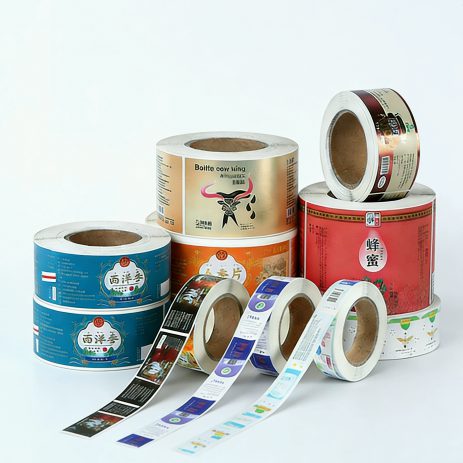
1. Label edge warping
Edge warping is the most common issue, predominantly occurring on curved bottle bodies, curved packaging, and products stored in refrigerated cabinets.
There are three main reasons: the mismatch between the adhesive and the surface material, resulting in insufficient viscosity; the presence of oil stains and dust on the labeling surface, which prevents the adhesive from adhering properly; and low ambient temperature, which causes the adhesive to become brittle and lose its viscosity.
Solution: Use a glue with higher viscosity; clean the surface before labeling; switch to a low-temperature resistant glue for refrigerated products. Additionally, PET material labels have good stiffness and are less prone to warping than soft surface materials, making them a preferred choice for curved products.
II. Remove the labels
The reasons for label peeling and edge warping are similar, but they occur more frequently on materials with low surface energy. For surfaces like PE, PP, and silicone, ordinary adhesives simply cannot adhere firmly, and the labels will peel off after just a few days.
Solution: Choose strong adhesive or specialized adhesive for low surface energy; perform corona treatment on the labeling surface; or switch to synthetic paper, which has good conformability, to increase the contact area.
III. Blurry Printing
After thermal label printing, the ink appears blurry and yellowish. Common causes include: moisture or prolonged exposure to heat affecting the thermal paper, causing the coating to discolor prematurely; wear and tear on the print head, leading to uneven heating; and a mismatch between the thermal transfer ribbon and the surface material.
Handling method: Store thermal labels in a dark and moisture-proof environment, and avoid stocking them in high-temperature conditions. Regularly clean the print head with a cleaning card. Select the thermal transfer ribbon according to the surface material. Resin-based thermal transfer ribbons are scratch-resistant and suitable for synthetic paper and PET.
IV. Barcode cannot be scanned
When the warehouse scanner fails to read the barcode, the issues generally lie in contrast, reflection, and accuracy. If the label surface is covered with a shiny film, it will reflect light, making the scanner unable to read it. If the color contrast of the barcode is insufficient, the lines and background colors are too similar. If the printing resolution is low, the edges of the barcode will appear blurry.
Solution: Replace the glossy film with a matte film to eliminate reflection; deepen the color of the barcode to ensure black and white contrast; adjust the print resolution to above 300dpi, especially for small barcodes.
V. Residual adhesive after removal
The label leaves a layer of adhesive after being removed, usually due to the use of the wrong type of glue. Permanent adhesive is inherently designed to not be removable, and naturally leaves adhesive residue in scenarios where replacement or removal is necessary.
Solution: For locations that require regular removal, switch to removable adhesive. Removable adhesive sticks firmly and leaves no residue when removed, making it suitable for scenarios such as price tags and turnover labels.
VI. Color Difference
The color inconsistencies between different batches are primarily due to two reasons: variations in the printing environment leading to batch differences; and discrepancies between the colors seen on the screen by the customer and the actual product, as the color gamut of the screen and the printing color gamut are inherently inconsistent.
Handling method: The sample shall prevail. Confirm the sample sheet before mass production, and increase production after sample approval. Require the manufacturer to manage color differences, and conduct spot checks and comparisons during mass production.
VII. How to handle small batch orders
Digital printing can be done with just a few hundred sheets, making it suitable for color and plate testing; traditional offset printing generally requires tens of thousands of sheets to be cost-effective. For the first collaboration, it is recommended to start with a sample to confirm the color and adhesion, before proceeding to larger quantities.
Correct sequence for troubleshooting
When it comes to label issues, most often, there is not a single cause. Only by clarifying the usage environment, the surface being labeled, and the storage conditions can the manufacturer prescribe the right remedy. Do not immediately assume that the label quality is poor.
These issues are also faced by label manufacturers on a daily basis. The sales personnel of Xuzhou Huaishi Electronic Technology Co., Ltd. have summarized that over half of customer inquiries are related to label warping and label falling off. This company specializes in customizing labels for various industries such as food, cold chain, cosmetics, health products, pet food, and electronics. When customers bring samples, they will first test the compatibility of the glue and the material, then discuss production. If any issues arise after shipment, the after-sales service will directly reprint the labels.
Check these common issues one by one, as it can save a lot of rework time. Next time if there is a problem with the label, first check the glue, then the material, and finally the environment. In most cases, there will be a solution.