Wax, Wax-Resin or Resin Ribbon: Three Quick Tests
A fingernail, clear tape and an alcohol wipe separate the three ribbon families in five minutes. What to check on the printer afterwards.
Every supplier says the ribbon is wax-resin. Then the print rubs off with a thumb. You do not need a lab to sort this out. A fingernail, a strip of clear tape, and an alcohol wipe will separate the three families in about five minutes.
The difference is resin content
Wax ribbon is mostly wax, melts around 60 to 75 °C, prints at low energy, and pairs with coated paper at the lowest cost. Resin ribbon is mostly resin, needs considerably more energy to transfer, and holds up against abrasion and solvents. It pairs with PET, PVC, and synthetic facestocks. Wax-resin sits between them, typically 20% to 50% resin, trading some durability for cost.
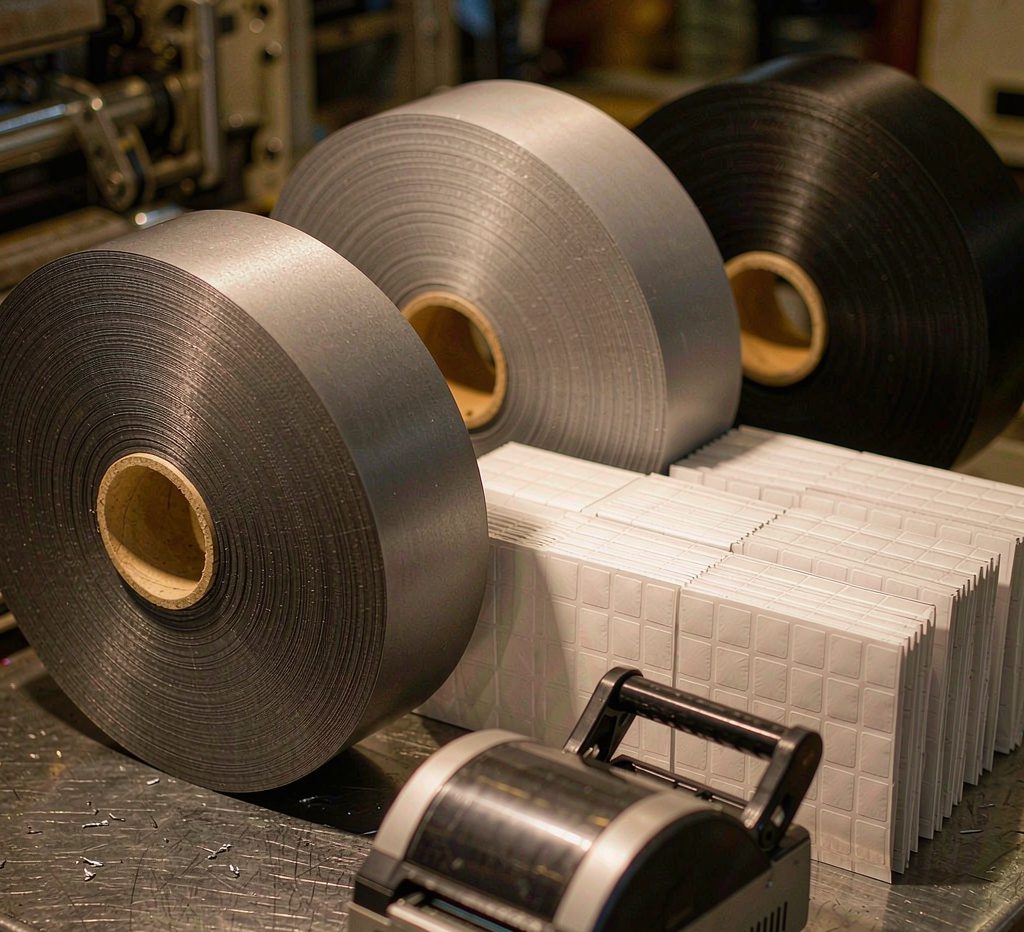
The printer has to follow the ribbon. Switching a machine from wax to resin usually calls for 20% to 40% more print energy and often a drop from 6 ips to 4 ips. Skip that step and the complaint becomes poor print definition, when the real issue is energy.
Test one: the fingernail
Print a solid black block, wait ten seconds, and scrape across it at a moderate angle. Wax leaves powder and a clear white track. Wax-resin leaves a shallow mark with slight edge loss. Resin barely marks, showing only a compressed line.
Test two: the tape pull
Press 3M 610 or 810 tape firmly over the printed area and pull it off fast. Wax transfers most of the image to the tape and leaves a grey ghost on the label. Wax-resin transfers a little. Resin transfers almost nothing. This test is closer to real handling abrasion than the fingernail.
Test three: the alcohol wipe
Rub the printed area 20 times with a 75% alcohol wipe. Wax starts smearing after about five passes. Wax-resin holds to roughly 15 or 20. Resin is still legible at 20. If the label will meet solvents, oil, or repeated cleaning, this is the test that matters most.
Passing the tests is not the end
A pass only confirms the ribbon family. Three printer settings still need attention: energy, speed, and head pressure. Too little energy spreads the bar code edges and drags the ISO/IEC 15416 grade down. Too much energy burns through thin synthetic facestock.
Check it directly. Print a bar code, read it with a verifier or a phone scanner, and look at the edge definition. Fuzzy edges mean reduce energy. Faded print means raise it. Move in steps of about 5% rather than jumping to the maximum.
Storage changes the answer too
Ribbon does not age well in a hot room. Rolls stored above 35 °C for a season can wrinkle, and a wrinkled ribbon prints with light streaks no amount of energy will fix. Keep stock below 30 °C, out of direct sun, and off the floor. Resin ribbon is the more sensitive of the three to humidity swings, because the coating picks up moisture at the edges and starts to curl.
If a roll that tested well last quarter now prints patchy, compare the storage conditions before blaming the supplier. Half the ribbon complaints we see trace back to a rack next to a loading dock door.
How to write the order
Do not order "wax-resin ribbon" and stop there. Specify width, length, winding direction with the ink side out, and the facestock it will run on. Common widths are 25, 50, 60, and 110 mm, common lengths 74, 90, and 300 m. Get the winding direction wrong and the roll will not seat.
The safer order of questions runs facestock first, then environment, then ribbon grade. Coated paper in a dry indoor setting is fine on wax. PET, or anything that meets solvent or gets scraped, goes straight to resin and avoids a rework cycle later. Ribbon width should also match or exceed label width, because a narrow ribbon wears a groove into the printhead edges.