

Initial Tack, Peel and Shear: What They Measure
Three figures answer three questions. Will it grab, will it hold, and how long will it last. Test conditions decide whether the numbers compare.
Supplier reports list three numbers: initial tack, peel adhesion and shear. Buyers read the figures without always knowing what each one governs. They measure three entirely different things.
Initial tack: the first instant of contact
Initial tack is the bond formed within a fraction of a second to a few seconds of contact. The rolling ball method drops a standard steel ball down an incline and records how far it travels before the adhesive stops it, with a smaller ball and shorter distance indicating lower tack. Finger tack, pressing lightly and feeling the resistance, is the shop floor version.
Low tack shows up as labels that will not stay put on an automatic line, or that lift in the air blast on a conveyor. High speed lines and cold environments are especially sensitive, and a good share of flying label problems end with insufficient initial tack.
Peel: how firmly it holds once bonded
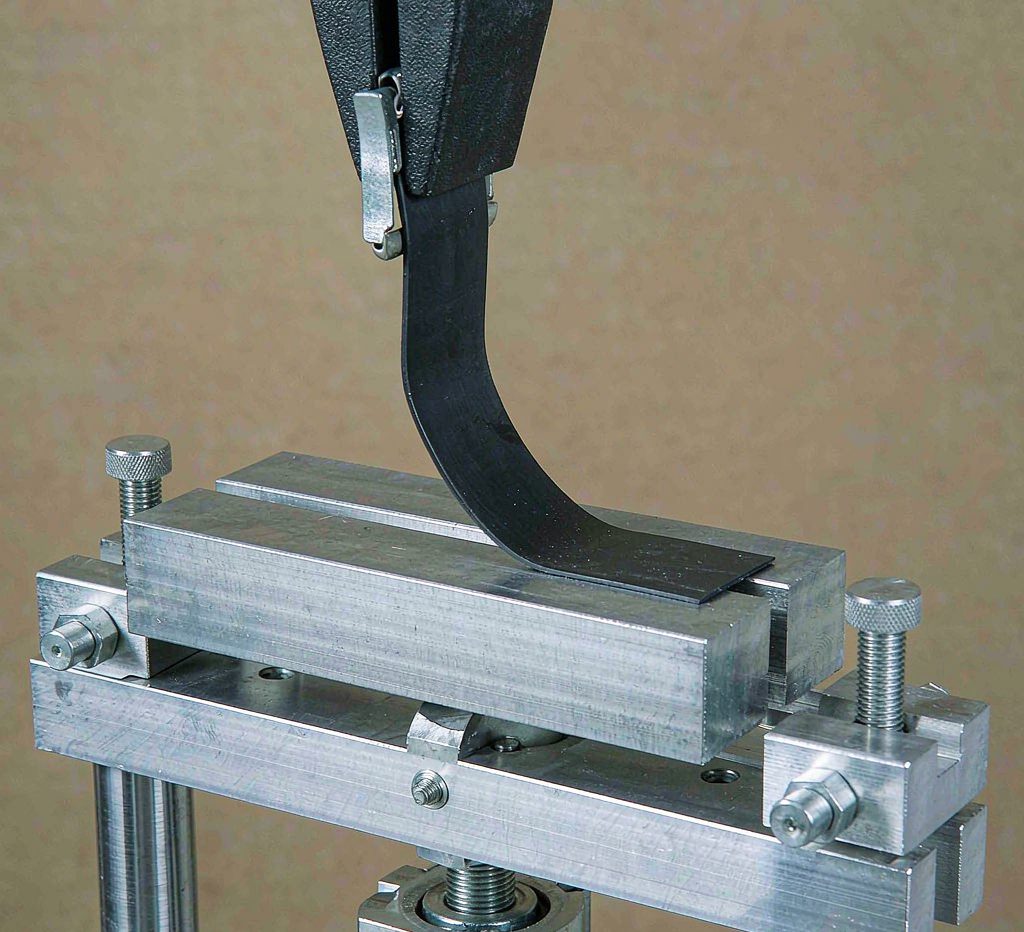
The standard method is 180 degree peel. A 25 millimetre strip is applied to a standard stainless steel panel, rolled once each way with a 2 kilogram roller, conditioned at 23 degrees Celsius and 50 percent relative humidity for 20 to 24 hours, then peeled at 300 millimetres per minute with the average force recorded in newtons per 25 millimetres.
Every one of those conditions matters. Too short a dwell and the adhesive has not wet out, so the reading is low. A different peel rate changes the result substantially, because adhesive is viscoelastic and fast peeling is a different event from slow peeling. Change the substrate to PE or PP and the reading drops well below stainless, because surface energy is lower. Read the conditions before comparing two figures; numbers from different conditions are not comparable.
Shear: how long it lasts
Shear measures resistance to sliding. A defined area is applied to a vertical panel, a 1 kilogram weight hangs from the bottom edge, and the test records how far the label creeps or how long until it falls. This reflects the internal cohesion of the adhesive.
Poor shear shows up as labels creeping downward, adhesive squeezing out at the edges and a ring of residue after removal. It is worst in summer, when a label on a shelf carries its own weight plus heat and shifts within weeks. On squeeze tubes, curved surfaces and vertical faces, shear deserves more attention than peel.
Read all three together
One number alone misleads. High peel with low shear means a soft adhesive that grips but cannot carry load, and it will squeeze out. High tack with ordinary peel suits fast application but not long term holding. High values on all three usually mean a hard adhesive whose cold performance will drop. Map the application to the three properties rather than asking generally whether it sticks well.
How to check without a lab
A rough comparison is still possible. Apply identical labels to the actual container, condition for 24 hours, then peel by hand at a steady rate and feel whether resistance is consistent. Then put the container in a 40 degree oven for a week and look for squeeze out and movement. Those two steps eliminate most unsuitable products, and only the survivors need a proper test report.
One point gets overlooked: the same batch measures differently when fresh and after three months on the shelf. Adhesive gains peel strength with time while initial tack falls away, so check the date and batch on the report. Judging today's delivery with a report written three months ago is how wrong decisions get made.
If the application is safety related, retest at the end of the shelf life rather than at the start.