

Labels Lifting Off PE Bottles: The Bottle Is at Fault
Shampoo and detergent bottles shed label corners no matter which adhesive you try. Most of the time the bottle surface is the cause, not the glue.
Shampoo, dish soap, laundry liquid. The label lifts at the corner, the supplier is asked to change the adhesive, and the new roll behaves the same way. At that point it is worth looking at the bottle instead.
Why PE is hard to stick to
Polyethylene is a classic low surface energy material. Untreated, it often measures around 31 mN/m, while pressure-sensitive adhesives generally want 38 or higher to hold. That gap is enough that the adhesive never wets out; it just sits on top. Press it down and it holds for a day. Add moisture, a cold chain trip, or two weeks on a shelf and the edge lifts.
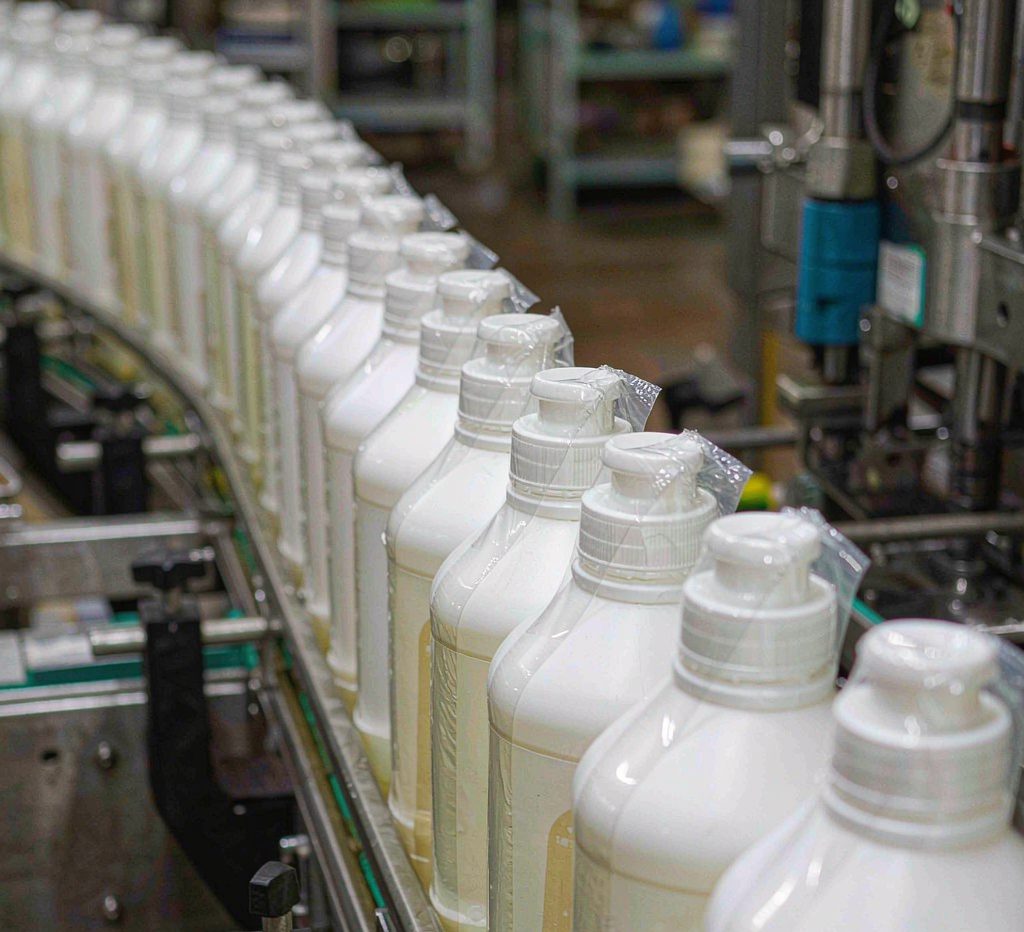
PP is a little better but still low. Regrind and blends are worse, and it is common for one batch of bottles to label well and the next to fail, because the ratio of recycled material keeps shifting.
Testing the bottle, not the label
The direct method is a dyne pen. Draw a line on a blank part of the bottle and watch whether the ink beads up within two seconds. If it does, the surface energy is below the pen rating. Try 36, 38 and 40 in turn and you can bracket the value. Without a pen, a drop of water gives a rough read: a flat puddle means high energy, a bead means low.
A quicker check is a strip of tape pressed hard and pulled fast. If it comes away clean with no trace on the bottle, there is essentially no adhesion to begin with, and no adhesive choice will fix it.
What the bottle plant should do
Corona treatment straight after blow molding is the usual answer. High voltage breaks surface molecules and attaches polar groups, lifting surface energy above 40. The catch is decay: the effect fades over weeks, so bottles should be labeled soon after molding, or the plant should ship treated stock promptly rather than storing it.
Flame treatment suits shapes that corona cannot reach. It lasts longer than corona but is harder to control, and overheating leaves a glossy, distorted patch that looks worse than the problem.
Then there is primer. A coat of primer on the label area, applied by the bottle plant or before labeling, gives the adhesive an intermediate layer that bridges low and high energy surfaces. It is inexpensive and makes a visible difference on curved parts and large labels.
What can still be done on the adhesive side
For low surface energy stock, specify an adhesive formulated for it: high initial tack, fast wetting. These tend to be softer, so die cutting and matrix stripping need re-setting or you get adhesive squeeze and blade build-up. Label size matters too. The larger the label, the more edge there is to lift. On PE, avoid full wrap coverage where possible; trimming the size or changing the shape cuts the failure rate noticeably.
Temperature at application counts as well. In a workshop at twelve degrees the adhesive cannot develop tack, and if roller pressure is light the label looks flat but never bonds, then springs back the next day. Below roughly fifteen degrees, either warm the bottles or specify a lower glass transition adhesive.
None of these checks cost much. A dyne pen is cheaper than one rework run, and asking the bottle plant for the treatment date takes a single message. What costs money is switching adhesives three times and ending up where you started.
On PE and PP jobs, Huaishi asks first whether the bottle plant treated the surface and when the bottles were molded, then specifies adhesive and primer. Quoting without those answers tends to end in rework.