

Label Wound the Wrong Way: What It Does to the Machine
Same labels, wound the other way: tracking drifts, the liner wrinkles, labels flip back or sensors fail. Two words left out of the order stall a line.
The labels arrive, go on the machine, and the web tracks off, the liner wrinkles, and the labels come out facing the wrong way. The supplier is called, and the supplier says it was made to specification. What went missing from the order was usually winding direction.
Inside wind and outside wind
A roll can be wound two ways. Inside wind puts the printed face inward, so the roll looks white from outside and the label lifts upward at the peel plate. Outside wind puts the print outward, visible on the roll, and the label leaves in the opposite direction.
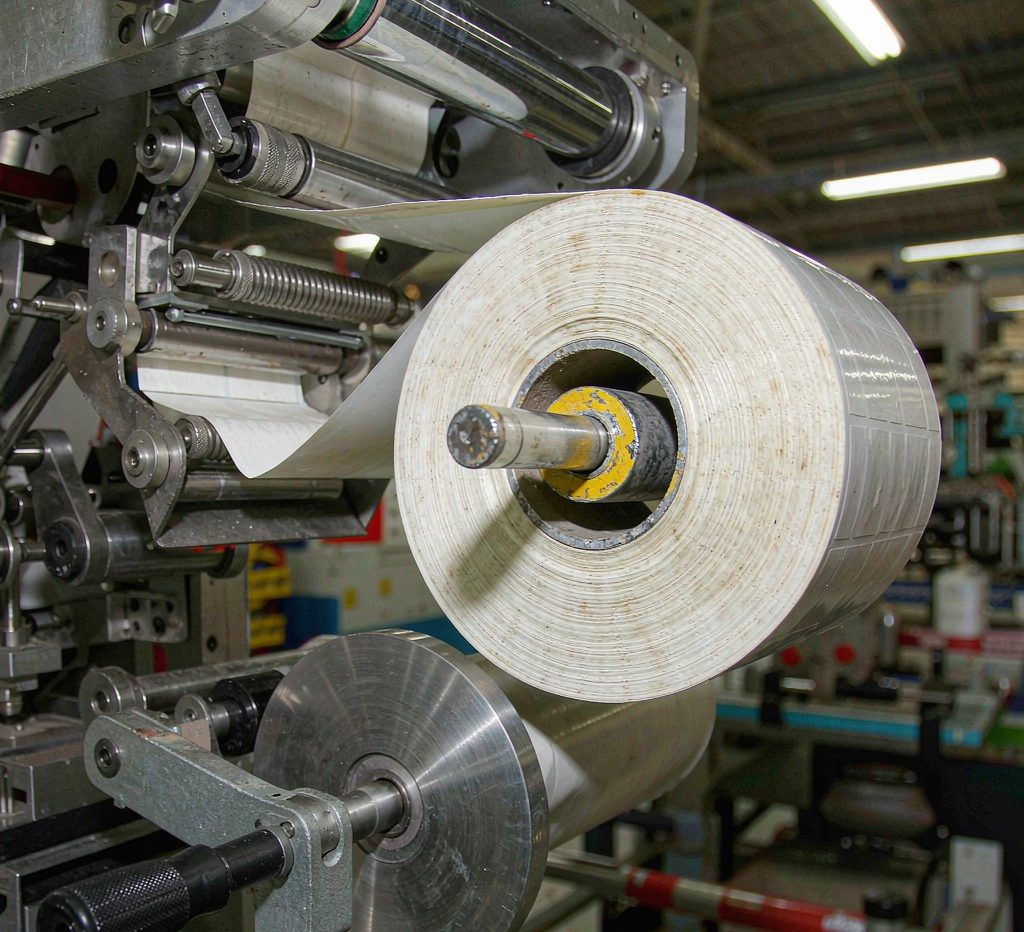
Neither is wrong. It depends on the machine: whether the web leaves from the top or the bottom, and which way the peel plate faces. Fit the wrong one and the label is pressed back into the liner at the peel point instead of being lifted away. It will not run more than a few meters.
How it shows up
The mildest symptom is tracking drift. Tension pulls the wrong way, the liner wanders across the rollers, and the label lands a millimeter or two off. You cannot see it by eye, but it fails inspection.
Next is wrinkling. With the roll reversed, the liner bends the other way around the peel plate and the stress concentrates at the edges, producing lengthwise creases that can tear the web.
More common is the label flipping. Instead of laying flat on the bottle, the peeled label folds back on itself and sticks to the machine with adhesive facing out. On a line running dozens of bottles a minute that means stopping to clean glue off the hardware.
The quietest failure is the sensor. Gap or registration sensors are mounted for a specific web path. Reverse the winding and the signal lands in the wrong place, so the machine either fires blanks or runs labels continuously.
What else belongs on the order
Winding direction is one of several. The same order should state maximum roll diameter, core inner diameter, maximum meters per roll, and how many splices are allowed. Labeling machines have a fixed spindle size, so the wrong core will not mount; an oversized roll hits the housing; too many meters makes the roll heavy enough to wobble as it turns.
Two core sizes dominate: one inch and three inch. The difference looks small until the roll will not fit. Hand application usually takes one inch, automatic lines three inch. Omitting this is a frequent cause of rework.
Then the unwind side. Whether labels leave to the left or the right of the machine, and whether the artwork must be reversed, all hang off the same decision. Customers who specify outside wind but not the exit side still end up with the wrong roll.
The easiest confirmation
Take a roll currently running well, cut thirty centimeters from it, and roll it back up with the liner so the direction is preserved. Send it with the sample request. That beats ten minutes of description in a chat window.
Watch for dual lines as well. A customer running two machines, one taking inside wind and one outside, needs the same order built two ways. Shipped as one batch, half of it will not run.
On a first order Huaishi asks for a length of the label currently in use, or a photo of the roll as mounted on the machine, and confirms winding direction, diameter, core and exit side together before scheduling the run.