

Why Self-Adhesive Labels Fall Off: Four Common Causes
Adhesive layer, surface energy, application temperature and storage conditions explain most label failures. How to test each one before blaming the label.
The affixed self-adhesive labels either warp within a few days after application or detach entirely during transportation, or even fall off with just a gentle touch. Many people encountering such situations tend to attribute it to poor label quality, but this is not necessarily the case. The detachment of self-adhesive labels is mostly related to details such as adhesive layer selection, labeling operation, and usage environment. Identifying the root cause can lead to targeted solutions.
Next, we will analyze the common causes of label detachment in conjunction with daily labeling scenarios. Whether it's labeling food packaging, logistics labels, or industrial equipment, we can identify the root of the problem and avoid making the same mistakes again.
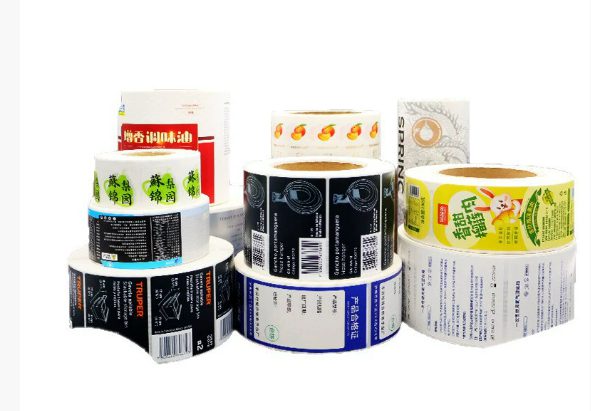
1. The most common issue: the adhesive layer is not properly selected, which leads to easy detachment from the root cause
The key to ensuring labels are securely affixed lies in the adhesive layer. Many people only consider the face material and printing when selecting labels, overlooking the need for the adhesive layer to be compatible with their specific usage scenarios, which is the primary reason for detachment.
1. The viscosity of the adhesive layer does not match the specific scenario: For instance, in low-temperature cold chain environments (such as frozen food and vaccine storage), if ordinary room temperature adhesive is selected, the adhesive layer will become brittle at low temperatures, rendering it ineffective in terms of viscosity, and it will surely fall off once applied. Conversely, if low-temperature resistant adhesive is chosen for room temperature scenarios, although it can be applied, the cost is high and may not be necessary. Additionally, when applying to rough surfaces (such as cardboard boxes or wood-grain boards), using low-viscosity adhesive will not fill the surface gaps, resulting in insufficient contact area and naturally weak adhesion.
2. Selection of incorrect adhesive type: As previously mentioned, there are three commonly used adhesives: acrylic adhesive, hot melt adhesive, and rubber-based adhesive, each with significantly different application scenarios. For instance, if hot melt adhesive is chosen for labeling in outdoor high-temperature environments, the adhesive layer will soften and become sticky at high temperatures, quickly causing the label to warp and fall off. If rubber-based adhesive is used for labeling plastic bottles, it exhibits poor adhesion to plastic substrates such as PP and PE, resulting in inadequate adhesion.
II. Easy to Overlook: If the labeling is not done correctly, even the most effective adhesive will be useless
Even with the right adhesive layer, improper labeling can still cause detachment. Many people, seeking to save time, simply affix the label onto the object, neglecting two crucial steps.
1. The surface of the adherend is not clean: If there is dust, oil, or moisture on the surface of the adherend, the adhesive layer cannot fully contact the surface, which is equivalent to "adhering to impurities". No matter how strong the adhesion is, it will be useless. For example, when sticking labels on sauce bottles, if the bottle body is not wiped clean of oil, the label may appear to be firmly attached, but it will fall off upon vibration; when sticking labels on outdoor equipment, if there is dust on the surface, the dust will fall off over time, and the label will also fall off with it.
2. Label not pressed in place: When applying the label, it is only lightly attached without squeezing out the air trapped in the adhesive layer, resulting in bubbles. This not only affects the aesthetics but also reduces the contact area between the adhesive layer and the adherend. Especially for curved surface labeling (such as round bottles, curved boxes), bubbles are more likely to form. Subsequently, with temperature changes or vibration, the bubbles will burst, causing the label to warp and fall off.
III. Environmental Impact: Temperature, Humidity, and Chemicals Can All Cause Labels to "Malfunction"
After the label is affixed, changes in the usage environment can gradually degrade the performance of the adhesive layer, leading to detachment, a point that is often overlooked.
1. Radical temperature changes: For instance, when a pharmaceutical label is taken out of a refrigerated storage and suddenly placed in a high-temperature environment, the differential thermal expansion and contraction between the label and the adherend can induce stress, gradually "lifting" the label, leading to edge warping and detachment. Outdoor labels, when exposed to intense sunlight during the day and cooled down at night, can experience repeated cycles, causing the adhesive layer to degrade and eventually fail, resulting in detachment.
2. High humidity or damp environment: In a damp environment, moisture can penetrate into the adhesive layer, causing it to soften and decrease in viscosity. For instance, in the storage environment during the plum rain season in the south, the adhesive layer of ordinary paper labels can easily separate from the attached object after absorbing moisture; fresh produce packaging labels may also experience detachment issues when in prolonged contact with condensed water.
3. Contact with Chemical Substances: For instance, labels affixed to cleaning agent bottles or pesticide bottles can corrode the adhesive layer due to residual chemicals on the bottle, disrupting the structure of the adhesive layer and rapidly diminishing its stickiness. In industrial settings, labels can also be corroded and fall off when in contact with engine oil or lubricating oil.
IV. Material and Craftsmanship: Issues with the label itself can also lead to detachment
In addition to the adhesive layer and operation, the label's face material, back paper process, and the processing steps after labeling may also cause detachment issues.
1. Poor adaptability between the surface material and the adherend: For instance, when a rigid PET surface material is applied to a soft and easily deformable hose, the rigid label cannot deform along with the hose when it is squeezed, and it may be "torn off"; conversely, when a soft paper surface material is applied to a hard metal surface, it can be affixed, but it is prone to damage and detachment after prolonged vibration.
2. Improper label die-cutting or lamination: If the die-cutting pressure is too high, it can damage the adhesive layer, leading to decreased tackiness at the label edges and gradual edge lifting. If the lamination temperature is too high, it can cause premature aging of the adhesive layer, weakening its tackiness and making it prone to detachment during subsequent use.
In fact, the detachment of self-adhesive labels is rarely caused by a single factor. Most often, it is a combination of issues such as "incorrect adhesive layer selection + improper operation" or "environmental impact + incompatible material". The solution is not complicated. First, clarify your labeling environment and the surface condition of the object being labeled. Then, select the appropriate adhesive layer. Before labeling, clean the surface and press it in place. This can basically avoid most detachment issues. If you are unsure about the problem or need to customize labels for special scenarios (such as low temperature, high humidity, exposure to chemicals), it is convenient to seek help from a professional manufacturer like Xuzhou Huaishi. They will consider various aspects such as adhesive layer, surface material, and process based on your actual usage scenario, customize an appropriate labeling solution, and provide labeling guidance to ensure the labels are firmly attached, eliminating the need to worry about detachment issues.