

Using Labels With Handheld Scanners: A Practical Guide
Print contrast, barcode size, quiet zone and laminate choice decide first-read rate on handheld scanners. Practical settings for warehouse use.
When many enterprises embark on digital management, the first step is often to introduce scanning guns. However, the actual factor affecting scanning efficiency on-site is often not the device itself, but rather the inconspicuous self-adhesive label.
Scans failing to be recognized, requiring repeated alignment for recognition, and being extremely particular about scanning angles... These issues that plague on-site employees are mostly rooted in the labels, rather than the insufficient performance of the scanning guns.
Instead of struggling with the question of "which scanner is better to use", it is better to first address the compatibility issue of self-adhesive labels - by properly positioning the labels, scanning efficiency will naturally double, and digital management can truly be implemented.
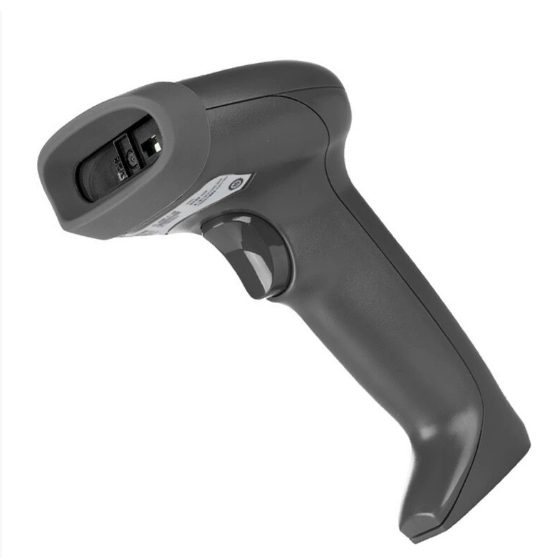
1. Core Understanding: What the scanner recognizes is the quality of the barcode, not the material of the label
Many people mistakenly believe that the scanner reads the label material, but this is not the case: the core of the scanner is to recognize the structural integrity and black-and-white contrast of the barcode. As long as two core conditions are met, recognition is usually smooth and unimpeded:
The black and white contrast is sufficiently clear, without blurring or smearing, and the boundaries between the barcode bars and spaces are distinct;
The barcode graphic is free from deformation, damage, compression, stretching, wrinkling, and other issues.
Once the barcode is compressed, stretched, wrinkled on the surface, or has severe reflection, the recognition speed of the scanner will significantly decrease, or even fail to recognize it. This is also the most common scanning challenge on-site.
II. Barcode Design: Plan the scanning distance in advance to enhance the error tolerance rate
The on-site operation is fast-paced, and employees won't take their scanning guns to slowly adjust angles and find focus. Therefore, during the barcode design stage, it is necessary to adapt to the actual scanning scenario in advance, with a focus on two details:
1. Barcode size: Prioritize adapting to the on-site scanning distance. It's better to be slightly larger than "just enough". If the barcode size is too small, it will directly reduce the effective scanning distance, forcing employees to approach the label repeatedly and significantly slowing down efficiency. Especially in high-frequency scanning scenarios such as warehousing and production lines, appropriately enlarging the barcode size can greatly enhance recognition speed.
2. Blank area: The blank areas on both sides of the barcode (i.e., the quiet zones) cannot be omitted. Many people, in an attempt to achieve a compact layout, position the barcode closely to the label border, which may seem to save space, but in reality, it significantly reduces the scanning tolerance rate. Even a slight deviation in angle can render the barcode unrecognizable.
III. Label Material: Selecting the Right Material to Avoid Scanning Interference
Many enterprises only focus on whether the label "can be attached", but ignore the impact of the material itself on scanning recognition - the surface characteristics of different materials directly affect the barcode recognition experience, especially in complex environments where the differences are significant:
Glossy Film Label: In scenarios such as high-light warehouses and outdoor environments, reflection is highly likely to occur. Scanners are more likely to read the reflected light rather than the actual barcode pattern, leading to recognition failure;
Matte material label: The surface is non-reflective, providing enhanced recognition stability in complex lighting environments such as strong or weak light. It is the preferred choice for most industrial and warehouse scenarios;
Special surface fitting: If the label is attached to a curved or rough surface, the barcode pattern may undergo slight deformation. Even if the barcode itself is clear, it can still slow down the scanning speed. To mitigate the impact of deformation, it is necessary to use flexible surface materials.
IV. Adhesive matching: Only when the pasting is firm can the sweeping be smooth
The adaptability of glue may seem to only affect whether labels fall off, but in reality, it indirectly impacts scanning efficiency. If the glue is not compatible, issues such as edge warping, wrinkling, and partial detachment may occur to the labels after prolonged use.
However, as long as there are local irregularities or edge warping in the barcode, the recognition rate of the scanner will drop significantly; especially in batch scanning and high-speed operation scenarios, this efficiency difference will be infinitely magnified.
Many companies mistakenly believe that the aging and performance decline of the scanner gun is the root cause, but after investigation, it is found that the failure of the label adhesive layer leads to deformation of the barcode structure, which affects the recognition effect.
V. Print Quality: Ensure detailed precision to avoid recognition delays
The edge clarity of a barcode is crucial for determining the scanning speed, and the printing quality directly determines whether the edges of the barcode are regular. This point is often overlooked:
Ribbon mismatch: Incompatibility between the ribbon and the label material can lead to blurry barcode printing, ink layer peeling, and jagged edges;
Insufficient print density: The density is too low, resulting in insufficient contrast between the barcode bars and the spaces, making it difficult for the scanner to distinguish between them;
Print head wear: The aging and wear of the print head can lead to incomplete barcode printing, resulting in issues such as broken bars and blurring.
Often, scanning works normally during office testing, but it frequently stalls during high-speed scanning on-site. The core reason is that the printing quality does not meet the standard and cannot adapt to high-frequency scanning scenarios.
VI. Labeling Position: Select the Right Area to Reduce Operational Internal Friction
The selection of labeling positions directly impacts the scanning angle and efficiency. The following three types of positions should be avoided as much as possible, as they will significantly increase the operational difficulty for employees:
Curved surface position: Barcodes are prone to deformation and difficult to align during scanning;
Seam area: Labels are prone to wrinkling and detachment, and barcodes are susceptible to damage;
Edge position: The barcode is prone to being obscured during scanning, and the edges of the label are susceptible to wear, resulting in incomplete barcodes.
The ideal labeling location is a flat, unobstructed, and easily alignable area, which not only ensures the integrity and deformation-free of the barcode but also allows employees to quickly complete scanning, reducing unnecessary operational inefficiencies. Such details may seem insignificant at ordinary times, but in high-frequency scanning scenarios, they directly affect overall work efficiency.
Conclusion:
The combination of self-adhesive labels and scanning guns is both complex and simple. The core lies in grasping three key points: "clear barcodes, complete structure, and smooth surface".
In most cases, the so-called "scanning gun equipment issues" on site can ultimately be traced back to the label - either due to unreasonable barcode design, improper material or adhesive compatibility, or inadequate printing and labeling details.
Enterprises advancing digital management should not blindly pursue high-end scanning guns. Instead, they should first meticulously and thoroughly adapt self-adhesive labels, which can double scanning efficiency and ensure digital management is truly implemented in every aspect on-site, avoiding detours and pitfalls.