
Multilingual Labels for Cross-Border Compliance
Export labels often need two or three languages plus local regulatory fields. How to fit mandatory wording into limited label area.
In today's era of in-depth development, when a product moves from its domestic market to overseas markets, the first challenge it faces is often not logistics or tariffs, but the barrier-free transmission of information. Multilingual self-adhesive labels have become the core medium to address this challenge.
As a direct carrier of product information, self-adhesive labels play a crucial role in multilingual cross-border scenarios. They are not only the compliance "passport" for export enterprises to meet the regulations of various countries, but also the "interpreter" that eliminates doubts among users of different languages and enhances the international professionalism of brands. From the stringent requirements of the 24 official languages of the European Union, to the mandatory labeling in Arabic in the Middle East, and to the complex market with a mix of multiple languages in Southeast Asia, how to scientifically arrange multilingual information on a small self-adhesive label, taking into account both compliance and readability, has become a core issue that all enterprises expanding overseas must overcome, and it is also the key to the application of multilingual self-adhesive labels.
Many enterprises expanding overseas mistakenly believe that multilingual labeling is an "optional feature," but in reality, it is a "must-have" for cross-border compliance. The core reasons for this are mainly focused on two aspects: mandatory legal and regulatory requirements, as well as user experience and safety responsibilities. Major global economies have clear and strict regulations regarding the labeling language of imported products. The European Union requires the use of the official language of the member country where the product is sold, such as French for French websites and German for German websites. Failure to comply may result in the product being removed from sale. Canada mandates bilingual labeling in English and French, with both languages having the same font size, and no distinction between primary and secondary languages. In the Middle East, countries such as Saudi Arabia and the United Arab Emirates require mandatory labeling in Arabic, usually placed in the most prominent position to ensure clear identification by local users. Even for Chinese export products, according to the "Product Quality Law," labeling in Chinese is required for products that are exported and then sold domestically or for specific categories, to ensure domestic compliance.
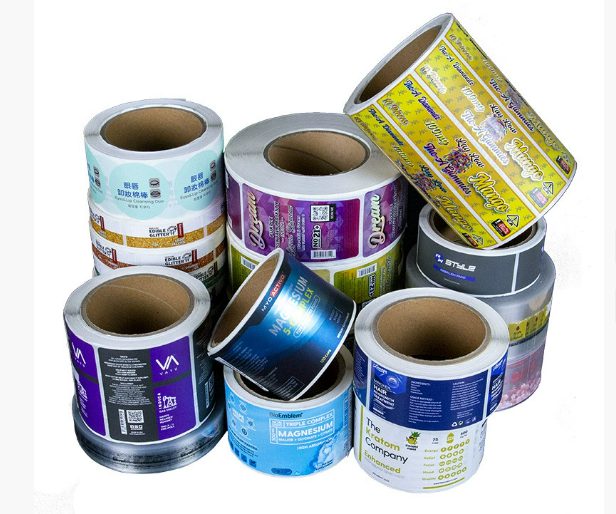
From the perspective of user experience and safety responsibility, the importance of multilingual self-adhesive labels cannot be overlooked. For categories such as electrical appliances and chemicals, incorrect language labeling may lead to user misoperations, which in turn can trigger safety accidents and pose potential safety hazards. Clear multilingual instructions and warning information can significantly reduce the volume of overseas customer service inquiries and product return rates, thereby lowering after-sales costs for enterprises. Furthermore, label details that align with local language habits can directly demonstrate the brand's respect and sincere commitment to the local market, enhancing the brand's trustworthiness in overseas markets and laying the foundation for the brand's globalization strategy. This is also the core value of multilingual application of self-adhesive labels.
Accommodating multiple languages on a limited label area requires a balance between compliance and readability, posing a significant challenge to label layout design and printing technology. Based on different overseas scenarios, we have summarized three core design strategies for multi-language self-adhesive labels that are suitable for various product packaging needs.
The first is the layered folding label strategy, which is suitable for scenarios where the instruction manual is lengthy, involves more than three languages, and the packaging space is extremely limited, such as medicine bottles and small-package cosmetics. When unfolded, this label can reach 6-8 pages, easily accommodating complete information in dozens of languages. When folded, it remains compact in size and does not detract from the overall aesthetic of the product packaging. Technologically, it is important to focus on selecting highly flexible face materials, such as thin PET or specialty paper, to ensure that the label does not break or delaminate after repeated folding; the glue must have strong initial adhesion to prevent it from springing open after folding, which could affect the user experience.
The second approach is the parallel layout strategy by sections, which is suitable for scenarios with fewer language types (2-3) and ample packaging space, such as product outer boxes and large equipment nameplates. The advantage of this layout method is that all language information is immediately clear at a glance, eliminating the need for users to manually fold or unfold, offering exceptional convenience. During design, different language areas can be clearly distinguished through dividing lines or different background color blocks, supplemented by national flags and language codes (EN/FR/DE, etc.), to assist users in quickly locating the language they are familiar with. The layout must follow the conventional reading logic of "from left to right" or "from top to bottom". Important warnings and core information need to be bolded in each language to highlight key points and avoid safety risks.
The third approach is the variable data printing strategy, which is suitable for scenarios where the same product line is sold to multiple countries and requires flexible switching between language versions. Its core advantage lies in eliminating the need for separate plate making and printing for each country. By utilizing digital printing technology to switch label content in real-time, it achieves "one roll of labels, global use," significantly reducing printing costs and inventory pressure for enterprises. Technologically, it requires the support of high-resolution inkjet or thermal transfer technology to ensure that small font sizes and multiple languages remain clear and sharp, without blurring strokes or garbled characters, thereby guaranteeing accurate information transmission.
In the design and application process of multi-language self-adhesive labels, many companies are prone to falling into certain pitfalls, which can lead to compliance risks or usage issues. Here, we have compiled three common errors and their avoidance strategies to help companies mitigate risks.
The first common mistake is inconsistent font size. In bilingual or multilingual labels, if the font size of one language is too large and that of another is too small, it may violate local legal requirements for "equivalent prominence". For example, in Canada's bilingual English-French labels, any inconsistency in font size may lead to customs detention risks. The countermeasure is to strictly comply with the regulations of the target country, ensuring that key information such as ingredients and warnings are consistent and legible in all language versions, without any primary and secondary differences.
The second error is text overflow and truncation. The length of text in different languages varies greatly. For example, translating "Warning" into German as "Warnung" will make it longer, and translating it into Chinese as "Warning" will make it shorter. Arabic is written from right to left, and the layout logic is completely different from Chinese and English. If sufficient space is not reserved during design, text overflow, truncation, or line breaks are prone to occur. The solution is to reserve 30% of flexible space for each language during design, and use professional typesetting software that supports multiple character libraries to accurately adapt to the writing logic of different languages, avoiding problems such as garbled characters and text truncation.
The third mistake is neglecting cultural taboos and symbol differences. Cultures and customs vary across different countries and regions. Certain icons or colors commonly used domestically may be taboo overseas. If directly adopted, they may provoke resentment from local users and even violate local regulations. The countermeasure is to conduct localization review before finalizing the label. This involves not only checking the accuracy of the translation but also confirming the cultural adaptability of icons, colors, and symbols to ensure that the label aligns with the cultural habits of the local market.
Multilingual labels are typically characterized by dense text and small font sizes, posing higher demands on printing precision and material durability. The choice of material and craftsmanship directly determines the long-term legibility of multilingual information and serves as a crucial guarantee for export label compliance. It is recommended to use high-gloss PET or synthetic paper for the face material. These materials have a smooth surface, suitable for high-density small-character printing, and possess waterproof and oil-resistant properties, enabling them to adapt to complex environments such as humid and high-temperature conditions during sea transportation. This prevents labels from becoming damp, damaged, and resulting in illegible information.
The printing method can be selected based on batch requirements. For large-scale production, flexographic printing combined with high-definition dot matrix is suitable, offering stable color and high printing accuracy, capable of accurately presenting small-font foreign languages. For small batches and multiple versions, digital printing is preferred, allowing for flexible switching between language versions and reducing production costs. The ink should be high-contrast resin-based thermal transfer ribbon or UV ink, ensuring that the fine strokes of foreign languages do not break or smudge, while also improving barcode recognition rates and adapting to overseas automated scanning equipment. Additionally, it is recommended to add matte or glossy BOPP laminating to prevent small-font blurring caused by friction during transportation, extending the lifespan of the label and ensuring clear and readable multilingual information throughout the entire process.
With the development of digital technology, multi-language self-adhesive labels are evolving from "static display" to "dynamic interaction". Intelligentization and dynamization have become the core development trends in the future, further breaking down language barriers and facilitating enterprises' globalization layout.
The "one label, multiple languages" QR code is a widely adopted intelligent solution. The label retains only the core graphics and QR code. After scanning, users can automatically jump to the corresponding electronic manual page based on their phone system language. This not only solves the problem of limited label space but also achieves unlimited language expansion, adapting to multiple countries and languages. The AR (Augmented Reality) label goes a step further. Users can scan the label with their phone camera, and the operation video or 3D demonstration in their native language will be directly superimposed on the screen, intuitively conveying the product usage method and completely breaking the language communication barrier.
Furthermore, the rise of blockchain traceability multi-language labels has emerged, combining blockchain technology with user-friendly scanning of labels to access multi-language authentication information such as product origin and quality inspection reports, enhancing the credibility of cross-border products and aiding enterprises in building trust for their overseas brands. These intelligent upgrades make the application of multi-language self-adhesive labels more flexible and efficient, providing overseas enterprises with a more comprehensive solution for compliance and promotion.
Language knows no boundaries, yet labeling speaks volumes. Within the confines of a self-adhesive label, lies the ambition and sincerity of a company's global expansion, as well as the core carrier for export label compliance. An excellent multilingual labeling solution is not merely a mere accumulation of words, but a perfect fusion of compliance strategies, design aesthetics, and printing techniques. It is the ultimate embodiment of the value of multilingual self-adhesive labels.
For enterprises expanding overseas, investing in a professional multilingual self-adhesive label solution is akin to dressing their products in a suitable "international suit". It enables users worldwide to understand the "voice" of the product, allows the enterprise to navigate risks in the complex global compliance environment, and enables the brand to thrive in a borderless market. This truly achieves precise transmission of multilingual information, empowering the enterprise's global development.