

Multilingual Compliance for Cross-Border E-commerce Labels
Marketplace and customs requirements for cross-border labels. Language fields, importer details, warning statements and how to keep layout workable.
In the entire supply chain of cross-border e-commerce products, product quality and supply chain efficiency have always been the core focuses for merchants to control. However, seemingly unremarkable self-adhesive labels frequently become a key obstacle to customs clearance and a hidden risk point that most cross-border merchants tend to overlook. The frequent issues of product returns and customs seizures in the industry are often not due to quality defects in the products themselves, but rather non-compliant labels, which can lead to delays in logistics timelines, additional storage and return costs, and in severe cases, damage to the store's account reputation and missed business opportunities in the target market. A small self-adhesive label is associated with the compliance capabilities of the entire cross-border trade process and is the core prerequisite for smooth customs clearance and the smooth landing of products in the end market.
Cross-border e-commerce spans various countries and regions globally, where regulatory policies and product labeling standards vary significantly. The compliance threshold for self-adhesive labels is much higher than that for domestic e-commerce. Any slight negligence by merchants in practical operations can lead to various pain points, ultimately resulting in failed customs clearance. The most common issue is non-standard multilingual labeling. Many merchants directly adopt domestic label templates and simply add English translations, which not only fails to meet the official language requirements of the target market but also is prone to translation errors, grammatical mistakes, or blurry fonts and chaotic layouts, completely failing to comply with the labeling standards of local regulatory authorities. Secondly, missing or incorrect certification labels are a concern. Different target markets have clear and rigid requirements for product admission. Omitting core certifications such as CE, FCC, UKCA, or using expired or invalid labels will be directly judged as non-compliant by customs. Furthermore, incomplete key information on labels and incomplete content are also common problems. Failing to fully indicate product information, production qualifications, safety warnings, origin information, etc., cannot meet the local market circulation and regulatory requirements, thus leading to customs clearance obstacles.
To fully mitigate the compliance risks associated with cross-border e-commerce self-adhesive labels, it is crucial to precisely grasp the core labeling requirements of different target markets. This involves standardization and refinement around three core dimensions: multilingual specifications, certification labeling, and information completeness. Multilingual labeling is a fundamental compliance threshold; relying solely on English may not be sufficient for global markets. It is imperative to strictly adhere to the regulatory rules of the target market. In the European Union, labeling must be synchronized with the official languages of the corresponding member states. In regional markets such as Southeast Asia, Japan, Korea, and Latin America, labeling must be accompanied by the local common language. The translation must be precise and rigorous, fully covering core modules such as product name, specifications, and instructions for use. It is essential to avoid direct translation errors and ambiguous expressions. Additionally, the font must be clear and legible, strictly adhering to local labeling size and layout specifications to prevent issues such as ambiguity, errors, omissions, and inverted information.
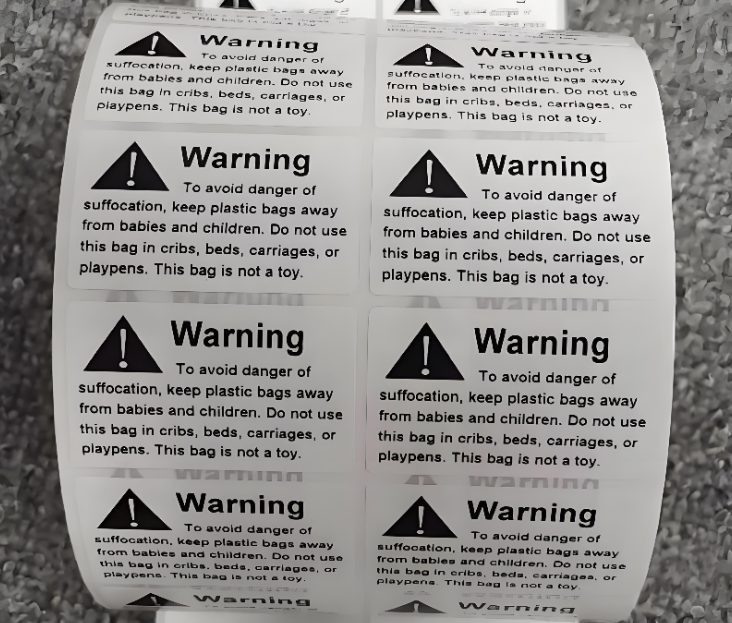
Certification marks must accurately correspond to the target market and must not be blindly applied. Goods circulating in the EU region must be marked with CE certification, electronic products exported to the United States must be accompanied by FCC certification, and the UK market requires the addition of UKCA certification. For special categories such as food, beauty and cosmetics, maternity and baby products, additional local health and safety-related special certifications must be marked. The size, placement, and printing clarity of certification marks have clear implementation standards, and they must not be arbitrarily reduced, obscured, or tampered with. The completeness of label information is also crucial and requires complete marking of basic product information, manufacturer qualifications, origin, shelf life, safety warnings, usage restrictions, etc. For special categories, additional special information such as ingredient lists and compliance numbers must be provided. All content must be authentic and effective, fully comply with local laws, regulations, and industry standards, and ensure that there are no abnormalities during customs inspection.
In combination with the core requirements of cross-border e-commerce, such as multiple versions, small batches, and high flexibility, and in accordance with regulatory requirements, targeted self-adhesive label solutions can be implemented, balancing compliance, practicality, and production efficiency. Variable data label printing technology is preferred, as it can flexibly adapt to multi-language, multi-version, and differentiated labeling needs. The same batch of goods can quickly switch between different languages and different certification templates without the need for repeated plate making, significantly shortening the production cycle and perfectly adapting to the cross-border e-commerce operation model of multiple categories, small batches, and fast order processing. Coupled with digital printing technology, there is no need for plate making for mass production, and small batch customization and proofing are supported. This not only meets the needs of merchants for trial orders and small-scale shipments but also avoids label inventory backlog, while ensuring printing accuracy, making multi-language text and certification labels clear and sharp, resistant to friction, and not prone to fading or peeling, suitable for long-distance sea and air transportation and warehousing environments in cross-border operations.
Label printing quality must be strictly controlled. It is advisable to prioritize the use of surface materials with strong weather resistance and specialized adhesives to ensure that labels do not exhibit issues such as curling, peeling, blurring, or fading during long-distance cross-border transportation and complex storage environments. This ensures that the labels remain intact and legible upon arrival in the destination country, while also meeting customs clearance and terminal sales display requirements. For special categories of products and overseas markets with high compliance requirements, it is recommended to engage professional cross-border label service providers in advance to complete label compliance audits. Each module, including language standards, certification labeling, and information completeness, should be carefully checked to eliminate compliance loopholes at the source and reduce customs clearance risks.
In the practical operation of cross-border e-commerce self-adhesive labels, it is essential to resolutely avoid three major core misconceptions, as failure to do so can easily lead to customs clearance failures. Do not directly apply domestic label templates for export, as there are significant differences in labeling standards, language requirements, and compliance terms between domestic and overseas markets. Simple modifications cannot meet overseas regulatory requirements. Do not overlook the exclusive certification marks of the target market, as certification is the core credential for goods to gain overseas access. Missing, incorrect, or expired certification will directly result in goods being detained and returned. It is imperative to avoid incomplete label information and ambiguous content. The core of compliant labels lies in complete and clearly verifiable information. Any missing or incorrect key information on the label can become an obstacle to customs clearance.
In the current increasingly competitive cross-border e-commerce industry and the increasingly stringent global trade regulations, cross-border e-commerce self-adhesive labels have evolved beyond being mere carriers of product information. They now directly reflect a company's compliance capabilities and risk management abilities. Drawing from relevant research and official technical guidelines in the field of cross-border packaging compliance, general implementation standards can be referenced in actual operations: for exports to the European Union, it is priority to ensure the completeness of CE marking and bilingual labeling, in accordance with EU packaging and labeling regulations; for exports to the United States, ensure FCC certification and English compliance information, in compliance with the Federal Communications Commission and consumer product packaging labeling specifications; for markets in Japan, South Korea, and Southeast Asia, confirm local mandatory labeling items in advance, aligning with regional trade packaging standards; for special categories such as food, daily chemicals, and electronics, complete label filing and recycling compatibility testing in advance, meeting full-chain compliance control requirements. Only by accurately adapting to the language norms, certification requirements, and information standards of the target market, selecting flexible and efficient customized printing solutions, and avoiding various practical pitfalls, can we create compliant, high-quality self-adhesive labels that are suitable for cross-border scenarios, ensuring smooth customs clearance of goods, reducing logistics losses and return losses, and assisting cross-border merchants in steadily expanding their global markets and achieving efficient and compliant operations.