

Synthetic Labels Do Not Tear, So Why Come Back
Synthetic stock is strong, but adhesion, die-cut quality and print durability still fail in use. Three return reasons that have nothing to do with tearing.
A customer insists on labels that cannot be torn, switches to synthetic stock, and comes back complaining that the labels will not sit flat and the edges lift. It happens a few times a year. Synthetic paper is not an upgraded coated sheet. It is a different material with a different temperament.
What synthetic stock actually is
The common grade is PP synthetic paper, polypropylene resin stretched into film with microvoids formed inside, bringing density down to between 0.6 and 0.8, lighter than water. Thickness usually runs from 80 to 250 microns, and the surface carries a coating because ink will not key to bare resin. PET is the other option: harder, more heat resistant, dimensionally more stable, and more expensive. Neither has a fibre structure, which is exactly why they neither tear nor disintegrate in water.
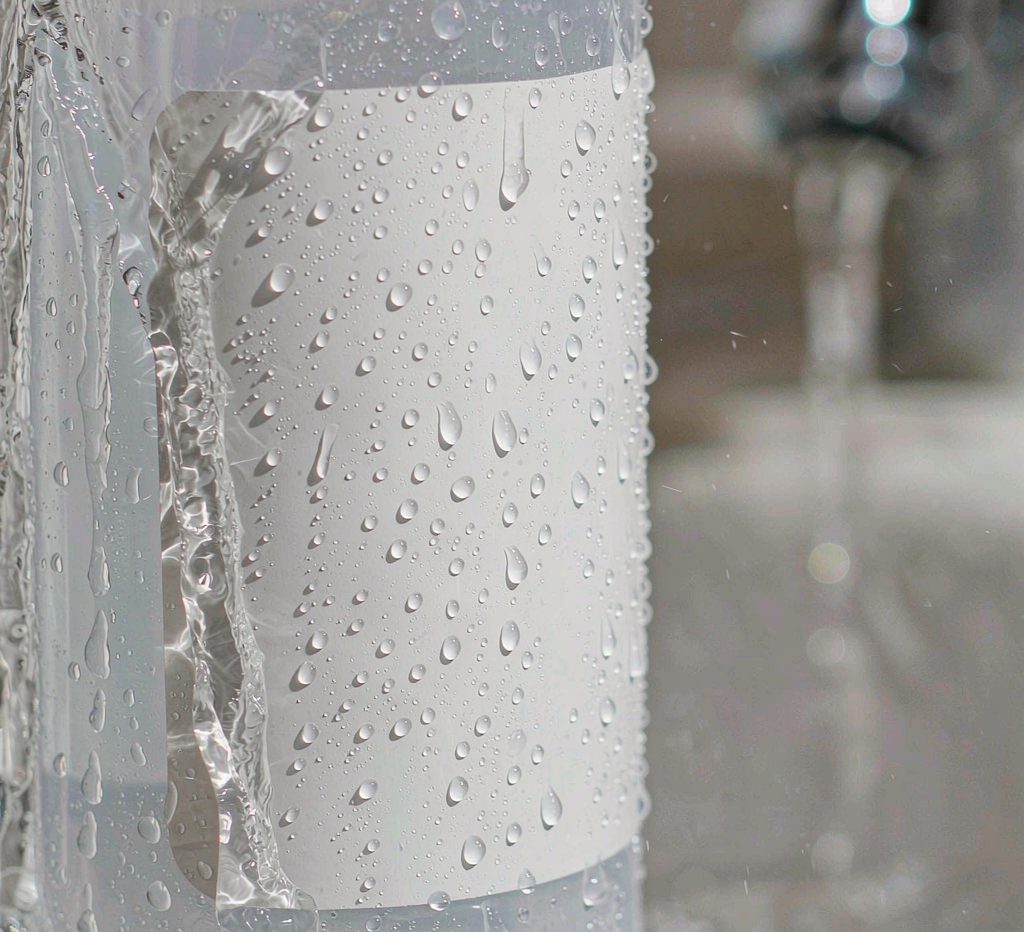
The first side effect is memory
Not tearing has a price: the film remembers its original shape. A paper label bent around a curve has its fibres crushed and stays there. Synthetic film bent into an arc springs back toward flat as soon as the constraint eases. On small diameter bottles, or over a curved shoulder, the outer few millimetres lift first. Below about 40 millimetres in diameter the effect is pronounced.
The second is stiffness
Synthetic stock is stiffer than paper of the same caliper. On an automatic applicator the label leaves the peel plate and travels on its own inertia, and a stiff label in flight is harder to control, especially when small. It drifts and lands crooked. Manual application does not care, because a hand can press anything down. Stiffness also means the applicator roller has to work harder to wet out the adhesive.
The third shows up in printing and finishing
Film has low surface energy, so UV ink keys less firmly than on coated paper and needs corona treatment or a primer. Die cutting is harder because the material is tough: the blade does not sever cleanly, matrix stripping takes more effort and edges string. Foil stamping needs a low temperature foil. None of this is impossible, but the process window is narrower and the cost is higher.
Where it is genuinely the only answer
Long term water contact, oils and chemical solvents, outdoor sun and rain, repeated wiping, tear resistance or tamper evidence: paper cannot do these. Shampoo and body wash bottles, oil canisters, chemical drums, outdoor equipment plates and garden machinery are the classic applications.
The test is simple. Ask whether the label will meet liquid over its life. If yes, use synthetic or PET. If not, coated paper with a laminate is usually cheaper and sits flatter.
If you do specify it, pick carefully
Go thinner. Film between 80 and 100 microns performs noticeably better on curves than 150 microns and above, unless high stiffness is the point. Increase adhesive coat weight, because film memory needs a thicker adhesive layer to absorb stress. Choose a soft, high tack adhesive rather than a hard one, since it flows into micro texture and curvature. And keep a 2 to 3 millimetre unprinted border so the adhesive has a continuous bonding margin.
One point gets missed often. Film absorbs no water, so condensation stays trapped between adhesive and bottle. The bottle surface must be dry before application, and the labelled goods should stay out of the cold store for the first 24 hours.
Storage matters as well. Film absorbs nothing, so any moisture that gets between liner and label in the warehouse stays there and shows up as bubbles or lifted patches at application.