
Vials Are Tiny: How Do You Get a Label On and Still Legible
A 2 ml vial is only 16 millimetres across, a 50 millimetre circumference. Name, batch, expiry and barcode all have to fit, so stock and application change.
A 2 millilitre vial measures roughly 16 millimetres across, which gives a circumference of about 50 millimetres. A 5 millilitre vial is larger at 22 millimetres, so about 69 millimetres around. That number decides how much information fits, and how hard the label is to apply.
Work out the area first
Wrap the full circumference and a 2 millilitre vial offers 50 millimetres of width and 25 of height. Allow margins top and bottom and the usable area falls under 40 by 20 millimetres. Product name, strength, batch number, expiry, manufacturer, approval number and a UDI barcode all compete for that space, and type height drops below 1.5 millimetres quickly. A press can print it. A human eye and a scanner may not read it.
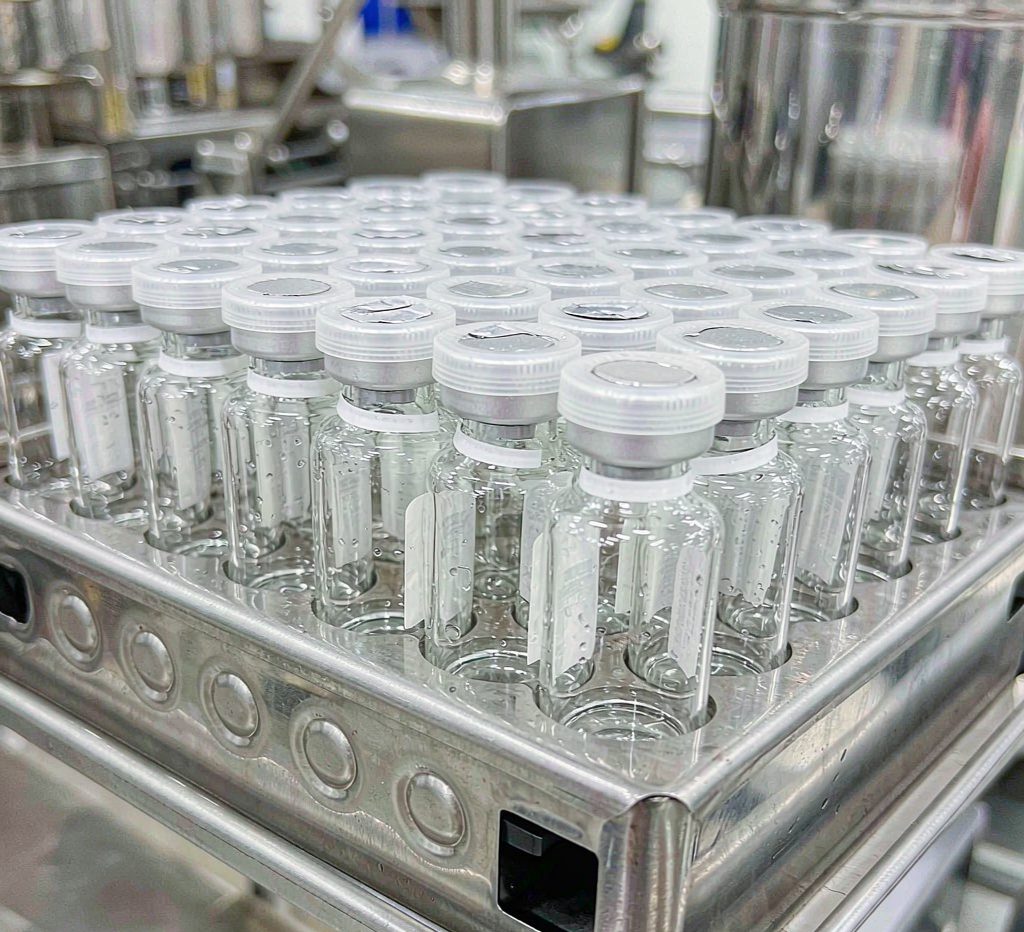
The usual answer is not smaller type but more area. Extended text labels, printing on both faces, and a wrap that overlaps slightly all multiply the usable surface. Booklet labels open to three or four panels so the patient leaflet prints inside the label itself, which is standard practice for injectables.
Three physical problems of a small diameter
Curvature. At 16 millimetres the radius is 8 millimetres, so the label is bent into a tight ring. Paper based stock carries restoring stress and fights back toward flat, which lifts the edges, especially at the overlap. Thin face stock sits better here, and 60 to 70 gsm coated paper often outperforms 80 gsm.
Application method. A roller touches only a line on a vial, so pressure is wildly uneven. These bottles are usually labelled by roll-on or blow-on, where the bottle rotates and the adhesive does the work rather than mechanical pressure. Initial tack therefore matters more than ultimate peel strength, and the adhesive should be chosen on tack.
Cleanliness. Pharmaceutical lines run in cleanrooms, and label rolls are wiped down before entry. Paper generates dust and film does not, so synthetic stock has an advantage in that environment.
What sterilization demands
Many injectables go through terminal sterilization. Moist heat at 121 degrees Celsius for 15 to 30 minutes is common, and the label must not distort, lift or discolour under it. Standard permanent adhesives soften and flow at that temperature, so a high temperature grade is required. Ethylene oxide runs cooler but demands chemical compatibility from ink and adhesive, with no residual odour afterwards. Irradiation affects materials less, though some face stocks yellow.
Which method and which parameters apply depends on the product process. The label supplier needs that information to specify material, and guessing produces rework.
What acceptance looks like
Three checks after labelling. Visual inspection for lifted edges, usually with a limit of one millimetre. Three scans with a barcode reader at the standard distance, looking for first-time reads. And a post-sterilization check of colour and adhesion. Passing those three is enough to start production.
One item gets overlooked: bottle cleanliness. Vials are washed and depyrogenated before filling, and any silicone oil or detergent residue left on the glass will defeat the adhesive. When a whole batch lifts, inspect the washer before changing adhesive.
Barcode space is the tightest constraint
A UDI mark on a vial is usually a Data Matrix, and the symbol needs a clear quiet zone around it or a scanner will not decode it reliably. On a 16 millimetre vial the printable height is limited, so symbol size and type height compete for the same few millimetres. Shrinking the symbol to fit raises module density, which pulls down the grade a verifier reports, and a low grade fails a customer audit even when the code is technically present and correct.
The practical answer is to move the barcode to a second panel or an overlap flap, and keep the front face for text a nurse can read under pressure.