Pet Food Labels Carry More Than Human Snacks Do
The dense panel on the back of a pet food bag follows different rules from human food, and the label has to survive oil, scratching and cold.
Pick up a bag of dog food and turn it over: ingredients, guaranteed analysis, feeding guide, life stage, net weight, manufacturer and address, packed into a dense block. The information load matches a human snack, but the rules behind it are a different set.
There is no nutrient reference value
Prepackaged human food carries a nutrition panel with energy, protein, fat and carbohydrate against a reference intake percentage. Pet food uses a guaranteed analysis instead, listing crude protein, crude fat, crude fiber, moisture and ash as minimums or maximums rather than measured averages.
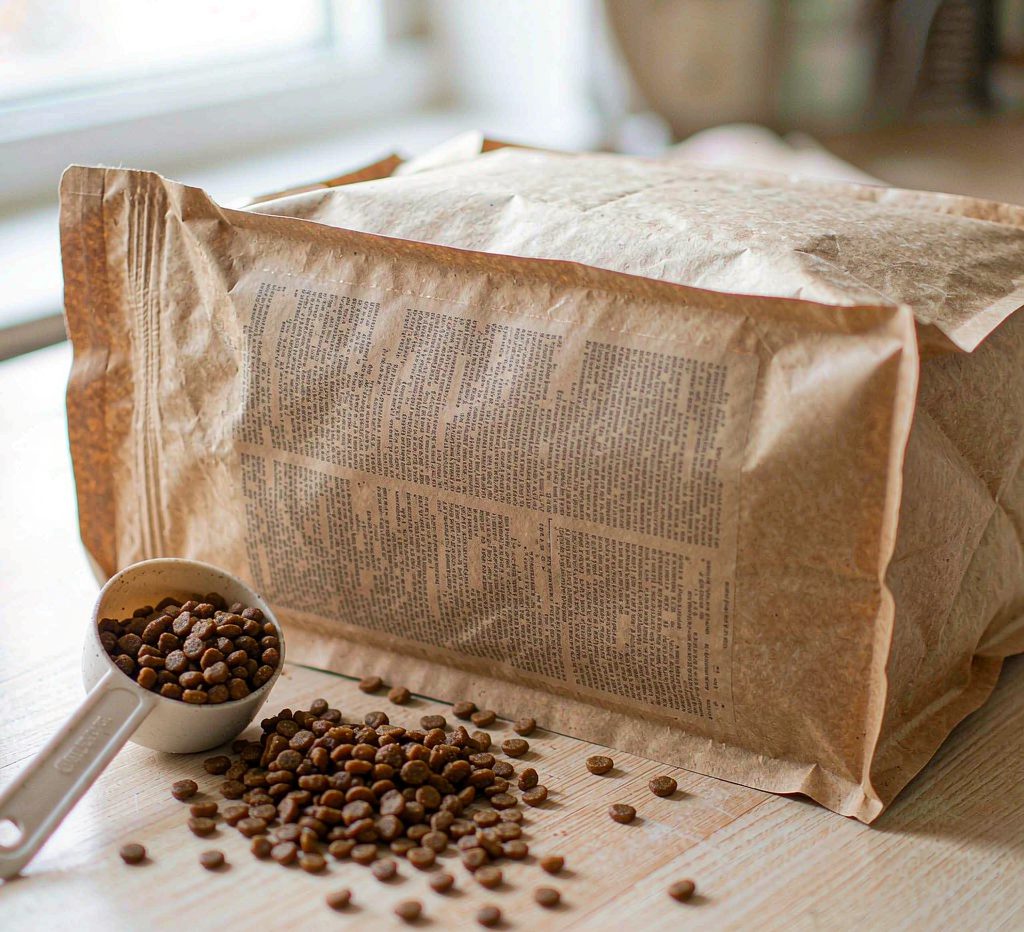
The point is a promise: the protein in the bag will not fall below the stated figure. That means the numbers on the label have to match the test report, and when a label is revised the report has to be updated with it.
The life stage must also be declared. Puppy, adult or all life stages carry different nutritional expectations, and the wrong claim is a labeling nonconformity. Prescription diets run on another set of rules entirely and usually sell through restricted channels.
The material has to survive three things
First, oil. Extruded kibble is coated in fat, the inside of the bag turns greasy, and a label with poor oil resistance lets the adhesive be penetrated, lifting at the edge and then peeling away. Those jobs need an oil resistant adhesive, or a split design where the information panel is printed on the bag and only a small seal label is applied.
Second, abrasion. Bags are picked up and put down on shelves, then squeezed and rubbed in warehousing and delivery. The face stock has to resist scuffing, which makes a matte film a better choice than coated paper; coated paper whitens and loses ink after a few passes, and a smeared information panel is unreadable.
Third, cold. Fresh and raw pet food moves through a cold chain, and the label has to stay flexible and bonded at minus eighteen. That is the same material family as cold chain labels for food, only smaller and denser.
E-commerce raises the bar
Pet food sold online goes through sorting, compression and drops. A label sitting on a folded corner takes repeated flexing and cracks first. Keeping the label off the fold and on a flat panel does more than paying for a tougher material.
Then there is printing. Small brands, custom mixes and trial packs often print batch and flavor on demand, which makes thermal transfer labels cheaper than pre-printing. Those labels need sharp print and good rub resistance, which comes down to matching ribbon and face stock.
Shelf life adds another constraint. A bag can sit in a warehouse for a year before it sells, and the label has to hold both its print and its adhesive for that long through whatever temperature the warehouse reaches in summer.
Two things to watch
Nothing on the panel is optional. Each item answers a regulatory requirement, and a missing one can get a shipment rejected at the channel's goods-in check. Customer artwork regularly arrives without a life stage or a manufacturer address, so the panel is checked before layout begins.
Version control matters too. Change a formula and the guaranteed analysis changes, so the label has to be remade. For pet food customers Huaishi prints the version number at the tail of each roll, so goods-in can tell which revision a carton holds and old labels do not end up on a new formula.