

Liner Caliper: What Decides Dispensing
The liner never touches the product, yet it controls dispensing and matrix stripping. Caliper follows from application method and label size.
Everyone studies face stock and adhesive, and the liner comes up last. Yet poor dispensing, ragged matrix stripping and drifting webs trace back to it about half the time.
The liner does three jobs
It carries the face stock and keeps it flat through production and shipping. It isolates the adhesive with a silicone release layer so the label can be peeled. And it provides stiffness, so the label leaving the peel plate still holds its shape on the way to the product. That third job is the one people forget, and it decides whether an automatic line runs smoothly.
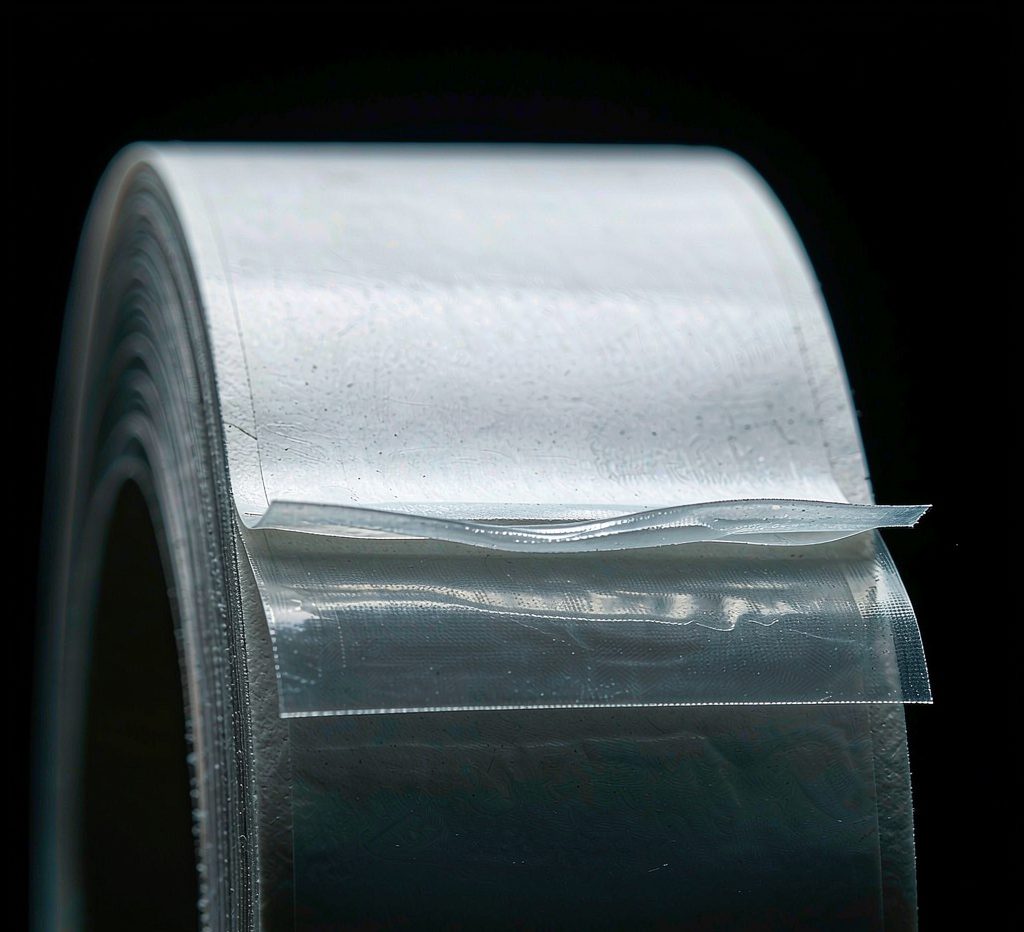
Three liners you will meet
Glassine is the default, commonly 60 to 90 gsm, supercalendered to a dense smooth surface that die cuts accurately at low cost. CCK is a coated kraft with a clay based coating, calendered afterwards, giving better smoothness and more consistent release than glassine, which suits high speed die cutting and fine detail. PET release film comes in 50 and 75 micron grades, is dimensionally stable, ignores humidity, tolerates heat, and costs the most.
What stiffness changes
Too thin and the label buckles as it leaves the peel plate, small labels curl immediately, and the line reports a missing label. Too thick and peel resistance rises, the label leaves faster and its flight is harder to control, so it sits badly on small diameter bottles. Heavier is not better; caliper has to match label size and application method.
As a rule, small labels, high line speed and small bottle diameters call for a thinner liner, while large labels, manual application and a need for flatness allow a heavier one. Glassine at 60 to 70 gsm with small labels, and 80 to 90 gsm at conventional sizes, is the usual pairing.
Humidity changes paper liners
Paper liners absorb moisture and grow. In a humid season, with workshop humidity above 80 percent, glassine takes up water, stretches in the machine direction, and both die cut register and print register drift. PET film absorbs nothing and stays dimensionally stable, which is why precision work and humid regions lean toward PET. Store rolls near 50 percent humidity and let them condition in the pressroom for 24 hours before running.
Three checks before switching liner
First, can the machine take it. Some web paths are designed around a specific liner caliper, and a heavier one jams. Second, does the release force still match. Changing liner usually changes release force, and dispensing settings tuned for the old one have to be redone. Third, reset die pressure. Different caliper means different cut depth, and getting it wrong leaves either an uncut label or a scored liner. Confirm those three before a bulk switch and you avoid reworking a whole batch.
Three symptoms that point at the liner
Curl at the peel plate and small labels blown off course point to a liner that is too thin for the weight of the label. A liner cut through during die cutting, with the web breaking at the rewind, points to a thin liner or excessive blade pressure. Labels that wander left and right after release on a high speed line point to uneven release force across the web, which usually means a coating problem rather than a caliper one. Swapping in a roll of the same specification confirms which case you have, and that test costs almost nothing compared with blaming the machine and stopping the line for a service call.
Confirm the web path clearance at the same time, since a heavier liner changes what the machine will accept.