

Why Brands Pay Three Times More for Digital Label Printing
Digital printing costs more per square metre, yet short runs, versioning and faster proofing can make it cheaper per order. Where the maths turns.
In the label printing industry, there is a phenomenon that has puzzled many traditional printing factory owners: the unit price per sheet for digital printing is three times higher than that of traditional offset printing. However, more and more brand owners are unhesitatingly abandoning offset printing and frantically switching to the "one-sheet minimum order quantity" model of digital printing. Many traditional factory owners cannot figure it out: with offset printing having a lower unit price and a mature production system, how can orders gradually shift to digital printing factories? In fact, the core issue is quite simple: what you calculate is simply the "manufacturing cost", while what brand owners calculate are the invisible "comprehensive hidden costs". This is also the key to digital printing's breakthrough.
In our years of involvement in the printing industry, we have encountered numerous factories that adhere to traditional offset printing. Most of them have fallen into the cognitive trap of "unit price supremacy," believing that by driving down the unit price of offset printing, they can retain customers. However, they overlook the fact that the demand in the current consumer market has already shifted. Brands are no longer facing the old model of "mass production and long-term inventory," but rather the new demands of "rapid iteration, precise cost control, and flexible response." The core advantage of digital printing precisely addresses these pain points, which explains why brands are willing to pay three times the unit price.
For brand owners, the most attractive aspect of digital printing lies in the temptation of "zero inventory", which is backed by a significant reduction in hidden costs. Traditional offset printing is limited by its process, with a minimum order quantity often exceeding 10,000 pieces. When many brands launch new products, they face the uncertainty of trial sales - if the new product fails in trial sales, these 10,000 labels will become waste paper, not only wasting printing costs, but also incurring additional costs for subsequent storage, stacking, and disposal. When these costs are added up, they often outweigh the benefits. Digital printing, on the other hand, completely breaks the minimum order quantity constraint, achieving "one-piece minimum order, on-demand printing". Brand owners can "print as much as they sell", even if it's just a few hundred or tens of pieces, and still deliver efficiently.
We have previously served a brand specializing in milk tea ingredients. Previously, they used traditional offset printing for product labels, with a minimum order quantity of 10,000 pieces. Last year, they launched three new products for trial sales, of which two had poor sales, resulting in the scrapping of over 20,000 labels. The cost of printing, warehousing, and scrapping alone amounted to nearly ten thousand yuan. Later, they switched to digital printing, printing only 2,000 pieces for the trial sales of new products and reprinting in real-time based on sales volume. This not only avoided inventory backlog but also saved nearly 60% of hidden costs. For the brand, digital printing may seem expensive per piece, but when accounting for hidden costs such as inventory and scrap, the total cost of ownership (TCO) is actually lower than offset printing. This is the most cost-effective choice.
The current "explosive growth of SKUs" in the consumer goods market has further amplified the advantages of digital printing, which is also the core driving force behind brands' shift towards digital printing. In today's consumer goods industry, especially in sectors such as bubble tea, beauty, and snacks, brands are accelerating their marketing pace to align with market trends and attract younger consumers. Many brands introduce 5-10 new packaging designs and flavors every month, and even launch new products weekly, placing increasing demands on "rapid iteration" in label printing.
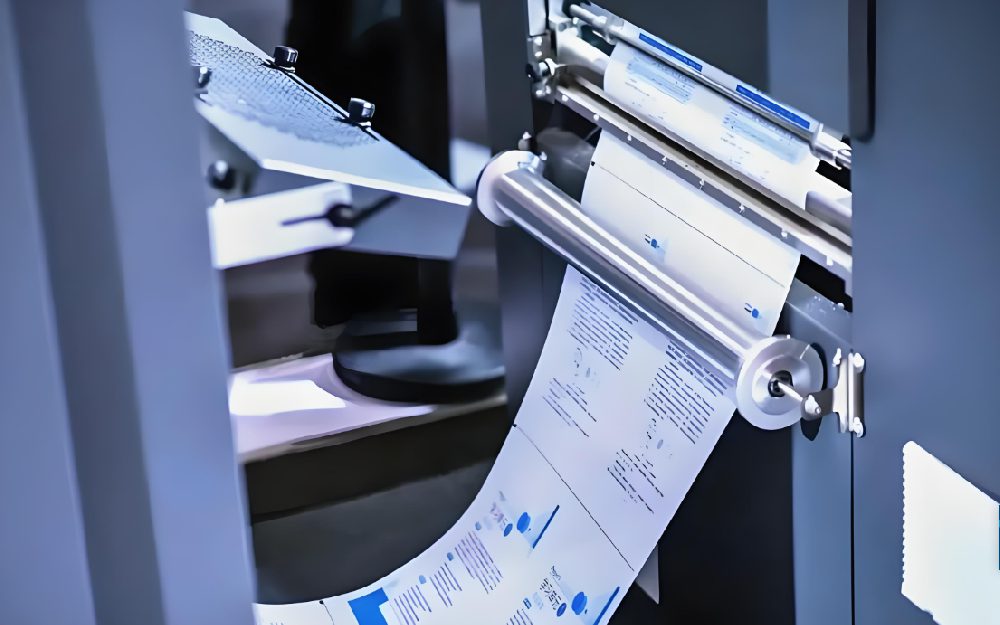
The shortcomings of traditional offset printing are fully exposed at this point: changing the printing plate requires downtime, debugging, and plate making, which is a time-consuming and labor-intensive process. A single plate change often takes several hours, making it impossible to meet the brand's iterative requirements of "weekly updates" or "daily updates". Digital printing, on the other hand, eliminates the need for plate making. Changing the design simply requires adjusting the file in the system, and the switch can be completed in just a few minutes. This not only enables rapid response to new product iterations but also facilitates "variable data" printing - where each label can have a unique QR code, serial number, and production date. This is crucial for brand owners in terms of private domain traffic attraction and product traceability.
For example, a beauty and makeup brand launches 8 limited-edition samples every month, and each sample label needs to be printed with a different QR code to guide consumers to add the company's WeChat account and redeem coupons. If traditional offset printing is used, not only is the minimum order quantity high and changing the printing plate is troublesome, but it also cannot achieve variable QR codes, which simply cannot meet the demand for private domain traffic acquisition. Switching to digital printing not only allows for on-demand printing and rapid version changes, but also enables individual customization of the QR code on each label, increasing private domain traffic acquisition efficiency by 40%. This is also one of the core reasons why brand owners are willing to pay a higher unit price.
The rapid response capability of the supply chain is the key to digital printing's superiority over traditional offset printing, especially in e-commerce promotions and sudden hot marketing scenarios where time is sales. The delivery time for traditional offset printing is usually 5-7 days, and even for urgent orders, it takes 3-4 days. However, digital printing, with its advantage of "no plate making, fast on-machine", can deliver as quickly as 4 hours. From file confirmation to finished product delivery, the entire process is efficiently connected, perfectly meeting the emergency needs of brand owners.
During the annual e-commerce promotions of 618 and Double 11, many brand owners will temporarily print additional labels or adjust label specifications based on real-time sales. Traditional offset printing simply cannot meet such urgent demands, whereas digital printing can respond quickly and help brand owners seize the marketing window. During last year's Double 11, a snack brand faced an unexpected surge in orders and urgently needed to print an additional 10,000 product labels. The traditional printing factory offered a delivery time of 4 days, but through digital printing, we completed production and delivery on the same day, helping the brand owner successfully complete shipments and avoid order loss due to label shortages. This rapid response capability is irreplaceable by traditional offset printing and is a significant reason why brand owners favor digital printing.
Many traditional printing factory owners are concerned that switching to digital printing will mean eliminating offset printing equipment and incurring significant costs. However, this is not necessarily the case. Based on practical industry experience, we offer a pertinent suggestion: factories do not need to eliminate all offset printing equipment. A more reasonable approach is to establish a hybrid production line where "offset printing is used for long-term, large-volume orders to maintain profits, while digital printing is used for short-term, small-volume, fast-iteration orders to capture traffic." Offset printing still has a unit price advantage for long-term, large-volume orders, making it suitable for the long-term printing of mature products and ensuring the basic profits of the factory. Digital printing, on the other hand, focuses on short-term, small-volume, fast-iteration orders, capturing the urgent needs of brand owners and the trial sales of new products, and seizing incremental markets.
It is particularly noteworthy that forcibly recommending offset printing for orders with a minimum order quantity (MOQ) of less than 5,000 pieces will only drive away customers. For such short-run orders, brand owners place greater emphasis on flexibility, response speed, and cost controllability. Digital printing, with its "one-piece minimum order" and "on-demand printing" capabilities, perfectly meets these needs, whereas offset printing's high MOQ and long lead times only increase the hidden costs for brand owners, ultimately leading to customer loss. This is also the core reason for the decline in orders for many traditional printing factories - they cling to old models and fail to keep up with the changing needs of brand owners.
As the consumer goods market continues to evolve, "small batches, rapid iteration, and precise cost control" have become core demands for brand owners. The advantages of digital printing will only become more prominent. Traditional printing companies, in order to retain customers and capture the market, can no longer focus solely on the unit price of individual sheets. Instead, they must recognize the hidden cost needs of brand owners, rationally combine offset printing and digital printing production lines, and balance profit and traffic. For brand owners, choosing digital printing may seem to incur higher costs per sheet, but in reality, it saves hidden costs such as inventory, scrap, and time, while also enhancing marketing efficiency. The cost-effectiveness is far superior to traditional offset printing.
Xuzhou Huaishi Electronic Technology Co., Ltd. has been deeply involved in the field of printing labels for many years, familiarizing itself with the process characteristics of digital printing and traditional offset printing. Based on the order scale, iteration requirements, and cost budget of the brand side, it can provide customized printing solutions, balancing the flexibility and efficiency of digital printing with the cost advantage of offset printing. This helps the brand side achieve precise cost control and rapid response to the market, while also assisting traditional printing factories in optimizing their production line layout, seizing opportunities in industry transformation, and achieving a win-win situation for both parties.