

Label Failures Across Six Industries and How to Choose
Food, electronics, chemicals, automotive, logistics and cosmetics each fail differently. A selection logic based on surface, environment and lifetime.
Delving deeply into the self-adhesive label supply chain industry, one will discover that product categories exhibit strong segmentation based on specific scenarios. Within the same manufacturing facility, it is possible to simultaneously produce three distinct types of products on a single day: high-end liquor hot stamping embossed cultural and creative labels, SMT production line 260°C oven-treated PI traceability labels, and fresh cold chain low-temperature water-resistant food labels. The materials, colloids, processes, and quality control standards for these products are entirely incompatible.
The core underlying logic of the industry lies in the fact that there is no universally applicable self-adhesive label solution across all domains. The six core downstream industries, namely food and fresh produce, electronic manufacturing, personal care and hygiene, automotive components, medical and pharmaceutical enterprises, and warehousing and logistics, exhibit vastly different operating environments, regulatory standards, pain points related to failure, and requirements for service life. Blindly selecting models without considering industry operating conditions can easily lead to batch accidents such as label edge warping, debonding, graphic and text damage, scanning failure, and non-compliance with standards, directly increasing the costs of customer complaints, product scrap, and production line downtime. This article, grounded in practical operational experience on the front line, breaks down label durability requirements, high-frequency failure pain points, pitfall cases, and standardized selection schemes by industry segment, adapting to the full spectrum of business docking, procurement selection, and process review.
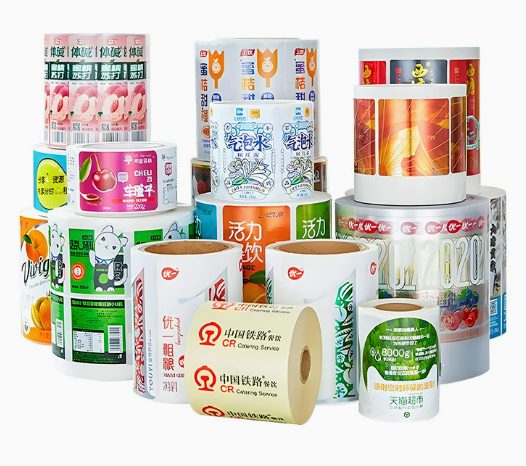
1. Food and beverage industry: compliance comes first, adapting to temperature and humidity alternating cold chain conditions
Food and beverage is the largest downstream sector for self-adhesive labels, and it is also the most stringently regulated field in terms of domestic national standards, supermarket access, and cross-border commodity inspection. Labels not only serve as a means of displaying product information, but also have their material migration, colloidal safety, and environmental adaptability included in the scope of food safety production sampling inspection. The working conditions cover five major scenarios: normal temperature warehousing, supermarket spraying, low temperature refrigeration, deep cold chain, and oil and fat immersion.
Industry core rigid selection requirements
Food Contact Compliance RequirementsDirectly fit the ingredients, label the inside of the packaging, and ensure that the migration of harmful substances such as ink and pressure-sensitive adhesive meets the standards. Eliminate the risk of plasticizers and heavy metal leaching, and comply with the national standards for food packaging contact materials
Low-temperature colloidal stabilityIn refrigerated storage at 0-4℃ and deep-freezing storage at -18℃, the gel will not solidify and lose its viscosity, effectively preventing issues such as low-temperature peeling and edge warping
High humidity, waterproof, and moisture-resistant performanceIn scenarios such as supermarket spray moisturizing cabinets, condensation during cold chain transportation, and dew formation due to temperature differences in cold storage, the substrate remains impervious to water absorption, does not delaminate, and does not swell
Media weather resistance and adaptabilityThe packaging labels for edible oils, fermented condiments, and acidic sauces must resist the corrosion caused by the penetration of oils and weak acid media
Real rollover cases in the industry
The frozen salmon product line of a leading domestic fresh food e-commerce brand follows a closed-loop cold chain circulation at -18℃ throughout the entire process, from the processing plant's cold storage, through mainline cold chain transportation, to the end-user's household refrigerator. Initially, conventional coated copperplate paper labels were used for procurement, paired with universal acrylic latex for mass production and launch. During the warehousing stage, the labels were affixed securely. However, after end consumers unpacked and thawed the products, issues such as label edges curling and overall detachment occurred in batches. The complaint rate for defects in the product's outer packaging approached 8%, leading to a surge in brand after-sales losses and product rework costs.
Root cause analysis: The copperplate paper substrate, suitable for room temperature, possesses water absorption properties. After the box warms up, condensed moisture on the surface infiltrates into the substrate through the label cut. Simultaneously, the initial adhesion of general acrylic latex decreases sharply in low temperature environments. The dual effects of temperature and humidity directly lead to the overall failure of the label, which is a common misconception in the food cold chain industry.
Optimization of implementation plan: Replace the hydrophobic PE film substrate with a food-grade, dedicated hot-melt pressure-sensitive adhesive for freezing applications. The substrate itself lacks a water-absorbing fiber structure, maintaining a constant initial and sustained adhesion even under ultra-low temperature conditions of -20°C, effectively resisting the erosion from alternating condensation between cold and warm environments. After the iteration of the plan, the customer complaint rate for this category of labels has been reduced to less than 0.3%, ensuring compatibility with the entire cold chain workflow.
Comparison Table for Label Standardization Selection in the Food and Beverage Industry
Application Scenario | Recommended implementation plan | Core quality control indicators |
|---|---|---|
0-4℃ refrigerated fresh milk bottle | PE film + moisture-resistant food-grade acrylic adhesive | Resistant to condensation, the curved surface labeling is smooth and free of warping |
- Frozen seafood and meat below -18℃ | PE/synthetic paper substrate + low-temperature freeze-specific hot melt adhesive | Constant initial adhesion force under -20℃ working conditions |
Edible oil large-capacity packaging bottle | BOPP/PE film + grease-resistant acrylic adhesive | Long-term resistance to oil penetration, with no softening of the adhesive layer |
Ambient-temperature bottled beverages | BOPP film + conventional food-specific adhesive | High transparency and texture, compatible with high-speed automated labeling |
High-end red wine gift bottle | Fine copperplate paper + removable eco-friendly wet glue | High-end printing texture, water-wash peeling without residual adhesive |
Acidic condiment bottle | PET film + acid and alkali resistant modified acrylic adhesive | Resistance to corrosion of acetic acid-citric acid substrates |
II. Electronic Manufacturing Industry: Prioritizing Process Traceability and Inflexible Demand for High-Temperature Corrosion Conditions
Electronic manufacturing is a high-threshold and high-performance field in the self-adhesive label technology. Labels have moved away from their decorative attributes and become the core data carrier for the entire process traceability of PCB circuit boards, SMT chip mounting, and components. They must adapt to multiple harsh working conditions such as reflow soldering, wave soldering high-temperature processes, flux immersion, and chemical cleaning agent wiping in the workshop. Barcode scanning stability and substrate thermal shrinkage rate are the core assessment indicators.
Industry core rigid selection requirements
High temperature resistance and load-bearing: SMT reflow soldering peak temperature tolerance of 240-260℃ for short periods, wave soldering tin furnace temperature range of 250-260℃ for constant temperature operation, with no yellowing or shrinkage of the substrate
Chemical resistance: Tolerant to long-term contact and immersion in liquid flux, board cleaning solution, and industrial cleaning agents
High-precision traceability: After high-temperature cycling, the one-dimensional code and two-dimensional code remain intact, and the automated production line scanning equipment can read them at high speed
Anti-static customization: Precision wafer and chip component labeling must comply with the workshop's ESD anti-static control standards
Real industry failure cases
The standardized SMT production line of a consumer electronics OEM factory in East China produces an average of 8,000 PCB circuit boards daily. The boards are equipped with traceability barcode labels, which were initially mass-produced using high-temperature resistant PET substrates paired with universal acrylic adhesive. The production line operated smoothly for the first three months, but in the fourth month, hidden faults emerged in batches: the labels appeared intact, with no peeling or yellowing, but the workshop's high-speed scanning guns frequently misread or failed to scan the labels, directly causing production line downtime, work order ledger errors, and the workshop identified it as a barcode ghost data fault.
Technical Decomposition and Traceability: The PET substrate meets the high-temperature resistance threshold, but after repeated high-temperature thermal cycles, it undergoes irreversible shrinkage at the micrometer level, causing invisible shifts in barcode line spacing and line width, which exceed the tolerance threshold of industrial scanning equipment, leading to batch reading failures. This is a common and hidden selection mistake in the electronics industry.
Optimization of implementation plan: Replacing Huai Shi Technology's PI polyimide substrate with high-temperature resistant modified silicone rubber, the thermal expansion coefficient of the PI substrate is far superior to that of PET, with a dimensional deformation rate of less than 0.3% in a high-temperature environment of 260°C, ensuring consistent barcode layout throughout the process. Additionally, the adhesive force of the colloid is compatible with PCB epoxy resin boards, resulting in a stable comprehensive scanning rate of 99.7% after iteration, and a reduction of 95% in downtime due to scanning failures in the production line.
Electronic Manufacturing Industry Label Standardization Selection Comparison Table
Application Scenario | Recommended implementation plan | Core quality control indicators |
|---|---|---|
SMT reflow soldering board traceability | PI substrate + high-temperature resistant silicone rubber, suitable for thermal transfer coding | 260℃ peak tolerance for 5 minutes, barcode rating ≥ B level |
Wave soldering process identification label | PI substrate + solvent-resistant acrylic adhesive | Long-term resistance to corrosion from solder flux immersion |
Precision Component Anti-static Label | Anti-static modified PI + dedicated acrylic adhesive | Surface resistance ranging from 10⁶ to 10⁹ Ω meets ESD standards |
PCBA finished equipment nameplate | PET film + medium temperature weather-resistant acrylic adhesive | 120℃ long-term temperature resistance, resistant to cleaning agent wiping |
Electronic wire harness winding label | Flexible vinyl substrate + highly flexible and strong adhesive | It remains uncracked after repeated bending and conforms to curved surfaces with precision |
III. Personal Care and Cosmetics Industry: Compatibility of Appearance and Function, Empowerment of Consumer Brands
The labels for daily chemical care, beauty makeup, and skincare belong to consumer attribute labels. They take into account both the visual marketing value of the brand and the three major pain points in the bathroom environment: high humidity, tube squeezing, and content leakage. These labels must not only meet the high-end printing quality requirements of bronzing, embossing, and frosting, adapting to the premium demand of product brands, but also adapt to the complex usage environment of constant temperature and high humidity in the bathroom, repeated squeezing of tubes, and surfactant leakage.
Industry core rigid selection requirements
High humidity and water resistance: The label remains intact, without delamination, bubbling, or peeling, even after long-term storage in enclosed high humidity spaces in bathrooms
Resistance to deformation and flexible adaptation: The flexible hose of facial cleanser and hand cream can withstand repeated squeezing, and the substrate follows the deformation without cracking or peeling
Chemical penetration resistance: Resistant to corrosion of the adhesive layer caused by surfactant, alcohol, and vegetable oil leakage from personal care products
High-end craftsmanship compatibility: Supports bronzing, embossing, frosting, and transparent printing, meeting consumer product aesthetic standards
Real industry failure cases
As a cutting-edge high-end shower and bath care brand, we initially used copperplate paper with laminated film and universal permanent self-adhesive labels. The sample prototypes met visual quality standards and passed sample acceptance. However, after three months of mass production and long-term placement of products in shower areas, issues such as label edges bubbling, film delamination, and overall detachment occurred in batches. This has damaged our brand reputation.
Root cause analysis: The laminating process only protects the front side of the label, leaving the raw fibers of the paper cut completely exposed. Moisture from the bathroom permeates inward along the cut, causing the paper substrate to absorb water and expand, ultimately leading to complete separation from the laminating layer. This is a common issue with daily-use paper labels.
Optimization of the implementation plan: Replace the integrated hydrophobic PE film substrate with a moisture-resistant special colloid, ensuring that the substrate is free of water-absorbing fibers to eliminate water infiltration issues at the source. Simultaneously, the film's flexibility adapts to the bottle's compression deformation, eliminating the need for film covering processes, and simultaneously reducing production costs and processes, thoroughly addressing the pain point of failure in high humidity bathrooms.
Standardized Label Selection Comparison Table for the Daily Chemical and Personal Care Industry
Application Scenario | Recommended implementation plan | Core quality control indicators |
|---|---|---|
Bath and Shampoo Hard Bottles | Polyethylene (PE) film + high moisture resistance pressure sensitive adhesive | High humidity resistance and waterproofing for sanitary ware, with stable curved surface fit |
Skin care flexible hose packaging | Flexible PE film + deformation-following gel | No cracking or edge warping occurs after repeated squeezing |
High-end glass bottles for beauty and makeup | Transparent BOPP/PET + removable and traceless adhesive | Highly transparent texture, no adhesive residue upon removal |
Fragrance Face Cream High-end Gift Box | Art copperplate paper + bronzing embossing and laminating process | Brand visual quality, compatible with dry storage environment |
Laundry detergent, dishwashing liquid, daily chemical consumables | Industrial PE film + active agent-resistant colloid | Resistant to formula leakage and non-corrosive during long-term storage |
IV. Automotive parts industry: ultra-long durability, full-vehicle and full-life cycle compatibility
The automotive industry labels it as a product category with the highest durability. Component labels must accompany the entire vehicle for over ten years, enduring multiple tests such as extreme temperature differences between the north and south, high-temperature engine oil vapor in the engine compartment, high-frequency mechanical vibrations during driving, and high-pressure water jet washing of the chassis. Car companies have strict standards for quality inspection and component traceability ledger review, and failure to meet these standards will directly trigger supply chain claims.
Industry core rigid selection requirements
Wide temperature range cycle tolerance: from extreme cold storage at -40℃ to high temperature alternating cycles inside the cabin at 150℃, without substrate embrittlement or adhesive failure
Industrial medium resistance: impermeable and non-delaminating to long-term immersion in engine oil, brake fluid, coolant, and transmission fluid
Outdoor weather resistance and anti-aging: The exposed nameplate labels on the vehicle body are resistant to UV exposure, ensuring no fading or chalking for many years
Extra-long service cycle: Core component labels meet the 10-year vehicle warranty period, with traceability information permanently retained
Real industry failure cases
A local automotive wiring harness supplier in Jiangsu uses conventional PET substrate and general-purpose heat-resistant acrylic adhesive for the traceability labels of wiring harnesses inside the engine compartment. The operation was normal for the first two years of production. However, in the third year after the vehicles hit the road, a large-scale issue of label detachment occurred across the entire fleet, triggering significant claims from automakers' supply chains.
Root cause analysis: The PET substrate meets the temperature resistance requirements, but the crosslinking density of ordinary acrylic adhesive is low. After prolonged exposure to high-temperature engine oil vapor, the adhesive undergoes plasticization and decomposition, leading to a complete decline in bonding strength. High-frequency vibration of the wiring harness accelerates label peeling, posing a high-risk selection hazard in the automotive supply chain.
Optimized implementation plan: Upgrade the PI polyimide substrate with cross-linked oil-resistant solvent-based acrylic adhesive, and overlay with a protective laminating process to block the erosion of oil and gas on the printing and adhesive layers. The substrate and adhesive are both compatible with high-temperature oil and gas environments and mechanical vibration conditions, meeting the ten-year warranty traceability standards of automobile companies.
Comparison Table for Standardized Label Selection in the Automotive Manufacturing Industry
Application Scenario | Recommended implementation plan | Core quality control indicators |
|---|---|---|
Engine compartment internal components | PI substrate + oil-resistant solvent-based pressure-sensitive adhesive | -40~150℃ temperature range, long-term resistance to engine oil vapor |
Chassis Braking System Metal Nameplate | PI + high-temperature resistant silicone + surface coating | Resistant to corrosion from brake fluid and high-pressure water flow |
Original vehicle tire factory identification | Synthetic paper/PE substrate + removable soft adhesive | Tread is easy to remove, with no colloidal residue stains |
New energy power battery label | Modified PET + electrolyte-resistant special colloid | Resistant to organic electrolyte penetration, with optional flame retardant formula |
Vehicle VIN anti-counterfeiting plate | Permanent identification label for anodized aluminum foil | Tamper-proof, with lifelong durability and resistance to damage |
V. Pharmaceutical and Medical Device Industry: Zero Tolerance for Compliance Issues, Equivalent to Legal Documents
The tolerance for errors in labeling of pharmaceuticals and Class II and Class III medical devices is approaching zero. Batch numbers, expiration dates, registration numbers, and traceability codes all belong to statutory information compliant with drug regulatory requirements. Label deformation, illegible handwriting, and information loss directly trigger the scrapping of entire batches of goods and product market recalls, with recall costs often reaching the million-level. Meanwhile, sterilization and disinfection, low-temperature freeze-drying, and dust-free workshop conditions further raise the threshold for model selection.
Industry core rigid selection requirements
Permanent information retention: Production batch number, expiration date, and traceability code are resistant to long-term erasure, without issues of ink shedding or surface wear
Sterilization condition compatibility: Resistant to three mainstream sterilization processes: 121°C/134°C high-pressure steam, ethylene oxide, and radiation
Anti-counterfeiting and tamper-proof: The traceability seal label for drug supervision requires a visible and irreversible VOID mark for anti-counterfeiting purposes
Micro high-precision printing: For extremely small format labels on ampoules and vials, the printing overlay error is strictly controlled to the micron level
Real industry failure cases
A medical infusion product manufacturing enterprise in northern Anhui uses conventional thermal transfer resin ribbon and ordinary film labels for finished infusion bags. After completing the 121°C high-pressure steam sterilization process in batch, the ink on the label batch number and expiration date diffused and blurred over a large area, resulting in the entire batch of products being deemed non-compliant by the drug regulatory authority and disposed of at full cost.
Root cause analysis: The secondary softening and diffusion of ink under humid and hot conditions in conventional commercial resin ribbons cannot adapt to the high-temperature and humid sterilization environment used in medical applications, which is a typical misunderstanding in consumable matching within the pharmaceutical industry.
Optimization of implementation plan: Replace the medical-grade high-temperature resistant special resin ribbon with a dimensionally stable PI substrate label. After the ink is cross-linked and cured at high temperatures, it is resistant to heat and moisture, and impervious to water vapor penetration. After sterilization, the printed text on the label remains sharp and free of blurring, and the substrate does not shrink or deform, successfully passing the routine drug supervision inspections.
Comparison Table for Label Standardization Selection in the Pharmaceutical and Medical Industry
Application Scenario | Recommended implementation plan | Core quality control indicators |
|---|---|---|
Medical infusion bags and plasma bags | Medical PE film + heat and moisture resistant sterilization gel | 121℃ steam sterilization for 30 minutes ensures stability and prevents detachment |
Vial and ampoule pharmaceutical label | Ultra-thin PET/PI + medical sterile acrylic adhesive | Micro-sized layout, high-precision overprint technology |
Low-temperature freeze-dried injection agent | Low-temperature resistant synthetic paper + medical cryogenic gel | -40℃ freeze-drying storage for long-term compatibility |
Pharmaceutical Anti-Counterfeiting Sealing Label | VOID anti-counterfeiting film + specialized pressure-sensitive adhesive for tamper-evident applications | Reveal traces and ensure irreversible tamper resistance |
Reusable surgical instrument nameplate | Medical-grade PI substrate + disinfection and sterilization resistant colloid | Enzyme-resistant preparations and medical disinfectants are repeatedly wiped down |
VI. Warehousing and Logistics Industry: Low-cost and Highly Adaptive Sorting Link Information Carrier
Warehouse trunk logistics and express sorting labels exhibit four major characteristics: vast volume, low unit price, high printing strength, and complex operating conditions. These labels do not pursue high-end craftsmanship; instead, they focus on four dimensions: high-speed printing adaptability, sorting friction resistance, outdoor weather resistance, and extreme cost control. The failure of face sheets, shelf labels, and pallet labels can directly lead to parcel sorting confusion and warehouse ledger disconnection issues.
Industry core rigid selection requirements
High-speed printing adaptability: Thermal label printers are compatible with high-speed assembly line printers, ensuring no paper jams, continuous paper feeding, and uniform print color development
Resistance to mechanical friction: After high-intensity friction from sorting belts and rollers, the surface barcode remains unscathed and the surface layer remains intact
Universal weather resistance: open-air transfer, transportation in rainy weather, exposure to sunlight and rain, waterproof substrate, UV aging resistance
Ultimate cost control: Scaled mass production compresses redundant processes, aligning with the pricing system of the logistics industry characterized by low profits and high sales volume
Warehousing and Logistics Industry Label Standardization Selection Comparison Table
Application Scenario | Recommended implementation plan | Core quality control indicators |
|---|---|---|
E-commerce express electronic waybill | Specialized base paper for three-proofing thermal sensitive materials | Waterproof, oil-resistant, and resistant to friction, ensuring smooth high-speed printing |
Indoor storage shelf fixed label | Thickened synthetic paper + long-lasting strong adhesive gel | Resistant to handling and collision, and will not fall off in the warehouse throughout the year |
Cold chain trunk logistics tracking label | Low-temperature synthetic paper + cold chain-specific pressure-sensitive adhesive | -25℃ low temperature transportation without label loss |
Warehouse turnover wooden pallet label | PET substrate + industrial strong acrylic adhesive | Resistant to forklift impacts and outdoor exposure to sunlight and aging |
Airport aviation baggage barcode strip | High-toughness thermal synthetic paper + removable adhesive | Resistant to tearing, with no residual adhesive on the outer packaging |
In-depth industry analysis: The essence of custom labeling lies in the trade-off and matching of working conditions
Upon reviewing the implementation cases across six major downstream core industries, it is not difficult to observe that a universal self-adhesive label does not exist. Each mass-produced label is a customized product resulting from a balance of various factors, including materials, adhesives, processes, costs, and operational conditions.
After being dispatched from the production workshop, labels are transported to various environments such as cold storage chains, electronic high-temperature production lines, humid bathrooms, automotive engine compartments, medical sterilization cabinets, and logistics sorting trunk lines, where their performance is degraded in different ways under varying working conditions. The core value of label procurement and supply has never been the sale of standardized stickers. Instead, it lies in combining industry regulatory standards, production line processes, pain points of failure, and budgetary ranges to eliminate high-risk general solutions and match exclusive identification schemes that can fully cover the entire product lifecycle.
Understanding the hidden pain points of the industry and thoroughly grasping the logic of operational failure are essential to avoid batch rework, customer complaints, and supply chain claims losses. This is also where the core professional barriers of label suppliers lie.