Cosmetic Labels That Survive Sweat and Water
Hand cream, sunscreen and toner attack labels from both sides. Water-resistant stock, appropriate adhesive and finishing that resists oil.
Beauty care and daily chemical products belong to the category of multi-scenario reuse and high-frequency physical contact. The entire workflow, from circulation and display to home use and outdoor carrying, is complex and highly differentiated. In the bathroom, prolonged exposure to high-temperature steam and water splashes on the countertops can infiltrate the bottle body; during outdoor sports and fitness storage, labels can come into contact with sweat-soaked fabrics, continuously suffering from the friction and erosion of sweat salt; sunscreen, essential oils, and moisturizing cream ingredients can leak and contaminate the surface of labels; soft tube bottles are repeatedly squeezed and bent, and makeup bags are stacked densely inside, causing friction. Under the superposition of multiple working conditions, ordinary commercial self-adhesive labels are prone to issues such as wrinkling, ink delamination and whitening, edge lifting and debonding, and substrate hydrolysis and damage, directly reducing the visual quality of the product and compromising the brand's high-end packaging tone.
Unlike ordinary household adhesive consumables, beauty and skincare-specific sweat-resistant and waterproof self-adhesive labels cater to the triple needs of daily chemical brands' aesthetics, consumer usage, and long-term shelf retention. Relying on modified surface materials, specialized functional adhesives, and surface protective processes to optimize material shortcomings, these labels are suitable for five wear scenarios: water vapor, sweat, oil, mechanical friction, and bottle deformation. They ensure that the labels remain firmly attached, with clear layouts and exquisite appearance, throughout the entire cycle from supermarket shelf display, daily consumer usage, to product consumption completion, meeting the long-term visual operation needs of beauty brands.
1. Four core wear and tear conditions of beauty and daily chemical labels, underlying pain points in industry material selection
The material selection for beauty and grooming labels differs from that for general food and beverage labels. It not only needs to meet the basic performance requirements of strong adhesion but also needs to align with the high-appearance packaging positioning of beauty products and the scenarios of human contact and use. The industry has summarized four types of irreversible working condition challenges through long-term implementation, which also serve as core lightning protection references for brand packaging design and procurement selection.
The persistent erosion of high humidity and moisture poses a fundamental challenge. Shampoo, body wash, and facial cleansing canned toiletries, when stored in enclosed bathroom spaces for extended periods, can experience condensation on walls and bottle surfaces due to diurnal temperature variations. Daily shower splashes can directly impact the surface of labels. Conventional paper substrates, with their hydrophilic pores, are highly susceptible to water absorption, leading to swelling and deformation. Printed graphics quickly become blurred due to diffusion, and colloids quickly hydrolyze and lose their adhesive properties when exposed to water, which is also the most common cause of label failure in toiletries.
The human sweat compound corrosion specifically tests the sports skincare and outdoor sunscreen product lines. Human sweat contains both sodium chloride salt and body surface oil, which continuously oxidizes the surface ink of labels and decomposes the internal structure of pressure-sensitive adhesives. Compared to pure water erosion, sweat corrosion accelerates label blistering, adhesive powdering and detachment, significantly shortening the lifespan of outdoor beauty labels.
Chemical corrosion of cosmetic ingredients poses an invisible risk in material selection. Skin care essential oils, sunscreen auxiliaries, and emulsifying emollients exhibit weak dissolving properties. Leakage from the remaining volume in the bottle and contamination of raw materials in the transportation container can dissolve ordinary printing inks and corrode non-standard film materials, leading to layout discoloration, substrate swelling, and damage. Such after-sales issues account for a high proportion in high-end essential oil skin care product lines.
The dual wear and tear from deformation and friction is well-suited for flexible packaging and storage scenarios. When facial cleanser and moisturizer tubes are repeatedly pressed and bent, the hard labels can tear and warp due to their inherent resilience. Additionally, when portable beauty products are stored in makeup bags or fitness bags, multiple bottles can rub and collide with each other, causing scratches and abrasions on the unprotected labels, thereby compromising the elegance of the product's outer packaging.
II. Selecting surface materials that fit the packaging shape, balancing appearance value and durability
When selecting the material for beauty and cosmetics labels, there is no need to blindly opt for high-end imported substrates. The core relies on four dimensions: the soft and hard forms of the bottle, the product usage scenario, the brand's visual positioning, and procurement costs. There is no universal substrate in the industry, and relying on targeted matching with product categories can balance packaging quality, performance, and mass production costs.
(1) Extrusion hose packaging: Exclusive adaptation for flexible PE substrate
For flexible squeeze containers such as facial cleanser, portable hand cream, sunscreen in tube, and body lotion, the bottle body undergoes continuous deformation, bending, and rebound during use. High-tensile PET and copperplate paper face materials are too rigid, and even with high-viscosity glue, they still crack at the bending position and the edges and corners may come off.
The PE film substrate, with its biaxially oriented flexible structure and zero rebound stress, stands as the optimal choice for this scenario. The substrate stretches and contracts synchronously with the hose, eliminating the risk of peeling tension. Additionally, it possesses inherent waterproof, sweat-resistant, and weak acid/alkali-resistant properties, making it suitable for mildly corrosive daily chemical raw materials. It is compatible with a wide range of soft tube beauty products, spanning from mass-market to mid-to-high-end, and is also the most versatile flexible label substrate for daily chemical mass production.
(II) Transparent and minimalist bottle body, dual material achieves label-free visual effect
High-end essence liquid, fragrance essential oil, and light luxury toner feature a transparent and minimalist packaging design, emphasizing the visual aesthetics of a bare bottle with an unobtrusive label. The transparent film label serves as the core supporting consumable. There are significant differences in texture and weather resistance between the mainstream transparent PET and transparent PP base materials on the market, catering to the aesthetic needs of various brands.
Transparent substrate category | Transparent texture | Physical wear resistance | Temperature tolerance range | Brand landing and adaptation scenarios |
Transparent PET | High-transparency glass texture | Excellent scratch and wear resistance | High-temperature-resistant and adaptable storage | High-end essential oils, perfume, and luxury care essence |
Transparent PP | Lightweight, matte finish, and a touch of luxury | Conventional wear-resistant medium strength | Suitable for indoor storage at room temperature | High-end emulsion and basic skincare bottle labels |
Transparent PVC | Low transparency | Poor friction resistance | Temperature change and deformation | Old curved bottle bodies are gradually being phased out due to environmental protection restrictions |
Industry procurement practical tips: PVC substrates are currently facing environmental protection controversies related to daily chemical contact in the EU. Currently, exports to the US cosmetics market and top domestic cosmetics brands have completely phased out the use of PVC. For new product packaging planning, it is advisable to directly opt for transparent PET and PP substrates.
(III) High-end matte beauty makeup product line: Special texture composite substrate
Face cream jars, makeup palettes, and gift boxed lotions, as well as the noblewoman skincare series, have abandoned the glossy plastic label texture, pursuing a warm and matte paper texture. At the same time, they avoid the shortcomings of pure paper, such as poor waterproofing and susceptibility to corrosion, and prefer two types of special substrates: PP-based synthetic paper and silver-coated PET.
PP synthetic paper replicates the printing texture of native paper, without the cheap feel of thin film plastic. It is waterproof, sweat-resistant, tear-resistant, and resistant to corrosion from daily chemical ingredients, with a production cost advantage over specialty PET. The silver-colored PET comes with a metallic matte finish, enhancing the luxury level of the product without additional processes. It is suitable for all products in makeup and high-value skincare gift boxes, balancing brand appearance and durability under working conditions.
(IV) Mass-market daily chemical product line - cost-effective solution using laminated copperplate paper
Open-shelf shampoo, bulk shower gel, short-term promotional bottle labels, and outer box storage labels have high brand budget sensitivity and short usage cycles, so there is no need for high-quality film substrates. Regular copperplate paper is selected, paired with glossy and matte laminating processes, to enhance basic waterproof and scratch-resistant properties at a low cost, suitable for dry supermarket display and indoor storage conditions.
Key points for material selection to avoid pitfalls: Laminating can only protect the surface layer of the layout, and moisture will still penetrate the edges of the substrate. Its resistance to bending and long-term moisture resistance are far inferior to that of film-based materials. It is prohibited for long-term storage in bathrooms and for use in soft tube extrusion of beauty products.
III. Functional Adhesive Layer Selection to Match Bottle Material and Working Conditions
The issues of adhesive delamination and concealed edge warping on beauty and cosmetics labels are primarily attributed to the mismatch between the adhesive and the bottle body, as well as the usage scenario. Beauty and cosmetics packaging predominantly consists of PP and PE low surface energy plastic bottles. When paired with the high humidity and sweat corrosion conditions found in bathrooms, the selection of adhesive must be carefully considered based on three dimensions: interface properties, environmental humidity, and compliance standards.
High-humidity bathroom scenarios require specialized water-resistant acrylic adhesives. These adhesives have been optimized with a hydrophobic molecular structure, ensuring molecular anchoring and bonding even under conditions of condensation and thin water films on the bottle body. They prevent water vapor from decomposing the adhesive, making them suitable for permanent bathroom products in the care and grooming category. They remain adhesive and do not powder even in long-term humid environments.
Low surface energy plastic bottle bodies adhere to the principle of homologous matching. The surface adhesion of PE and PP virgin plastic bottle bodies is extremely low, and general-purpose glues are prone to automatically warping edges in the short term. The industry standardization solution is to use homologous materials paired with dedicated primer pressure-sensitive adhesives. The shrinkage rates of label materials and bottle body materials are highly uniform, avoiding peeling and warping issues caused by temperature differences and aging.
The outdoor sports sunscreen product line is compatible with sweat-resistant and oil-resistant composite gel. It has been specially formulated to resist sweat salt and sunscreen oils, with maximum chemical corrosion resistance. The gel will not be decomposed by human secretions or skincare oils, making it suitable for all scenarios including fitness and outdoor travel.
In the daily chemical industry, there are stringent requirements for adhesive compliance. Cosmetic and skincare products fall under the category of consumer goods that come into contact with the human body. Mass-produced adhesives must be verified for FDA 175.105 safety qualifications for daily chemical contact. They must be free of harmful leaching auxiliaries and irritating solvents, meeting the safety production standards for cosmetic and daily chemical packaging. When purchasing in bulk, brands must request batch testing reports.
IV. Post-printing Surface Processes to Enhance Label Resistance to Wear and Tear
The substrate and adhesive lay a solid foundation for bonding, while the surface printing process determines the wear resistance, corrosion resistance, and appearance appeal of the label. Beauty and cosmetics brands rely on post-production processes to differentiate product grades and simultaneously enhance the long-term durability of the label. These three processes are the mainstream standard configurations in the industry.
Lamination technology serves as a fundamental protective process. Matte films diminish reflection and provide a warm, smooth texture, fitting high-end skincare and cosmetics products; glossy films enhance the color saturation of the layout, making it bright and eye-catching, suitable for open-shelf daily use and promotional products. After lamination, a sealed protective layer is formed, isolating moisture, sweat, and surface friction damage.
UV overall glazing and partial UV technology offer a superior texture compared to laminating. The coating is thin and does not compromise the overall flatness of the label, boasting higher surface hardness and stronger scratch resistance. Partial raised UV treatment can be applied to brand logos and core patterns, creating visual layers and meeting both protection and brand design requirements.
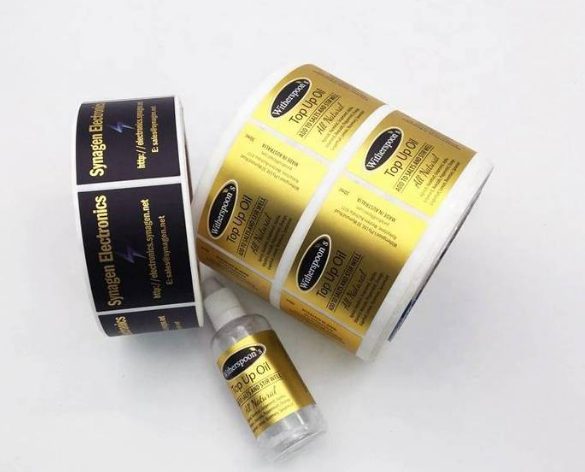
Gilding and silver gilding, as light luxury decoration techniques, are suitable for gift boxes in beauty and high-end product lines, enhancing brand premium and packaging recognition. Industry practical experience: The surface of gilding anodized aluminum is extremely prone to rubbing and peeling without protection. Therefore, all gilding process labels must be laminated and enclosed for protection, to avoid defects such as wear and tear during transportation and use.
V. Standardized Selection Comparison Table for Full-Category Beauty and Cosmetics Products
Beauty and Cosmetics Product Category | Characteristics of Packaging Working Conditions | Preferred compatible surface materials | Glue core requirements | Supporting surface layer process |
Hose facial cleanser, hand cream | Repeatedly squeeze the flexible bottle body | Native PE film | PE Specialized Strong Adhesive | Matte film anti-fingerprint treatment |
Essence Essential Oil Transparent Bottle | Transparent bottle body with minimalist design | High-transparency PET substrate | Non-marking high-transparency pressure-sensitive adhesive | Ultra-thin Optical Film/Film-free Process |
Face cream and lotion canned products | Bathroom fixtures stored in high humidity for extended periods | PP synthetic paper, silver-colored PET | Special adhesive for water and moisture resistance | Matte laminating enhances texture |
Outdoor sunscreen and skincare products | Exposure to sweat, oil, and outdoor friction | PP synthetic paper material | Resistant to sweat and oil functional adhesive | Thickened laminating for wear-resistant reinforcement |
Open-shelf shampoo and conditioner | High-frequency water vapor production at low cost and in large scale | BOPP economical film | Universal water-resistant strong adhesive | Regular gloss laminating |
Short-term promotional custom tags | Short-term display costs are manageable | Laminated copperplate paper | General-purpose adhesive for conventional daily chemical products | Basic bright film protection |
VI. High-frequency Material Selection Review and Practical Operational Plan for Avoiding Pitfalls in the Industry
Incorporate customized service providers' brand after-sales ledgers based on beauty and makeup labels, summarize the four most frequent material selection errors in beauty and makeup packaging on the market, trace the underlying causes, and align with brand packaging and procurement departments to directly implement rectifications, thereby avoiding losses during mass production.
The edges of the bathroom shelf labels are becoming white and leaking water, primarily due to the use of uncoated regular copperplate paper. Moisture permeates from the label edges and ink layer, hydrolyzing the substrate. Remedial measures: In humid household environments, abandon pure paper labels entirely and replace them with waterproof films made of PP, PE, or synthetic paper to prevent moisture infiltration at the source.
The label at the crease position of the soft tube skincare product is fractured and warped, which is due to a mistake in the selection of the surface material stiffness. The hard PET and thickened synthetic paper have excessive rebound stress, making them unsuitable for the repeated deformation of the bottle body. Rectification plan: For all squeezable soft tube beauty products, use low-stress PE flexible surface material for fixed matching, and do not replace the hard substrate.
The finished bottle body experiences subtle edge warping and debonding after being stored for a week. This issue is not due to insufficient glue viscosity, but rather the combination of low surface energy PP and PE bottle bodies with general-purpose industrial glue, resulting in inadequate interfacial adhesion. Remedial measures include verifying the raw material quality of the bottle body in advance, specifically matching it with a dedicated primer, and avoiding the cross-use of general-purpose glue.
Essential oils and sunscreen products exhibit ink corrosion and discoloration on the surface, indicating that the chemical resistance of the ink and the surface material does not meet the required standards. Even a minor leakage of raw materials can dissolve the printed layer. Remedial measures: For high-fat and high-active ingredient beauty and cosmetics product lines, focus on using PET surface materials that are resistant to corrosion, coupled with specialized printing inks that are resistant to solvents commonly found in daily chemical products.
VII. Standardized Operational Procedures for Brand Centralized Procurement
The cost of trial and error for beauty and cosmetics labels is high, and the packaging iteration cycle is short. Brand procurement can follow a four-step standardized process to compress the sampling cycle, reduce the cost of material selection and trial and error, and adapt to the rapid pace of new product launches for beauty and cosmetics brands.
In the early stage, four core parameters are locked to establish the material selection benchmark, clarifying the bottle material and packaging form, daily usage scenarios of the product, brand packaging texture positioning, and the full-cycle retention duration of labels on shelves. A one-click solution for selecting the combination of surface material, glue, and craftsmanship is achieved.
The replication of real-life working conditions has been completed through actual testing of prototypes. We refuse to rely solely on verbal verification of drawings and samples. Instead, we utilize empty bottles from the original factory products and simulate three real-life scenarios: high-humidity immersion in a bathroom, friction from a gym bag, and sweat application. These scenarios are tested for 72 hours to verify the appearance of labels and the stability of adhesion.
Pre-production process control for mass production involves automated cleaning of the bottle surface to remove release agents, production dust, and residual grease before labeling. This eliminates potential label detachment hazards caused by interface impurities, enhancing label attachment stability without the need to upgrade label consumables.
In alignment with the environmental protection trends in the daily chemical industry, export beauty and emerging domestic brands are phasing out non-standard PVC substrates, opting instead for recyclable and environmentally friendly PP and PE film labels, which meet domestic and international environmental audit standards for daily chemical packaging.
VIII. Core Summary of Industry Selection
The core logic of selecting sweat-resistant and waterproof self-adhesive labels for beauty and skincare products revolves around scenario adaptation. The material composition is determined by three dimensions: packaging form, usage conditions, and brand positioning. There is no need to blindly choose imported high-end consumables, nor to deliberately cut costs by using cheap base materials.
Flexible hoses are bound to PE flexible substrates, with high-end transparent bottles preferably made of high-transparency PET. For wet bathroom scenarios, synthetic paper combined with water-resistant glue is used. For outdoor sports product lines, functional colloids resistant to sweat and oil are paired. For affordable open-shelf products, laminated copperplate paper is selected to control costs and enhance quality. Relying on the synergistic combination of substrates, functional glues, and surface protection processes, it not only meets the high-value packaging design requirements of beauty and makeup, but also addresses all working conditions such as water vapor, sweat, chemical corrosion, deformation, and friction, ensuring that the label aligns with the brand's visual positioning while adapting to the full cycle of consumer usage and wear and tear, maintaining the exquisite appearance of the product packaging over the long term.