

Labels on Returnable Glass: Surviving Thirty Washes
Returnable bottles are washed at 60-80°C with caustic detergent. Which adhesive holds, and which lets the label release cleanly when it should.
On a returnable bottle line, putting a label on takes two seconds. Getting it off can take two minutes. Whether the label leaves the glass as one sheet or as a smear of adhesive decides if that bottle ever gets refilled.
What the washer actually does to a label
A bottle washer runs three stages: pre-rinse, caustic soak, final fresh-water rinse. Caustic temperature usually sits between 75 and 85 °C, sodium hydroxide concentration between 1.5% and 3%, soak time 5 to 15 minutes, spray pressure 0.15 to 0.3 MPa. Paper facestock swells and breaks into fibre. The adhesive loses cohesive strength under hot alkali.
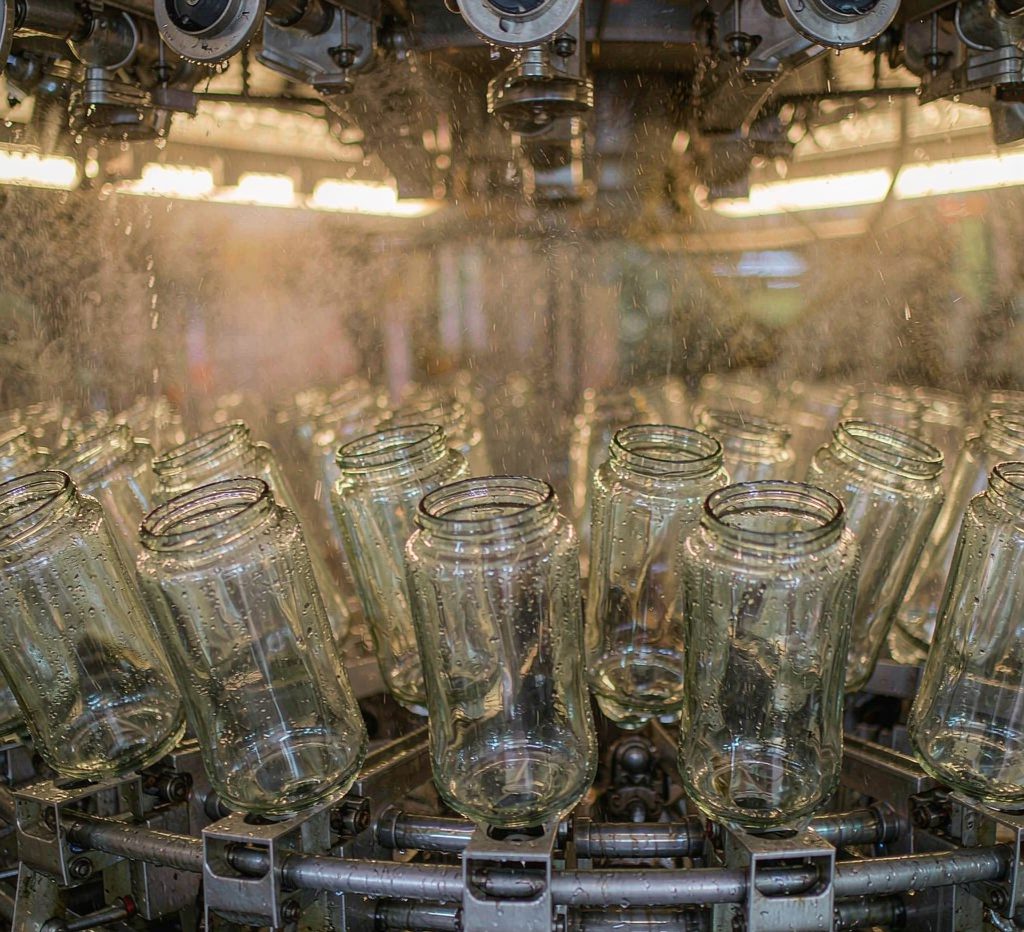
Two failure patterns show up. The label lifts as a whole sheet and floats into the filter basket. Or the facestock disintegrates and the adhesive stays bonded to the glass as a hazy film nobody notices until the labeler downstream cannot lay a new label flat.
The adhesive is the deciding part
Wash-off adhesives are built to hold through labeling and ambient storage, then release quickly once they meet alkaline water. What you want is cohesive failure across the whole sheet, not a tacky residue that gets worse with every cycle.
A common acceptance test: soak a labelled bottle in 2% NaOH at 80 °C for 10 minutes. The label should come off in one piece, with residual adhesive under 5% of the surface area. Many bottlers now write "no visible adhesive residue" straight into the specification.
Skip paper facestock
Paper is cheap and wrong for this job. It turns into pulp inside the washer, clogging nozzles and filters and pushing up the COD load of the recirculating water. The bill arrives as maintenance hours, not as material cost.
Most returnable-bottle work uses PP or PE synthetic paper at 70 to 90 µm. PET shows up where the bottle sees higher temperatures. Synthetic facestock absorbs no water, so the label leaves the glass as one intact piece a screen can catch.
Test it before you run the line
- Label three bottles from the same batch and let them sit for 24 hours.
- Soak in 2% NaOH at 80 °C for 10 minutes. Watch whether the sheet releases whole or breaks into flakes.
- Rinse for 30 seconds, dry, and inspect residue under 300 to 500 lux.
- Run a control in tap water at room temperature for 24 hours. The label should stay put.
Both results matter. A label that releases cleanly in caustic but lifts in tap water will fail somewhere in a chilled distribution chain.
Where the money actually goes
Buyers often compare wash-off stock against standard paper on price per thousand and stop there. That comparison misses the two costs that follow a bad choice. The first is manual scraping at the filling line, which shows up as labour hours nobody budgets. The second is washer downtime when fibre and adhesive build up in the nozzle manifold and the filter baskets have to be pulled mid-shift.
Synthetic facestock and a proper wash-off adhesive typically cost more per square metre than paper. On a line running thirty cycles per bottle, the material is repaid in a few months of not stopping the washer.
Three numbers to settle before quoting
Most returnable-bottle inquiries that reach us come from breweries and beverage co-packers in Jiangsu and Anhui. Three details keep a quote honest: the caustic temperature and concentration window, whether the bottles carry old adhesive from previous cycles, and the reorder rhythm.
The third one gets skipped and it matters. Wash-off stock is a small-batch, many-batch item. Print a year of labels at once and initial tack drops a grade by the sixth month in storage. Facestock caliper deserves a line as well. 80 µm and 60 µm synthetic paper behave differently in the washer. Thin stock lifts at the edges during the spray stage, and thick stock is less forgiving about peel plate angle on the labeler.