Direct Thermal or Thermal Transfer: Which Costs Less
Direct thermal needs no ribbon but fades with heat and light. Thermal transfer costs more to run and lasts longer. Choosing by label lifetime.
Two printers in the same warehouse. One runs thermal paper, the other runs coated paper with a ribbon. To a visitor both are just label printers. The running cost differs by nearly half, and the failure modes have nothing in common. Which one you buy depends on how long the label has to survive and what it will meet.
The only real difference is how the image forms
Thermal paper carries a heat sensitive coating. When the printhead heats it, a leuco dye reacts with a developer and turns dark. No ribbon is involved. Thermal transfer melts wax or resin from a ribbon onto the paper surface, and that ribbon is a consumable. Every cost difference downstream grows out of this one fact.
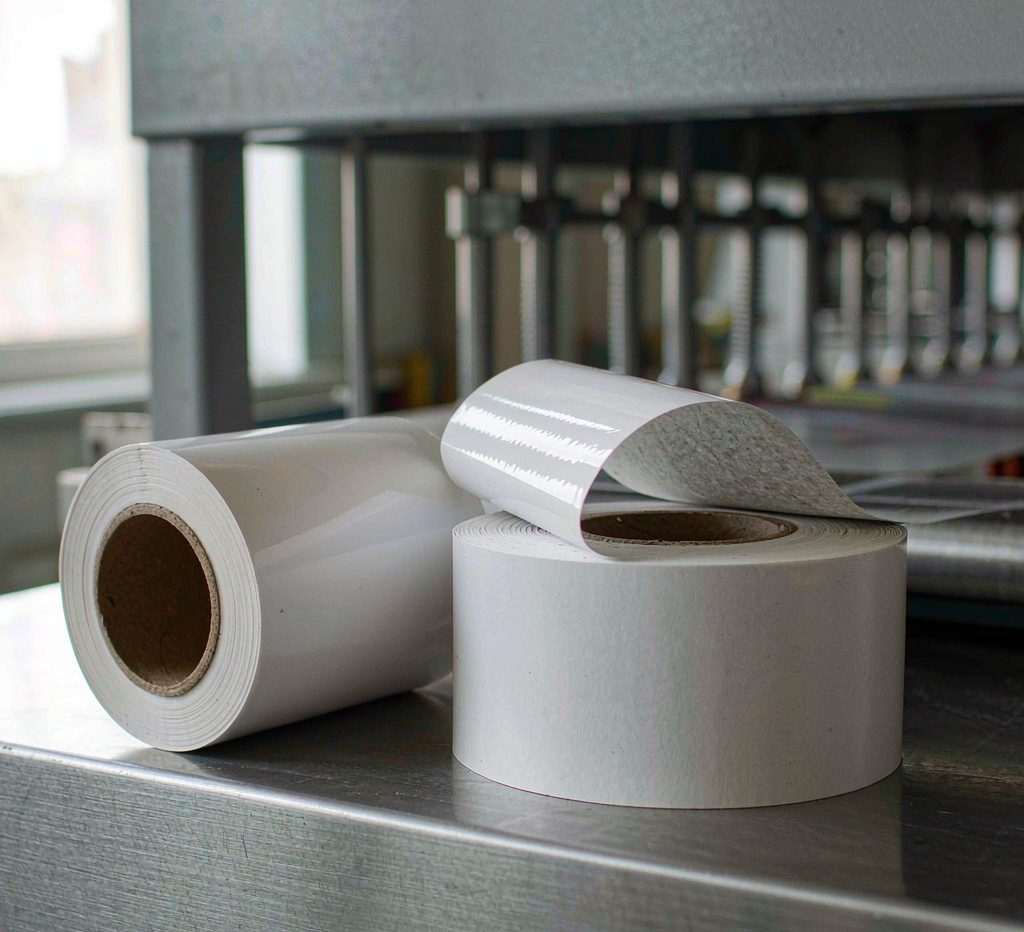
Do not compare label price alone
Thermal paper commonly lands between 3 and 5 yuan per square metre. Coated paper at 80 gsm sits around 4 to 7 yuan. On paper cost alone the gap looks small. The real money sits in ribbon and printhead wear. Every roll of thermal transfer stock needs a ribbon long enough to match it, and a mismatched roll means either a mid-run changeover or leftover waste. The printhead also runs hot and presses against a ribbon all day, so it wears faster than on a thermal printer. For short runs, fast turnover and document type labels, direct thermal usually comes out 30 to 40 percent cheaper in total.
Three weaknesses of thermal paper
Heat comes first. Above roughly 60 degrees Celsius the coating keeps darkening on its own. A delivery van in summer, a shelf next to a heat source or a sunlit windowsill all reach that range, and the whole label turns grey or black. Light and solvents come second. UV, alcohol, oils and plasticisers all attack the coating, which is why thermal labels on cosmetic bottles or oil canisters go unreadable within weeks. Friction comes third. There is no transfer layer protecting the image, so rubbing against cartons or conveyor rails lifts the print away in patches.
Shelf life belongs in the same calculation. Sealed thermal stock, kept dark below 25 degrees Celsius and around 50 percent humidity, usually carries a 6 to 12 month shelf life. Once printed, the readable life is far shorter and barcode grade drops quickly. Most scan failures on thermal labels happen in this window.
When thermal transfer is the only option
Any one of these signals settles it. If the record must be kept for two years or more, thermal paper will not hold. If the barcode has to stay at grade B or better under a customer's verifier, thermal contrast decay will pull it down. If the label enters a freezer, a retort line, a drying tunnel, or meets oil, alcohol or cleaning agents, the coating fails. If the label stays on the product through its whole service life, fingers and abrasion will erase it. And if the design needs two colours, full colour or a large solid area, thermal paper cannot do it at all.
Mixing the two is usually the cheapest answer
There is no need to standardise on one material. Carton shipping marks, temporary movement tags and location cards that get torn off the same day are fine on thermal paper. Product labels, certificates of conformity that travel with the goods, and anything scanned by a customer's system should be thermal transfer. Running both consumables in one plant is normal practice, and splitting by label lifespan costs less than picking one side for everything.
The test is simple. Ask what happens between printing and disposal. If the only things the label meets are hands and cardboard, thermal paper is enough. If it meets heat, solvents, abrasion, or more than a year of time, go thermal transfer.