Same Label, Three Quotes: Why Layout Decides Price
Layout decides how many labels fit a web, which then decides material waste. Two identical specs can differ 30% on price for this reason alone.
Send the same specification to three converters and three quotes come back: eight cents, ten cents, twelve cents. Same material, same size, same quantity. The gap is not greed. It is how those labels sit on the web.
Labels per square metre is the whole game
Self-adhesive labels are made on a roll, and the web width is fixed, commonly 330, 340 or 500 millimetres. How many labels fit across that width, and how much gap is left between them in the machine direction, decides how many pieces come out of every square metre. A 100 by 70 millimetre label laid three across versus four across can shift material yield by more than 25 percent, and the quote follows.
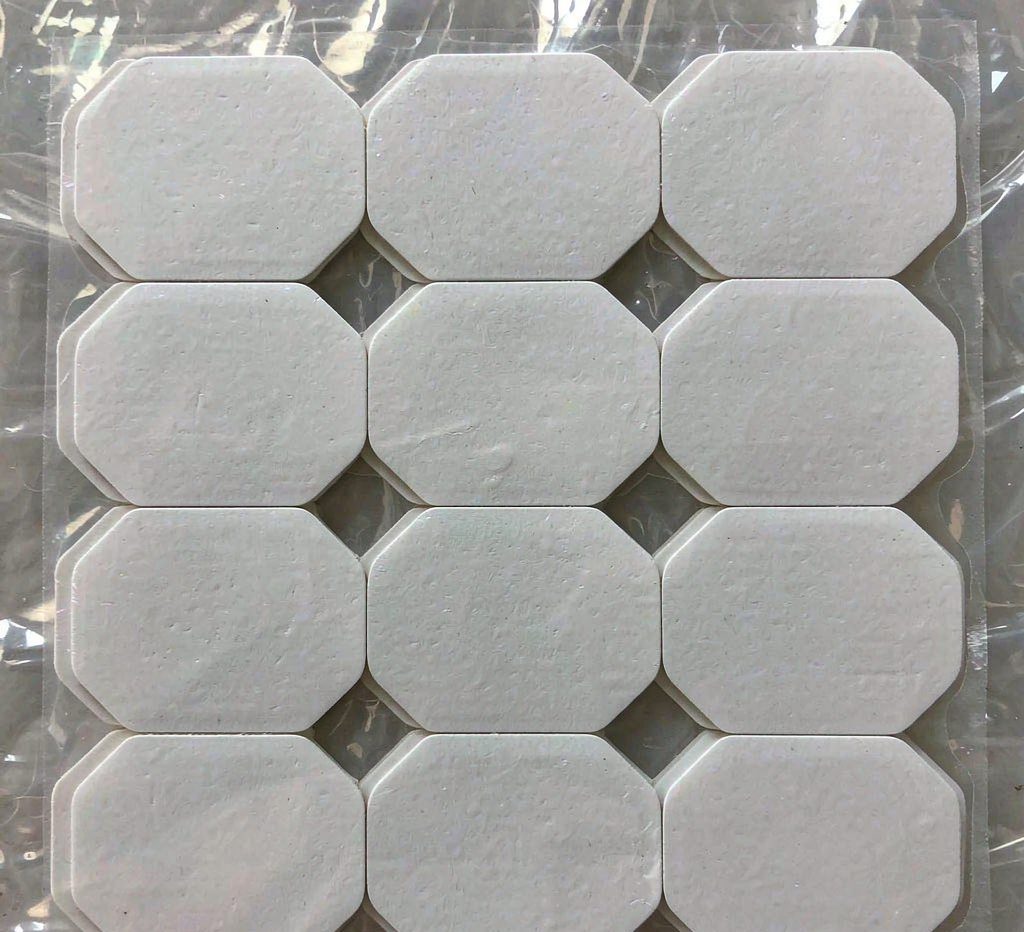
Run the numbers. On a 330 millimetre web with 3 millimetres of edge trim on each side, 324 millimetres are usable. Three 100 millimetre labels take 300 millimetres, two 2 millimetre gaps take 4, and 20 millimetres are left as waste. Widen the label to 105 millimetres and three columns take 315 plus 4 millimetres of gap, leaving only 5 millimetres of waste. That is why a small size change moves the unit price more than an hour of negotiation.
Changing the size beats arguing about the price
Three things a buyer can actually do, in order of effect. Tighten the machine direction gap from 4 millimetres to 2, which adds a few percent of output per roll. Change rounded corners to square, or an irregular outline to a rectangle, so die cutting and matrix stripping run cleanly and scrap falls. Nudge the dimension to a number that divides evenly into the web, so the edge trim shrinks. None of this requires a new supplier or a cheaper face stock. It is recovering what was being thrown away.
The size cannot shrink without limit. The quiet zone around a barcode, the minimum type size a regulation demands, and the suction area an applicator needs are hard floors. Confirm those three first, and only then look at what is left to trim.
Four lines in a quote that get overlooked
Minimum order quantity. Tooling and press make-ready spread over thousands of labels is one thing; spread over a few hundred is another, and small runs are expensive for reasons that have nothing to do with layout. Roll changeover loss. Every roll wastes a few metres at start-up and at the tail, so a nominal 500 metre roll usually yields around 490, and more rolls means more loss. Plate and finishing charges. Each spot colour adds a plate, and foil, varnish and embossing each carry their own make-ready threshold. Colour count and finishing steps drive fixed cost directly.
Work it out yourself and the gap becomes visible
Cost per label is roughly material price per square metre times label area, divided by yield, plus printing, finishing and allocated fixed cost. Split those three parts and the quote difference resolves into material, process or fixed cost. If a converter will state the web width, the number of columns and the metres per roll, the reason is usually obvious in one pass.
The reverse also holds. A quote that returns a single unit price and cannot explain the layout is not comparable. The eight cent and twelve cent numbers may be a four column layout against a three column layout with an irregular shape and a foil step. Without the layout, the comparison is guesswork.
Web width is also negotiable. Most converters hold several widths, and the difference between 330 and 340 millimetres can decide whether a 100 millimetre label sits three across with trim left over or three across with room to spare. Send the size together with the expected volume and ask which width yields best. The catch is more changeovers, and on a small run that make-ready cost can outweigh the material saved, so price both.