

Foil Labels Cost Twice as Much: When They Are Worth It
Hot foil and cold foil add cost and process steps. When shelf impact justifies it, and when a printed metallic effect does the same job cheaper.
The same spirits label quotes at eight cents on coated paper with foil stamping and twenty cents on aluminium foil stock. Buyers ask what the difference buys. The answer lies in three capabilities no other face stock offers.
What a foil label is made of
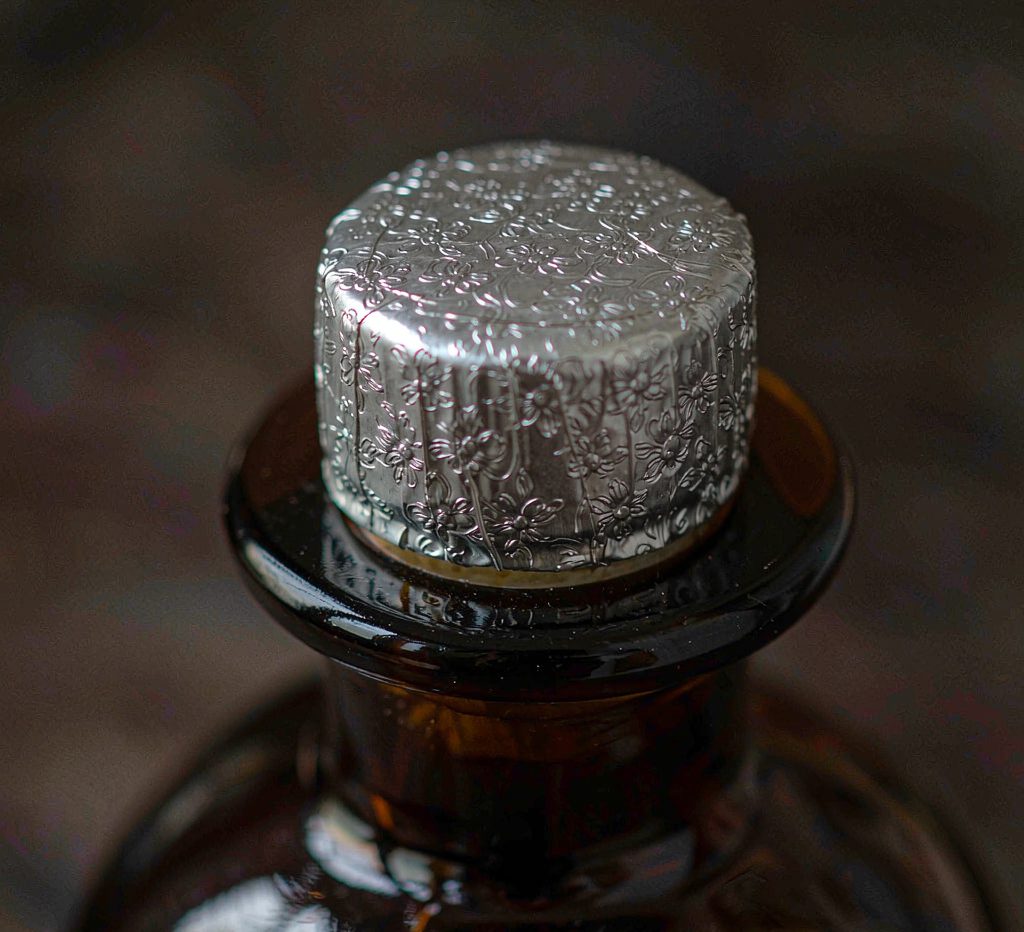
Bare aluminium is too soft and too thin to be a label on its own. The usual construction laminates 6 to 9 microns of foil onto a paper or PET backing, then treats the metal surface. The finished face can be bright silver, matte silver, brushed or embossed. The metal layer transmits no light, no gas and no water vapour, and everything else about the material follows from that.
First capability: total light and gas blocking
Paper and film both transmit some light and moisture; foil transmits none. For products that must be protected from light, such as certain essential oils, photosensitive pharmaceuticals and vitamin supplements, the small amount that passes through coated paper is enough to shorten shelf life. A foil label closes that path completely. The same applies to moisture barriers, where a foil label on a chilled product will not show damp at the back.
Second capability: heat
Aluminium tolerates far higher temperature than paper, and a laminated construction usually shows no distortion or scorching under short exposure around 150 degrees Celsius, with the real ceiling set by the laminating adhesive and the surface coating rather than the metal. Confirm that figure from the supplier rather than assuming. Labels that pass a drying tunnel, a shrink tunnel or sit on warm equipment are much safer in foil. The weak link is usually the adhesive, which softens long before the foil fails.
Third capability: the metal look
The metallic lustre comes from the material itself rather than a transferred film, so a large metallic area costs less in foil than full coverage hot stamping and will not flake when bent. Matte silver also takes colour print directly, producing colour artwork on a metallic ground, which is the standard technique on beer and craft beverage labels.
Where the cost lands
Price first, because laminated foil stock is simply expensive. Printing second, since the metal surface has low surface energy, UV ink keys poorly and usually needs a primer or corona treatment, adding a process step. Die cutting third, because the metal is tough, blades burr sooner, tools need replacing more often, and a burred edge can cut through shrink film or a hand. Bending last: foil creases permanently and will not recover, so it does not suit tight curves or applications that flex.
When the premium is worth it
Products that must be shielded from light, packaging that wants a metallic look without full coverage stamping, and industrial labels needing short term heat resistance. Matte silver foil as a background is already standard on beer and craft beverages, bright silver carries the premium end of cosmetics, and foil resists solvents on oil and chemical containers. For ordinary household goods, ordinary food and inner cartons, coated paper with a laminate is enough and foil is waste.
A practical test: if the foil is only there to make the label shinier, try matte silver synthetic paper or metallised film first. It costs noticeably less, and the visual gap is smaller than the price gap suggests.
Ask for a sample before committing. A foil label on the actual container under the actual lighting tells you more about whether the premium reads as premium than any specification sheet will.