Flexo, Letterpress or Digital: Choosing a Process
Run length, colour count, plate cost and turnaround decide the printing process. A comparison of what each one is actually good at.
Send the same artwork to three converters and the quotes can differ by a factor of two, with lead times two weeks apart. Often the gap is not management. It is the printing process underneath.
What each process does
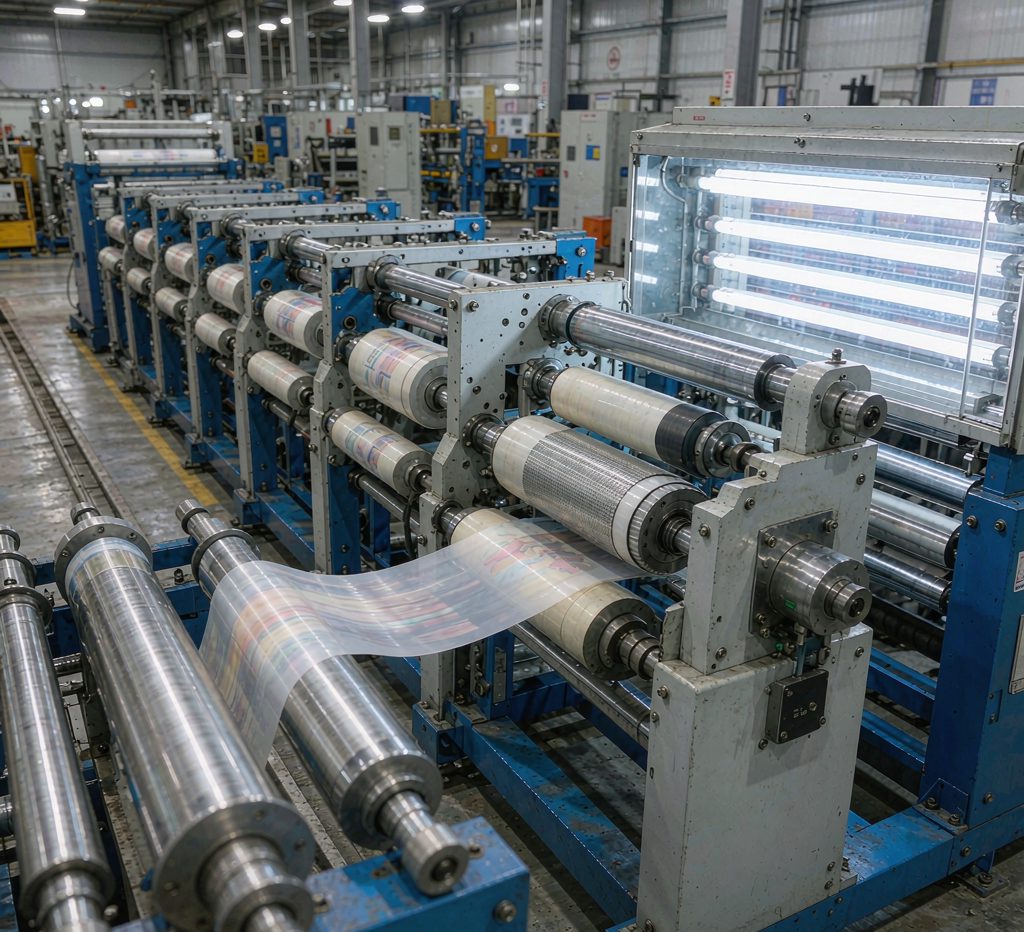
Flexo uses a flexible photopolymer plate wrapped on a cylinder, with an anilox roller metering ink onto the plate before it presses the substrate. Ink laydown is thin and even, which suits solid areas and line work. Letterpress uses a harder resin plate and ink rollers that ink the plate directly, with slightly higher pressure and finer dot reproduction. Digital needs no plate at all, imaging each impression with inkjet or liquid toner, which allows every label to differ.
Where the cost curves cross
Flexo and letterpress both need plates, one per colour, so four colours means four plates and a spot colour adds another. That plate cost is fixed whether the run is a hundred or a hundred thousand, which is why the unit price falls with volume. Digital carries no plate cost but a high per impression cost that barely moves with quantity.
The two lines cross somewhere. For a four colour label the crossover sits in the low thousands; with two colours or one it moves down, and with foil or die cutting in line it moves up. Rather than guess, give the converter your quantity, colour count and finishing steps and ask for both prices.
Quality differences
Flexo is stable across large solid areas with even ink film, but gradients can show slight banding and fine highlights or very small type lose definition compared with letterpress. Letterpress renders dots and detail better, which suits intricate artwork and small type. Digital handles gradients and photographic images most naturally and owns variable data, yet large solids can show faint banding and colour drifts between runs.
Spot colour is the other dividing line. Flexo and letterpress mix a dedicated ink, so the colour is accurate and repeatable. Digital simulates spot colours in CMYK, close but not identical, and some brand colours need an expanded gamut press to match at all.
Material limits
Digital presses run from a qualified list of substrates. Not every face stock and adhesive combination is on it, and an unusual synthetic or an ultra thin film may not print at all or may not hold ink. Flexo and letterpress accept far more, from 60 gsm paper to heavy board, foil to synthetic film.
This matters most during trial production. Confirm the material is qualified for digital before discussing price, otherwise a sample passes and production cannot run.
Finishing compatibility
On an inline press, flexo and letterpress complete printing, foil, varnish, die cutting, matrix stripping and slitting in one pass, which brings high output and tight register. Digital usually separates printing from die cutting, with register dependent on a second positioning step, and complex finishing performs less well. A label that needs both foil and die cutting is often pushed toward conventional printing even at low volume.
How to decide
Small volume, many versions, variable data, image led artwork: digital. High volume, single version, spot colours and complex finishing: flexo. Fine detail, small type, high dot fidelity: letterpress has the edge. Everything in between depends on the specific numbers.
A practical approach is to have the same artwork proofed both ways and applied to the real product. Photographs hide the differences; two labelled bottles side by side show them immediately.
One caution on cost comparisons: ask each converter to quote the same finishing steps. A digital quote that excludes die cutting and a flexo quote that includes it are not the same job.