

Logistics Label Barcodes: What That Long Code Encodes
SSCC, GS1-128 and application identifiers explained. What each field means and why the barcode on a pallet label is longer than a product code.
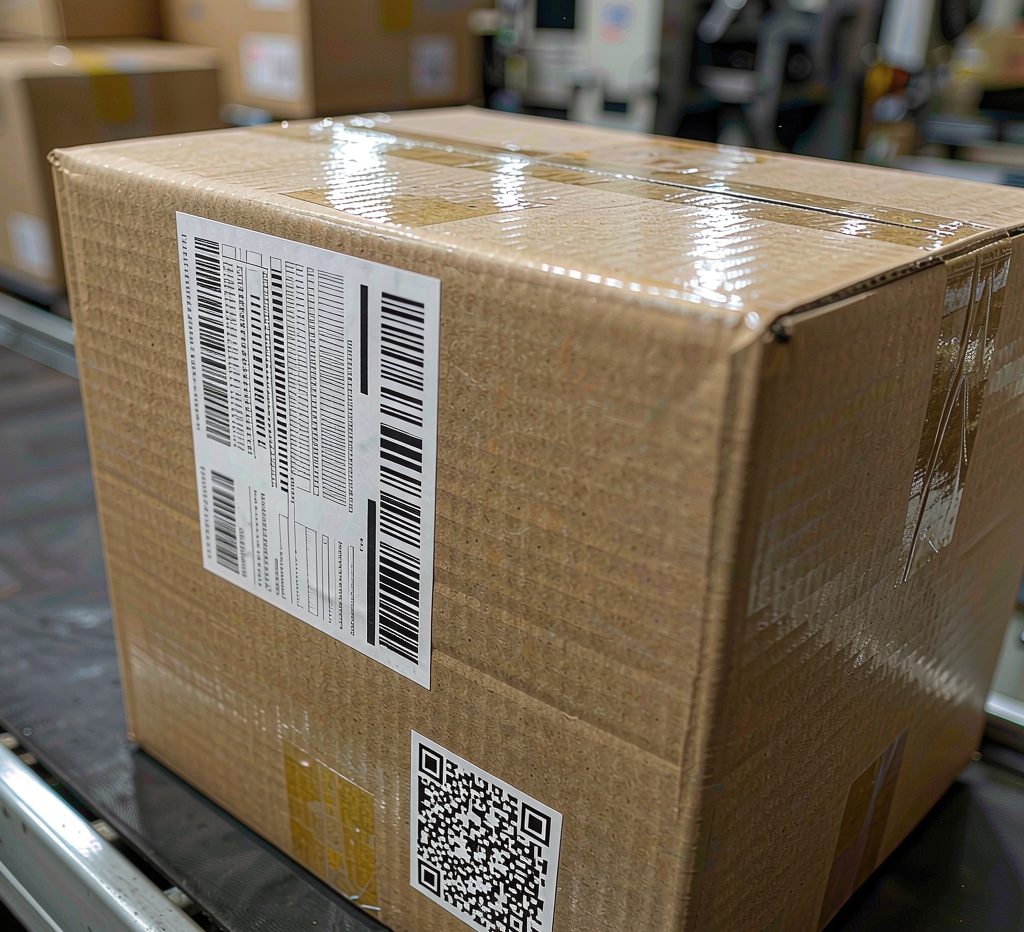
Anyone who receives pallets has seen the label: a long barcode across the top, a few lines of small print below, a square code to one side. Most people only care whether it scans. Few know where the digits come from, and knowing makes fault finding much faster.
Three levels of code on one label
A complete logistics label is arranged in three sections. The top carries the pallet code identifying the whole pallet, the middle the carton code identifying that box, the bottom the product code identifying what is inside. All three can appear on one label or on separate ones. Which section gets scanned depends on how finely the operation is managed.
What SSCC is
Both pallet and carton codes use SSCC, the Serial Shipping Container Code, which is the GS1 identifier for a logistics unit. It is an 18 digit number preceded by application identifier (00), so the encoded content reads as 00 followed by 18 digits.
Those 18 digits have four parts. The leading digit is an extension digit the user defines, typically to separate internal uses. Then comes the GS1 company prefix assigned by GS1, then a serial reference the company allocates itself, and finally a check digit computed from the preceding 17 by a fixed algorithm. Check digit errors are the most common fault, because many printing systems do not compute it automatically and manual entry goes wrong.
GS1-128 versus plain Code 128
Both use the Code 128 symbology. The difference is that GS1-128 content follows the GS1 application identifier rules, where each data element carries an AI prefix: (00) for SSCC, (01) for the Global Trade Item Number, (17) for expiry date. Parsing requires reading by AI rules rather than treating the string as plain text. That is why a scanner that handles ordinary Code 128 without trouble may fail on GS1-128 until the correct parsing mode is enabled in the device.
Hard requirements at the printer
Grade. Logistics operations usually demand grade B or better under the ISO/IEC 15416 verification method. Fall short and handheld scanners miss it on the conveyor, which stops the line. Grade depends on bar width deviation, ink spread, contrast and bar height.
Quiet zone. Clear space either side of the symbol, at least ten times the narrow bar width. Labels that print the barcode to the trim edge have no quiet zone and lose grade immediately.
Colour. Barcodes read on reflectance difference, so dark bars on a light background is the only workable combination. Black on red, clear film and metallic surfaces all defeat a red light scanner. Foil and laser materials used for logistics labels need a printed white patch behind the symbol.
Two placement mistakes
First, do not cross the carton seam. Cartons deform in transit and the tape line moves most, so a barcode straddling it gets pulled out of square. Second, keep away from corners and curved faces for the same reason. Lower centre of a flat panel is the safe position.
One more detail: burnish all four edges with a finger after applying. Logistics labels are large, and an edge that is not pressed down will curl in transit, at which point no scanner will read it.
The check digit deserves its own note. It is computed from the preceding seventeen digits by a modulus ten algorithm and exists to catch entry errors. A scanner that finds a mismatch refuses the symbol outright, which in the field looks like a barcode that simply will not read. When that happens, check the source data before replacing the label.