Electronic Shelf Labels: What Happens to Paper Labels
ESL adoption changes the label, not the need for one. Where paper and film labels remain mandatory, compliance, batch and tamper evidence.
Walk into a supermarket and the row of small paper strips along the shelf edge has turned into grey screens. Changing a price no longer means sending someone round with a stack of labels: one click at the back office and the whole aisle updates. For the store that is efficiency. For a label printer it is an account that has to be recalculated.
What the screens took
Electronic shelf labels solve one problem cleanly: prices change often and must match the system. Fresh produce is repriced three times a day, a promotion has to end on the minute, and manual swaps get missed, delayed or placed on the wrong hook. A connected screen updates in seconds and can carry stock, origin and traceability data as well.
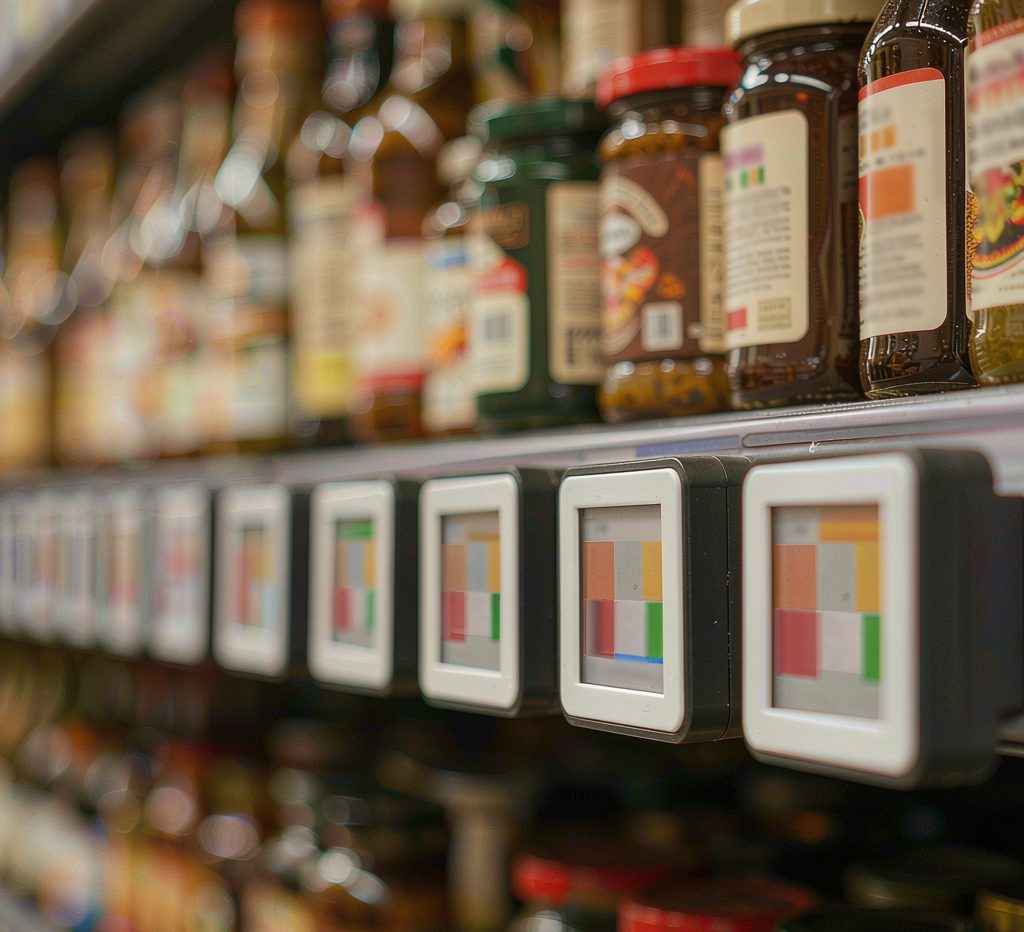
What got replaced is the uniform, high volume shelf strip that carries nothing but a price and a product name. That work used to be the steadiest volume a printer had: millions of pieces a year, fixed sizes, simple process, won on price.
What the screens did not take
Weighing scales still print onto paper or thermal stock that goes onto the film wrap and travels with the goods. A shelf screen cannot follow a tray of pork chops to the checkout.
Promotional displays, end caps, floor stickers, hanging banners, burst signs: odd shapes, large areas, often used for a few days and pulled. None of that becomes a standard screen.
Cold cabinets and wet fish counters are damp, cold and wiped down daily. Batteries and seals make screens a burden there, while a synthetic or film face stock handles water at a fraction of the cost.
Then the back room: totes, bin locations, batch cards, near-expiry notices. Written on, thrown away, replaced. The economics of a screen never work in those spots.
There is a reverse business that gets overlooked: the electronic labels need labels themselves. Every screen carries an asset number on the back, and the battery compartment holds a model code and a replacement date, which is how store audits are done. A chain with tens of thousands of screens needs tens of thousands of small, scuff-resistant labels, barely larger than a fingernail, and the die cutting tolerance is tighter than on the shelf strips they replaced.
The change is not so much a drop in total volume as a shift in structure. Standardized shelf strips shrink; non-standard, temporary, traveling labels stay, and they come in smaller, more fragmented runs.
What it means for buyers
An order used to be a few hundred thousand strips in two or three sizes, with the price beaten down to fractions of a cent. Now it is fifty sizes at a few thousand each, wanted quickly. What matters there is not unit price but how fast dies and schedules can be changed. A printer whose small-run quote sits close to its large-run quote wins that work.
Shapes have loosened up as well. Custom die cuts, spot varnish and variable data printing are all growing, and those sit comfortably inside digital printing while conventional offset struggles with them.
Each piece is tiny, yet one order runs into tens of thousands, and the cutting dies and waste stripping have to be built from scratch. Nothing about that rhythm matches printing shelf strips.
Huaishi supplied a supermarket chain with water-resistant labels for its fresh counters, two centimeters wider than the standard strip so staff had room to write origin and date by hand. Requests like that have become more common in the screen era, because wherever a screen cannot go, paper still fills the gap.