

What Paper Weight and Total Thickness Decide
Face stock weight and total caliper decide stiffness, printer feeding and conformity on curves. Both figures belong on the purchase confirmation sheet.
On a pressure sensitive label datasheet, the columns after size and material usually carry two figures: face stock weight and total thickness. Many buyers skip them as trade jargon. In practice they decide whether labels feed cleanly through a printer, release and apply without trouble, and conform to the surface you are sticking them on.
Weight is about the face stock itself
Weight applies to paper face stocks, grams per square metre. Coated paper commonly comes around 80 and 128 gsm. Higher weight means a stiffer, more substantial label that holds its shape on a large flat panel. Lower weight means a softer label suited to slight curves, though very light stock can curl and tear when peeled from the liner. Choose weight by application method: hand peel and apply tolerates lighter stock, machine dispensing prefers a step up, because the label has to hold itself flat on the way out of the dispenser.
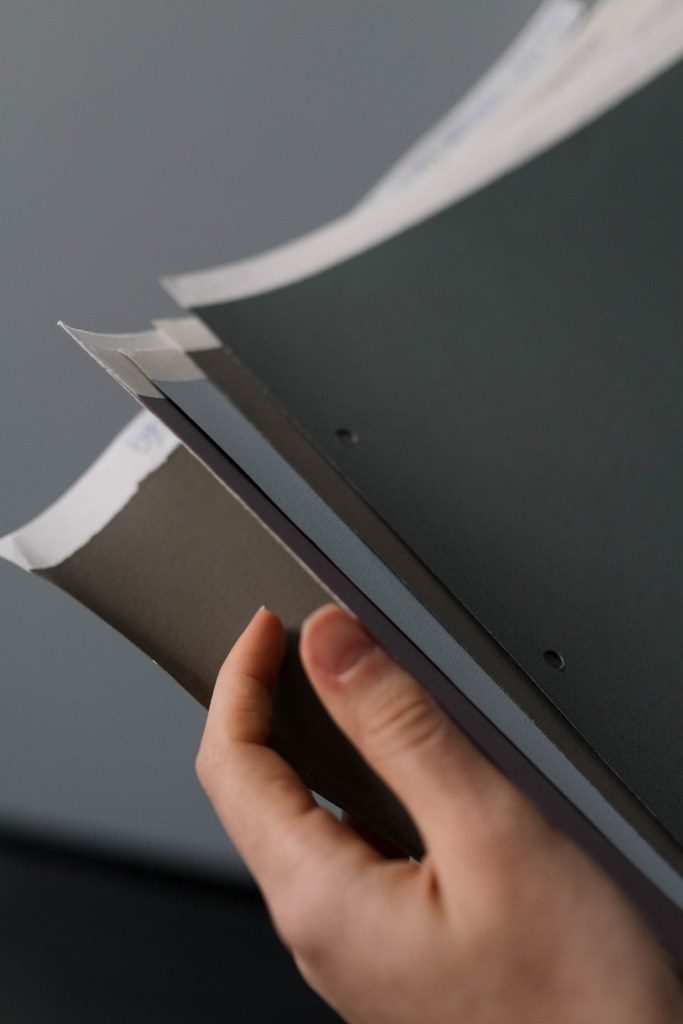
Thickness is about the equipment and the curve
Total thickness adds face stock, adhesive and liner, measured in microns. First, it governs printer feeding. Stock that is too thin wrinkles in the path; too thick and it may not make the turns inside the machine at all. Every printer publishes a workable thickness range. Second, it governs conformity. The same label behaves completely differently on a small-radius bottle shoulder and on a flat carton. A thick label lifts at sharp bends, while a thinner film sits down and stays. Third, thickness reappears in the roll arithmetic: it decides how many labels fit on a given roll diameter.
Read the two figures together
Weight and thickness are not interchangeable. Two labels with the same nominal face stock, one heavier but thinly coated, one lighter with a heavy adhesive coat, feel different in the hand and run differently on the machine. Put both numbers on the purchase order so a mismatch can be proven on delivery. When HuaiLion issues a label confirmation sheet, it lists face weight, total caliper and liner weight side by side, because the three together make up the material specification and any missing figure leaves room for dispute at acceptance.
The trade-off
Premium packaging wants a stiff face stock that carries the layout, at the cost of a higher unit price and fewer labels per roll. Shipping slips and temporary markings can go lighter, cheaper and easier to apply. Films grade by caliper more finely than papers: the same PET at twenty and at fifty microns is two different handfeels and two different prices. When unsure, request samples at two grades, apply each to your own packaging, and run one through your equipment. That settles the question faster than reading datasheets.
A quick word on measuring. A micrometer on a single label overstates the caliper, because pressure compresses the adhesive and the reading varies with operator force. The honest figure is the one printed on the roll core label and on the datasheet, measured per the material standard with a defined foot pressure. If you need to verify a delivery, measure a flat unprinted section of web away from any die cut, take five readings and average them, and compare against the stated figure with a tolerance of a few microns. Two examples make the stakes concrete. A 25 micron film on a shampoo bottle in a hot filling hall conforms to the shoulder and stays flat through the summer; the same job specified at 50 micron with a stiff adhesive starts lifting at the curve within a week. A heavy card stock label on an industrial drum survives abrasion that would destroy the light paper, but it costs more per roll and feeds more slowly on a desktop printer. Neither choice is wrong; both are wrong when they are made by habit rather than by the surface and the machine involved.
In one sentence: weight decides whether the label feels like paper or card, thickness decides whether it survives your equipment and your curves. Both are fields on the confirmation sheet, not optional footnotes.