

Adhesive Oozing and Blade Build-Up When Slitting Labels
Oozing and blade build-up are two different faults. Ooze means adhesive has been pushed to the roll edge by tension and temperature. Build-up means the blade is crushing rather than cutting. Identify which one before changing anything.
Edge ooze and blade build-up are not the same fault. Ooze is adhesive pushed out to the side of the roll, visible as a glossy band at the edge. Build-up is adhesive grabbing the blade during the cut, leaving a gummed, fuzzy or incomplete slit.
They often appear together, but the causes differ, so identify which one you have before touching tension or tooling.
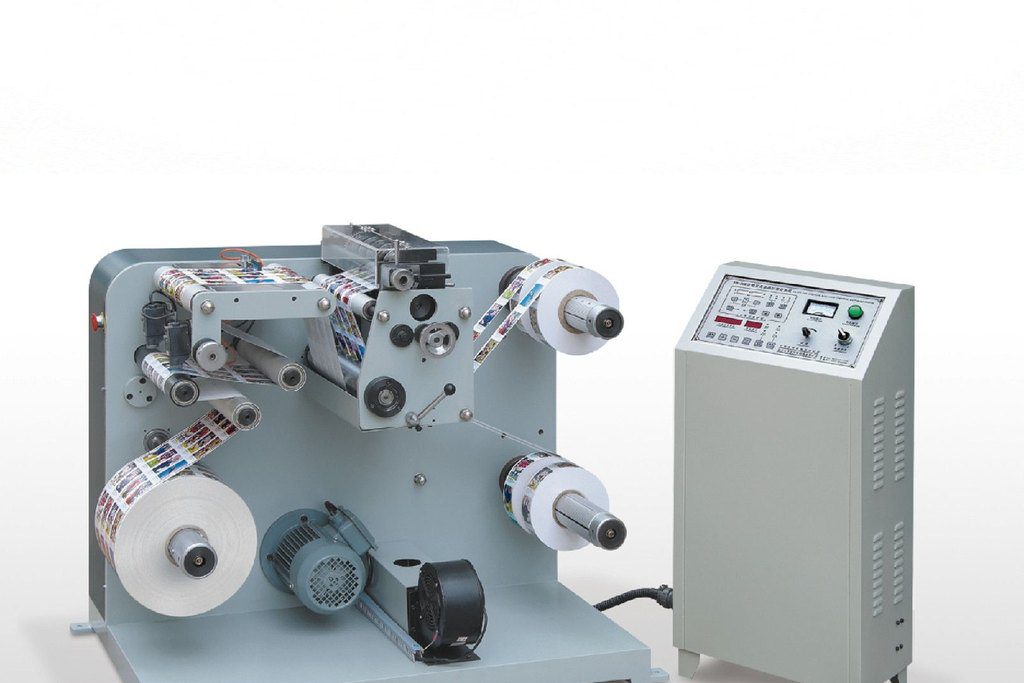
Telling them apart
| Symptom | Direct cause | Adjust first |
|---|---|---|
| Glossy band at the roll edge, tacky to touch | Adhesive squeezed sideways | Winding tension, ambient temperature |
| Blade carries adhesive, cut incomplete, strings form | Blade crushing the web instead of cutting | Blade sharpness, slitting speed |
| Tacky only after a few minutes | Adhesive creeping back into the cut | Adhesive type and coat weight |
| Only the outer wraps stick | Accumulated tension in outer layers | Taper tension setting |
A finger run around the roll face settles it. If the fingertip feels tacky and strings, that is ooze. If the cut edge alone is tacky and the edge itself is ragged, that is blade build-up.
Ooze: adhesive pushed outward
Ooze happens when pressure exceeds what the adhesive layer can carry, so the adhesive moves sideways. Three sources, roughly in order of frequency.
Excessive winding tension. Pressure accumulates with every wrap. Past 300 mm diameter, inner layers can carry two or three times the pressure of outer layers, and adhesive at the edge has nowhere to go. Tight winding prevents slip; it does not mean the roll is well built.
High shop temperature. Pressure-sensitive adhesive flows noticeably above 30 C, so the same tension that is fine in winter oozes in summer. Top-floor plants and humid seasons are where this hides.
Coat weight or a soft adhesive. A few extra grams per square metre means another layer of adhesive available to migrate. Cold-weather and high-tack adhesives are softer at room temperature and ooze sooner.
| Parameter | Typical range | How to judge |
|---|---|---|
| Winding tension | Tapered, 20-40 percent decay | Clean edge, no telescoping |
| Slitting room temperature | 20-25 C | Adhesive not tacky under finger pressure |
| Coat weight deviation | Within 2 g/m2 of specification | Matches the proof sample feel |
Build-up: the blade is not cutting
Once a blade dulls, the web is crushed rather than cut. Adhesive is displaced to both sides of the cut, one side stays on the label and the other transfers to the blade, and build-up begins.
Blade sharpness and angle. Rotary and razor blades use different edge angles, and a large angle on thin liner crushes it. Using the wrong blade type is more common than a dull blade.
Slitting speed. Speed brings friction heat, which softens the adhesive at the cut line and makes build-up far more likely. Wide machines are more sensitive than narrow ones.
Adhesive type versus temperature. Cold-weather adhesive is relatively hard at room temperature and cuts well. High-tack adhesive, the type used on rough surfaces, is the worst offender in a warm room; schedule those orders for the coolest part of the day.
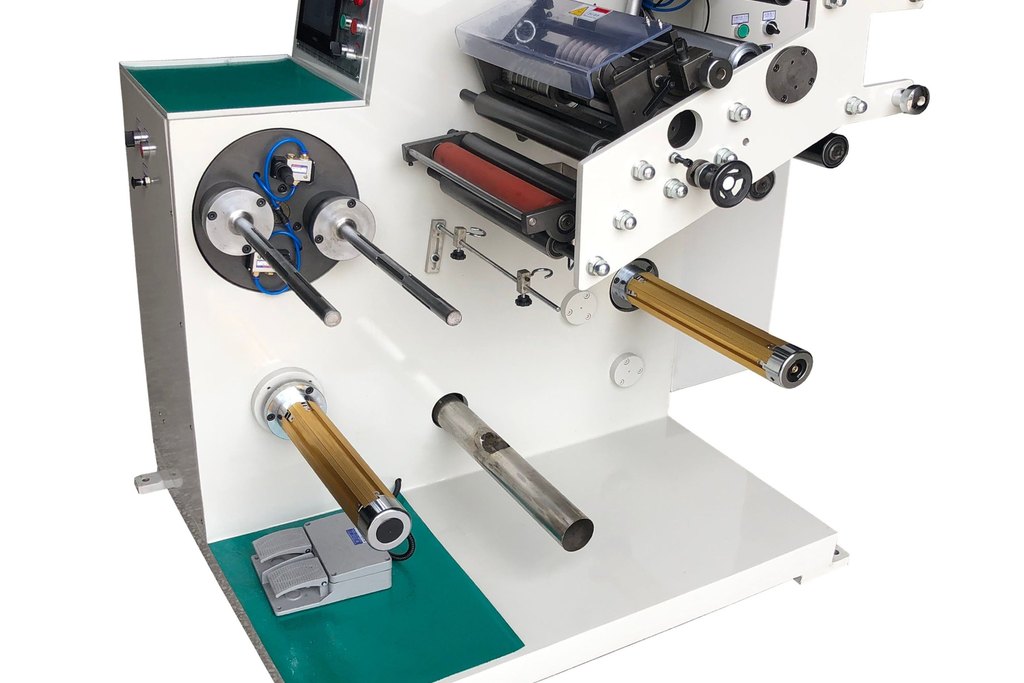
Check winding tension and shop temperature first; the blade comes later
Four steps on site
- Run a finger around the roll edge and record whether there is adhesive there.
- Read the room temperature. Above 28 C, cool the area before retesting.
- Stop and inspect the blade edge for a bright wear line, and check the cut edge for fuzz beyond 0.2 mm.
- Halve the speed and slit 50 metres. If build-up disappears, the cause is heat and tooling, not adhesive.
Keep the sequence. Slitting faults usually respond to one variable at a time, and changing tension and blade together tells you nothing about which one worked.
Prevention costs less than rework
Use taper tension. Tension decays with diameter so outer wraps are looser than inner ones and edge pressure never accumulates. Most slitters support it; many are left on constant tension because nobody changed the default.
Control temperature before slitting. Let rolls equalise in the hall instead of going from a 35 C truck straight onto the machine. In winter the opposite applies: cold rolls become brittle and the cut edge cracks.
Change blades by metres, not by feel. Log the length each blade has cut and replace on schedule, which is cheaper than reacting to build-up.
Questions we get
Why does only the outer part of the roll ooze? Outer wraps carry the accumulated pressure and are exposed longest. That points at tension settings rather than material, so reset with taper tension.
New adhesive supplier, immediate build-up. Is the adhesive bad? Check whether the type changed. High-tack adhesive needs cooler slitting, so parameters should follow the material rather than the material being rejected.
Can an oozed roll still be used? Remove the affected outer wraps, or the adhesive will grab guide rollers and cause tracking faults. If the inner face is clean and dry to the touch, the rest is usable.
Why does winter cause cracking instead of ooze? Cold makes the adhesive hard and the facestock brittle, so the cut edge develops micro-cracks that lift after application. Let material reach 15 C or above before slitting.