

Heat and flame ratings for labels on battery cabinets
Battery cabinets run hot in summer and cold in winter. Temperature, flame rating and adhesive each need their own answer, with a comparison table and four practical checks.
A battery cabinet skin hits the low sixties on a sunny day and minus twenty in a northern winter. A pressure-sensitive label on that surface has to clear two separate bars, heat and flame, or it lifts and embrittles within a season and nobody can say why.
Cabinet skin is not cabinet interior
Most cabinet makers quote an interior ambient figure. The label sits on the outside, facing a different set of numbers: sun-loaded steel runs ten degrees or more above air temperature, and exhaust air from the internal fans sweeps the lower edge.
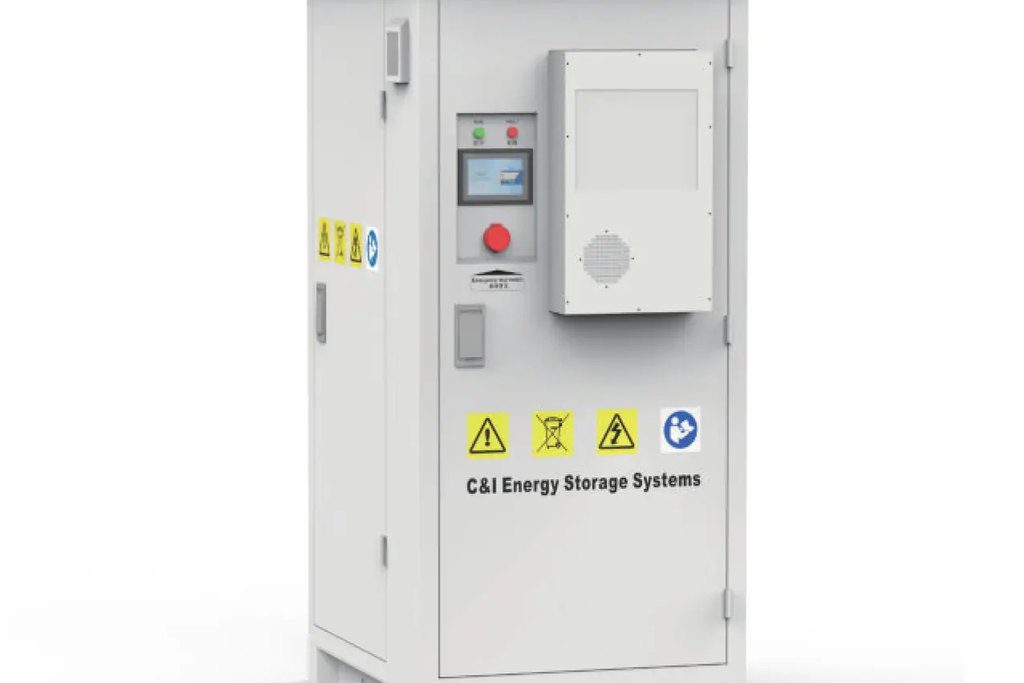
Ask three questions before choosing anything: which face the label goes on, how hot that face gets in summer, and whether it sees direct sun. With those three numbers the temperature band becomes a real choice rather than a guess.
Flame rating applies to a stack, not a sheet
A label is facestock, adhesive and liner. UL94 style ratings are normally issued for film facestocks. Adhesive layers rarely carry one on their own.
When the cabinet maker asks for V-0, confirm whether they mean the whole label or the face material. A whole-label claim needs a finished-sample test. A facestock report will not close that file.
The adhesive gives up before the facestock
Facestock survives 120 degrees while the adhesive softens at seventy, and the label slides down the panel with lifted corners.
Acrylics start to soften above seventy and lose shear strength on a permanently warm surface. Rubber adhesives handle cold well and heat badly. Silicone is wide-range and expensive, and most cabinets never need it.
One field test: peel a label off and see whether adhesive stays on the panel. If it does, the adhesive is short on shear and changing adhesive beats changing facestock.
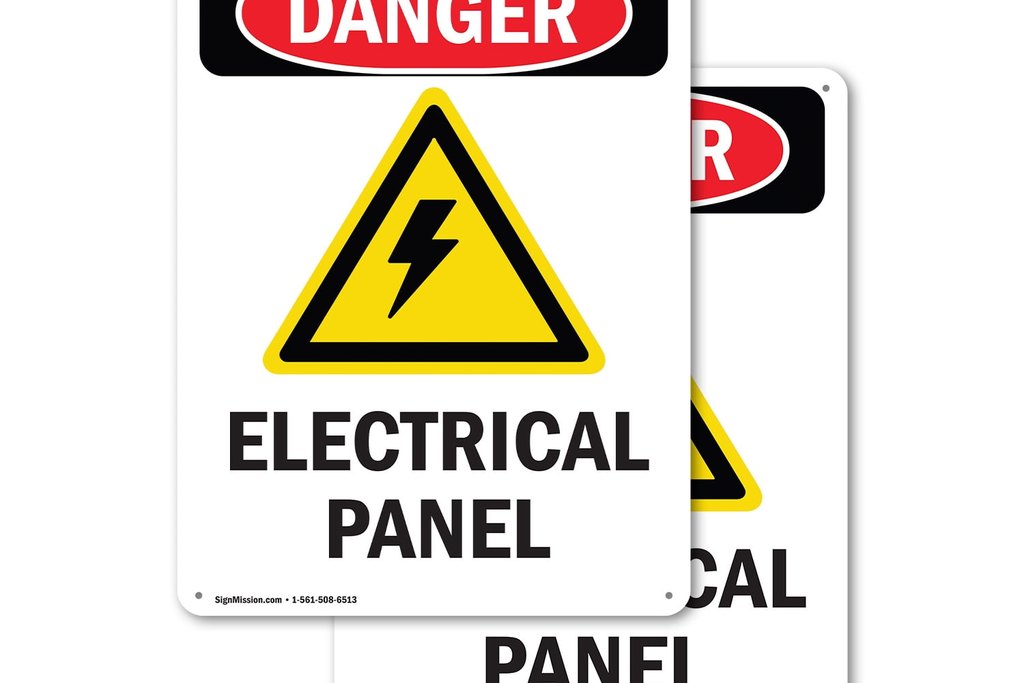
Flame rating applies to the finished label, not the face alone
Outdoors, two more forces
UV attacks facestock and print. A standard coated paper face yellows in one summer and the type goes grey. Outdoor cabinets want white PET or a UV-resistant overlaminate.
Condensation attacks the adhesive. Day-night swings leave the panel wet, moisture creeps in from the edge, and within a couple of months a white halo appears. Dry the panel, roll the edges down hard, and half of that problem disappears.
Working numbers
| Item | Typical demand | Practical range | How to check |
|---|---|---|---|
| Continuous heat | 60-80 C at the skin | Acrylic -20 to 100 C, rubber -40 to 120 C | 24 h at 70 C, then look for lift and shear |
| Short excursion | Near exhaust or inverter | Facestock up to 150 C briefly | Supplier data sheet, verified per batch |
| Flame | UL94 V-0 or V-2 | Film faces often V-2, V-0 needs a specific build | Test the finished label, not the face alone |
| Weathering | Three years outdoors | White PET plus UV overlaminate | 500 h xenon arc, then measure colour shift |
| Substrate | Galvanised, powder-coated, stainless | Powder coat is rough, needs high initial tack | Trial-stick 24 h before the full run |
Those ranges are field experience. Cabinet processes differ enough that every shop should re-check them against its own samples.
Replacing a label on a finished cabinet means downtime, adhesive removal and a re-stick. Before a production run, put twenty labels on a real cabinet for a week. Sun, rain and frost will settle in seven days what a data sheet cannot settle in a meeting.