

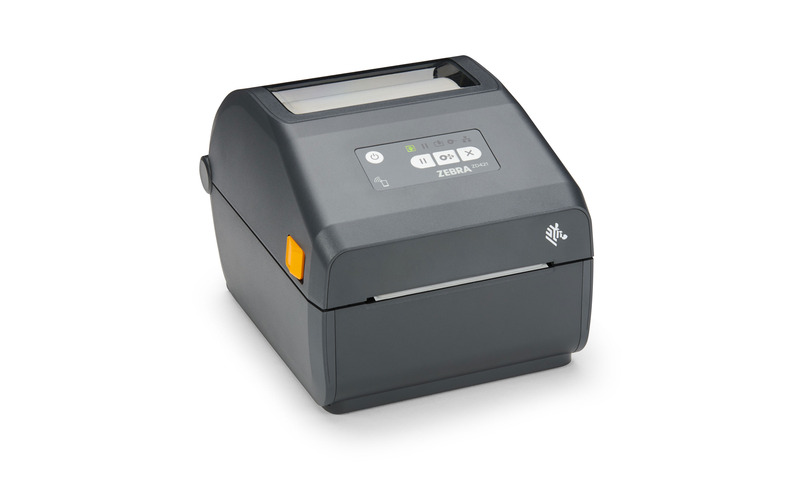
The ZD400 is a series rather than a single model. One printer platform spans several versions, separated by print method, width and industry use. Confirming which version you need is faster than guessing from a model list.
Three dimensions to settle
First, width. The 4-inch ZD421 prints up to 104 mm at 203 dpi or 106 mm at 300 dpi, which covers routine 100 x 70 mm and 100 x 100 mm labels. The 2-inch ZD411 prints up to 56 mm and suits narrow work such as cable markers, tube labels and small retail tags. Choose the wrong width and everything downstream suffers.
Second, print method. Direct thermal needs no ribbon and suits shipping documents and short-lived price tags. Thermal transfer takes ribbon and is the choice where labels must stay legible for over a year or resist abrasion and solvents.
Third, industry version. The healthcare version is adapted for hospital environments. The ribbon cartridge version encloses the ribbon in a cassette, so changing it involves no hand threading and less risk of loading it wrong.
The software side
The ZD400 series supports Zebra's Print DNA suite, covering deployment, remote management and security configuration. With one printer the difference is small. With a fleet it shows: new units pick up configuration templates on first boot, and firmware and settings deploy in bulk.
Service life
Zebra positions this series for stable long-term operation, with the frame and mechanism built for daily commercial duty. Actual life depends heavily on workload, media quality and cleaning habits. Poor label stock and an uncleaned printhead will shorten the life of any printer.
Narrowing the choice
Four answers settle it: label size, daily volume, how long the label must last, and whether networking is required. Those determine width, print method, interfaces and industry version. Where the answer is unclear, send us a sample label and we will print it, which is more useful than reading a spec table.