

When Some Labels in One Batch Stick and Others Lift
Patchy adhesion usually comes from uneven coating, release, application pressure or the surface itself. Sampling by position narrows it down quickly.
If a whole batch fails to stick, the material choice is probably wrong and a different adhesive solves it. If some labels hold while others lift at the corners two hours later, the diagnosis is harder, because the adhesive is most likely fine and the fault lies in consistency. The fastest approach is to sample by position, isolate the affected section, and only then decide which end to investigate.
Sort by position in the roll
Record where each lifted label sat in the roll. Do they cluster at the start and end, appear at a regular interval, or scatter at random? Clustering at the roll ends points to winding tension or pressure on the roll face during transport, which squeezes adhesive or stretches the face stock so it springs back after application. A regular interval suggests a mechanical cycle on the die-cut, laminating or coating roller, where one small runout repeats each revolution. Fully random failures point first to the surface being labelled.
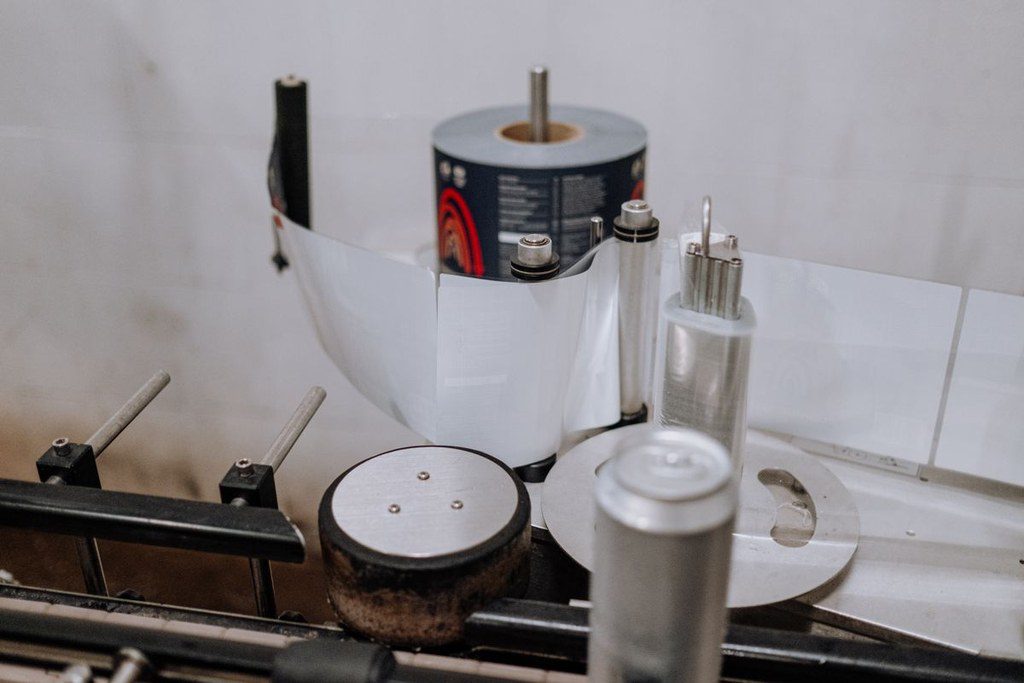
Write down time, operator and room conditions
Note the application time, the operator and the temperature and humidity alongside each sample. A surprising number of batch differences turn out to be two shifts, or labels applied before and after the air conditioning came on.
Then examine the surface
Bottles and cartons on one pallet are not necessarily alike. Mould release agent left on recycled mouldings, a different lamination batch on a carton, glass that was washed but not fully dried, or fingerprints carrying oil all create local weak spots. Take three containers that held and three that lifted, and apply fresh labels from the same section to all six in a cross test. If the problem follows the container, it is a surface issue and the labels are not at fault. A dyne pen gives a quick read on surface energy; readings several steps apart across one batch mean the incoming goods need attention first.
Coating and release consistency
Adhesive is coated, and a small cross-web variation in thickness changes initial tack. Peel a label and inspect the adhesive face under raking light or a loupe for streaks, skips and bubble lines. Uneven release force looks similar. If the peel feels tight in one stretch and loose in the next, labels are being stretched during dispensing and then relax on the container, lifting a corner. A handheld force gauge used at a fixed angle and speed at several points along the roll gives numbers that outlast anyone's memory of how it felt.
Check storage at the same time
Rolls moved between a warm store and a cold line, left open for days, or stacked flat under weight often degrade at the outermost tens of metres first. Apply five labels from the outside and five from the core in the warehouse and compare. The difference is usually obvious. Where adhesive has bled at the roll edge, strip that section before loading rather than running the whole roll.
Application itself
In manual work, pressure, order of contact and where the finger lands vary, and an unpressed corner becomes the starting point for a lift. On an applicator, look at peel-plate angle, brush pressure and the gap between the applicator head and the container; a wide diameter tolerance makes contact pressure swing. Have one operator run twenty labels on one machine under fixed conditions. If all twenty hold, the material is cleared and the variation is coming from feeding or handling.
Make the sampling repeatable
Keep a short form with four fields. Position in the roll, container ID, operator and time, and a peel reading or a described peel feel. Twenty samples usually point clearly enough. When a customer reports this at HuaiLion, we ask them to keep the lifted labels with their matching liner and send a short length from each end of the roll, since comparing coating pattern and release force beats a phone description. If the fault sits in one coating section, replace that roll. If it sits on the container, fix incoming cleaning first. Changing the adhesive wholesale also changes the labels that were already holding, and creates a whole new round of validation.