

Ribbon Wrinkles and Breaks Mid-Run, Where to Start
Wrinkling, drift and broken ribbon usually trace back to tension, roll diameter, head pressure or width matching rather than the ribbon itself.
When a thermal transfer ribbon develops a diagonal wrinkle, drifts to one side or snaps under the printhead, the first assumption on the floor is usually a bad ribbon. A fresh roll behaves for a while, then the fault returns. Most of these cases come from the machine's mechanical condition and from how the roll was loaded. Working through setup, pressure and the web path in that order beats swapping consumables.
Start with loading
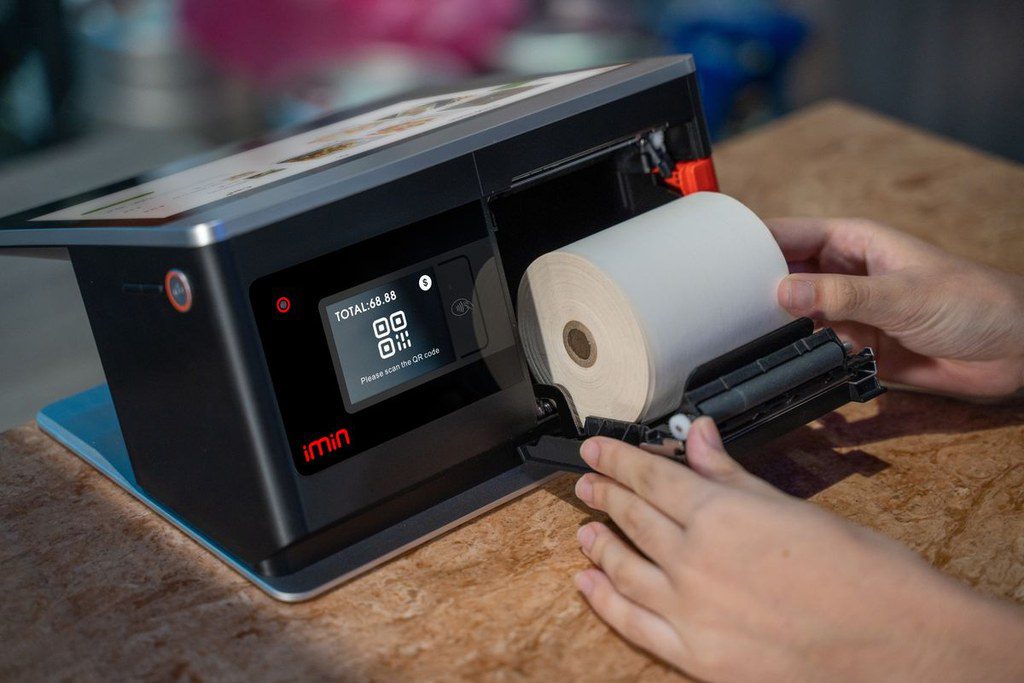
A roll seated off-centre, a core not locked onto the spindle, or flanges that do not sit against the roll edge all let the ribbon wander. Align both ends, seat the flanges with light pressure, and avoid over-tightening, which can deform the core. Ribbon width should be at least the label width. If it is narrower, part of the printhead presses directly on the label stock, wearing the head and loading the two edges unevenly, which is where diagonal wrinkles begin.
Roll diameter changes the tension
A full roll has more inertia, and tension shifts noticeably as the supply approaches the core. A lot of wrinkling appears in the last third of a roll for exactly that reason. On machines with a tension control, test one setting at full diameter and one near the core. On older models without it, balance the take-up friction against the print speed. If the first part of a roll runs clean and the tail wrinkles, reset the tension before questioning the batch.
Check head pressure and side balance
Uneven pressure pulls one side of the ribbon tighter than the other and produces a diagonal crease. Stop the machine and look at the head's impression on the ribbon. A darker mark on one side means the balance is off. Turn the pressure screws a fraction on each side and retest; a large single adjustment just introduces a new tilt. A loose head bracket or a grooved platen roller produces the same symptom, and adjusting pressure in that case only hides the fault.
Excessive heat deforms the base film, especially a thin film at high speed, so wrinkles often arrive with faint print. Back off temperature and speed together by one step rather than dropping heat alone, which makes it easier to find the working point.
Dirt and wear along the web path
Adhesive and paper dust on guide rollers and the platen change their effective diameter and steer the ribbon. Wipe each roller with a lint-free cloth and an approved cleaner, and check that every roller turns freely without axial play. A chipped or burred peel plate catches the ribbon, and breaks tend to occur at that same spot. Do not splice a broken ribbon and carry on, since the joint can tear again under the head. Put the remainder on a slow, short job instead.
Matching stock and machine
Wax, wax-resin and resin formulations differ in base film thickness and heat tolerance, so print settings need recalibration when the class changes. Resin usually needs more energy. If heat is already high and wrinkling persists, try a thinner base film or a slower speed. Very soft, thin face stock stretches in the print zone and drags the ribbon with it, a combination seen often with film labels.
Static is another candidate
In dry weather, film labels carry a charge that attracts the ribbon and creates local folds. Humidifying the room, confirming the earth connection and fitting an anti-static bar all help. Wrinkles that cluster in winter and disappear in summer usually belong here.
Record every adjustment
Log four items: ribbon grade and batch, width, temperature and speed, and the pressure setting, then add the outcome after a full roll. At HuaiLion we supply sample labels and a settings sheet with the ribbon, so a new batch needs only a density and tracking recheck. If three different rolls all wrinkle on the same machine, the consumable is cleared and the head bracket and platen need a service visit. Two or three rounds of these records also show when the printer is due for scheduled maintenance.