

Does a California Prop 65 Warning Belong on Your Label
A Prop 65 warning is not required for every product shipped to the US. Three tests decide it: a listed chemical, a plausible exposure route, and sale into California. If all three hold, the label needs a warning; the format then depends on the space you have.
Whether a Prop 65 warning goes on the label comes down to three tests: does the product contain a listed chemical, will normal use create an exposure, and will the goods reach California consumers. All three have to hold before the warning is required.
Plenty of exporters print it after only one of the three. The result is a label that gives up space and makes the product look hazardous for no reason.
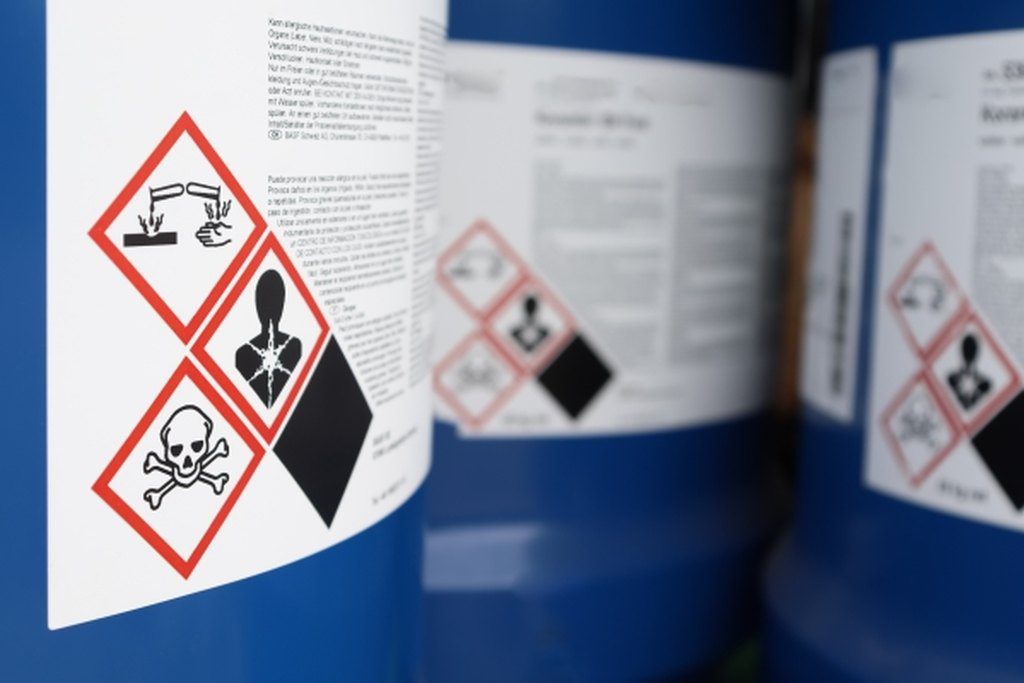
It regulates disclosure, not sale
Proposition 65 is a California statute, formally the Safe Drinking Water and Toxic Enforcement Act of 1986. It does not ban products that contain listed chemicals. It requires a clear and reasonable warning where an exposure is possible.
That makes it a disclosure duty rather than a market entry condition, which is the point most often confused with EU REACH. REACH governs registration, evaluation and restriction, and a substance above a limit stops the sale. Prop 65 governs the warning; a listing does not mean the product is banned.
The list is updated annually and has grown to nearly a thousand substances, covering heavy metals, common solvents, some flame retardants and certain botanical extracts. Check the current list item by item rather than relying on memory.
All three tests, then a warning
| Test | Warning triggered | No warning needed |
|---|---|---|
| Chemical | Intentionally added, or residue above the safe harbour level | Trace residue below the threshold |
| Exposure route | Mouth, skin or inhalation contact is possible | Fully enclosed, no contact in use |
| Market | Sold in California, or could be bought by a California consumer | Sold only in other states |
Safe harbour levels are expressed as an allowable daily exposure in micrograms per day, with separate values for cancer and reproductive toxicity. A business either demonstrates exposure below that level or applies the warning.
Short form or long form
The short form is a single statement plus the state website address and typically runs two lines of English. The long form names the chemical and the exposure route and occupies more than twice the space.
| Format | Content | Approximate footprint (30 mm wide label) |
|---|---|---|
| Short form | Statement plus website | About 2 lines, 8 pt or larger |
| Long form | Chemical name, route, website | 4-5 lines, will not fit in 30 mm |
If the label genuinely cannot carry it, the rule allows the warning on the outer package or a hang tag, provided the consumer can see it before purchase. Moving it into a leaflet or onto a web page does not satisfy the requirement.
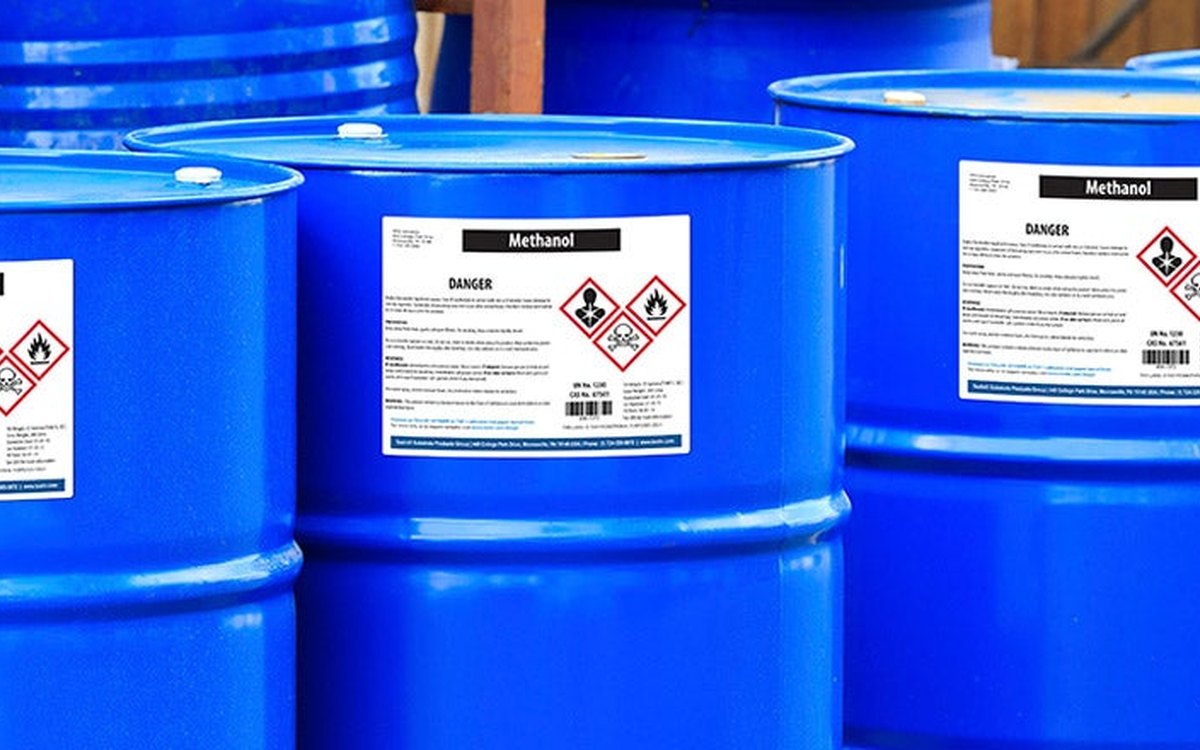
Short form or long form depends on how many items the label area can hold
Three practical points on the label itself
The text has to last. A warning is content that must remain legible for the life of the product. Thermal paper is the wrong choice because print fades with heat and time; coated paper or synthetic facestock with thermal transfer holds up.
The URL has to scan. A long English address on a narrow label smears easily. Replacing it with a QR code works, but keep the quiet zone intact instead of trimming the margin to save two millimetres.
Match adhesive and facestock to the environment. Chemical and automotive products shipped to the US often carry oil and see outdoor exposure, where a weatherable facestock outperforms standard coated paper. If the product also touches food, inks and adhesives face a separate test regime.
Three checks before printing
- Compare the formulation against the current list, including ink and adhesive rather than only the main material.
- Estimate exposure under both normal use and foreseeable misuse, and compare with the safe harbour level.
- Decide format and position, then confirm the printed result is legible at production size.
Questions we get
What happens without a warning? Enforcement runs largely through private litigation. The usual exposure is a buyer or consumer claim for remediation and damages rather than a regulatory fine, and the amount depends on product, volume and exposure.
Does a warning admit the product is harmful? No. It states that a listed chemical is present and an exposure is possible. Many companies add it even below the threshold to avoid litigation, and adding it without basis weakens the brand.
The label is tiny. Can the warning live on the website? No. It has to be visible before purchase, and a website is post-purchase information. Outer packaging, a hang tag or a packing insert works if it is visible at the point of sale.
Do we need separate labels for different states? Usually not. A label carrying the warning is acceptable elsewhere, so most companies run one version nationwide and accept the extra space.