

Barcode Printing Licensing Is Gone: Who Owns the Code Now
China's revised Barcode Measures took effect on 1 May 2026 and dropped the printing licence. Verification and filing remain, and contract-manufactured goods must carry the principal's code. Three changes, three penalties, one table.
China's revised Measures on Barcode Administration took effect on 1 May 2026, and the old barcode printing licence is gone. The obligation to check is not. A printer still has to see the customer's system member certificate and keep it on file, and goods made under contract must carry the principal's code. Get those three points wrong and the labels are waste.
The licence went, verification stayed
Under the old rules a printer had to hold a qualification certificate before taking barcode work. That requirement was deleted, along with Article 11 of the previous text, in the amendment issued as SAMR Order No. 127 on 28 February 2026.
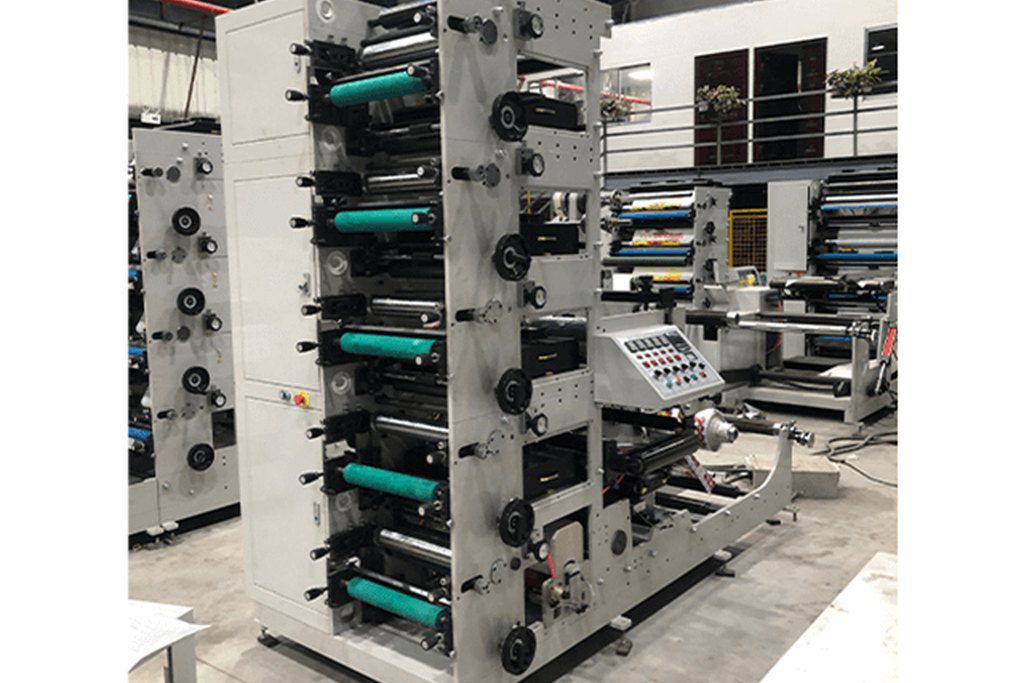
What opened up is market access. Article 15 of the new text is unchanged in substance: printers must print to the relevant national standards and guarantee quality, and when they accept barcode work they must check the customer's system member certificate, or an equivalent foreign document, and file it.
The one-off certificate is replaced by a check on every job. For a pressure-sensitive label plant the admin work has not shrunk, it has moved from January to every purchase order.
Three changes that land on the artwork
The definition changed. Article 2 now describes a commodity barcode as a code that identifies the identity of goods, and states that China follows the international identification system. That aligns with GS1, so export work does not need a second coding scheme.
Contract manufacturing is now explicit. The new Article 19 says goods made by a third party must carry the manufacturer code registered or filed by the principal. A group company that files with the national technical body may let a subsidiary use the group code, provided the products share the group brand.
Foreign codes have a route too. Article 21 requires the party bearing quality responsibility to file with the national technical body when goods made in China carry a barcode registered abroad, submitting the registration proof and a power of attorney.
| Situation | Whose code | Filing | Article |
|---|---|---|---|
| Made and sold in-house | Your own manufacturer code | Registration only, valid 2 years | 5, 6, 24 |
| Made under contract | The principal's | Principal registers or files | 19(2) |
| Group brand, subsidiary production | Group code by authorisation | Group files first | 19(3) |
| Made in China, foreign code | The foreign registrant's | Domestic responsible party files | 21 |
None of the three touches label dimensions. They touch ownership and paperwork.
Three things to keep on every job
A copy of the system member certificate. It runs for two years and must be renewed within three months of expiry, or the code is cancelled. Check the expiry date when the file lands, not when a buyer asks.
A filing note per order. No format is prescribed. Customer name, certificate number, quantity, delivery date is enough to answer a question later.
The approved artwork. Keep the barcode file, the magnification and the quiet zone you were given. When a self-adhesive label scans poorly it is usually module size or a quiet zone that got squeezed, not the paperwork.
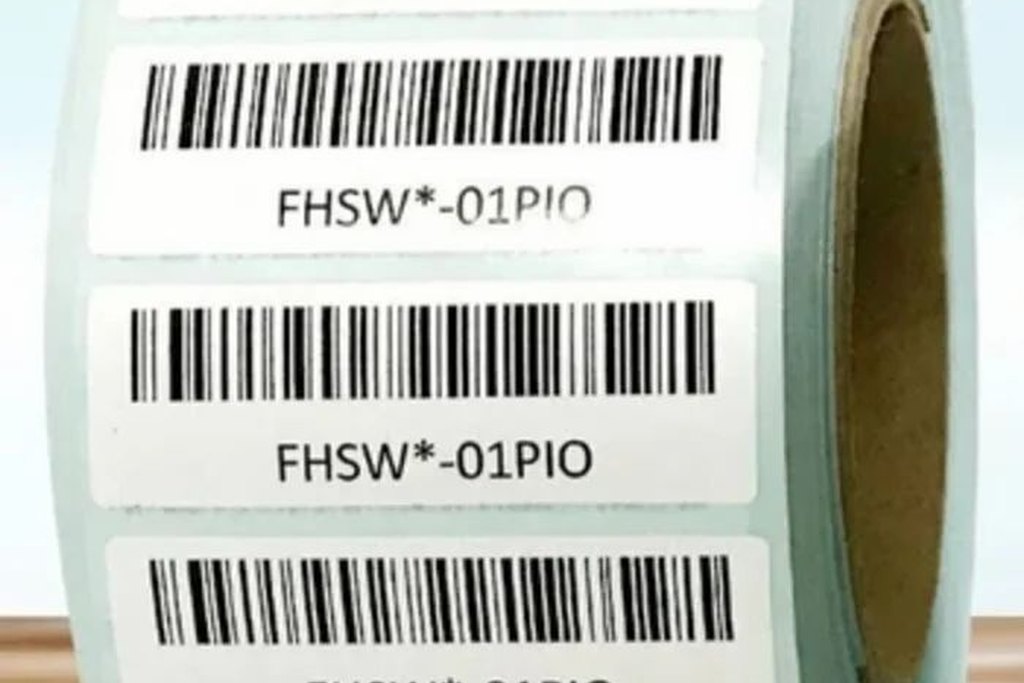
Poor scan grades usually come from magnification and a squeezed quiet zone
Contract manufacturing is where it goes wrong
OEM work is routine here: the brand owner orders, the factory converts. Which code goes on the pack used to follow whoever ran the press. That no longer holds.
Article 19 puts the duty on the principal. A converter with its own manufacturer code still cannot use it, unless a group filing exists and the brand is shared.
The penalties moved with it. Article 30: transferring a manufacturer code, or using the wrong code on contract-manufactured goods, brings an order to correct and a fine of CNY 3,000 if ignored. Article 31: using an unregistered code, passing off another code, forging one or using a cancelled one brings up to CNY 30,000. Article 32: reselling goods marked with an unregistered, unfiled or forged code brings up to CNY 10,000.
The amounts are modest. The exposure is traceability. A supermarket or marketplace audit that finds a code which does not match the filing takes the whole batch off sale, and that costs far more than the fine.
Two smaller changes
The bodies were renamed. What the old text called the coding centre and its local branches are now the national and local barcode technical bodies, with supervision assigned to market regulators at county level and above.
Fees are now in the text. Article 36 requires pricing on a cost-recovery basis and forbids forcing or dressing up services as chargeable.
More than 650,000 Chinese companies hold manufacturer codes, covering some 240 million products. At that scale a barcode is not a step in the press room, it is the ticket into a sales channel.
The short version
Dropping the licence helps printers, as long as verification and filing do not get dropped with it. When a customer brings an OEM job and asks whose code to use, check whether they are the principal, then check for a group filing. One wrong answer and the whole run of pressure-sensitive labels goes back on the press.
Artwork and code are tied together. For the quiet zone and the shift to 2D symbols, see the site's notes on label layout, and the product pages for standard roll formats.