

RFID on export wedding gowns: what one label really costs
China Customs now requires RFID traceability on wedding gowns shipped to the EU, Canada and Japan. Four cost blocks, three order patterns, and where the money actually goes.
China Customs switched on its smart clearance platform 2.0 on 14 July 2026. Wedding gowns under HS 6204.42 and 6204.49 going to the EU, Canada and Japan must now carry RFID traceability, with fibre composition, dyeing and finishing routes, certifications and factory audit records filed alongside the declaration. No data means no release, and that lands on every gown.
Four cost blocks, not one label
An RFID tag on a gown is not simply one more pressure-sensitive label. The cost splits into four blocks: the hang tag or care label itself, encoding and verification, the labour to attach it, and the data work behind the declaration.
| Item | What it is | How it is counted | Share |
|---|---|---|---|
| Hang tag inlay | Chip and antenna laminated into card | Per piece | Around 60 percent of tag cost |
| Care label version | Flexible package, survives washing and rubbing | Per piece | One step above the hang tag |
| Encoding and read-back | One EPC per garment, written then verified | Seconds per piece | 10-20 seconds each |
| Attachment labour | Looping, sewing, double-checking | Per piece | Halved if merged into an existing step |
| Data preparation | Composition, finishing, certificates, audits | Per batch | Thin once spread over volume |
| Rework | Unreadable tags, re-attach, re-declare | Per exception | One incident costs dozens of tags |
Treat the shares as field ranges. Garment type, batch size and supplier move them a long way, so check against your own quotation.
Pattern one: made to measure
One gown, one identity, from cutting to the shop floor. These orders often carry both a hang tag and a care label, the tag for the retailer and customs, the care label for the life of the garment.
The expense sits in encoding, not in the label. Writing numbers by hand invites a mismatch, and a mismatch means amending the paperwork for a single gown. At this point the unit price of the label is the least interesting number in the job.
Practical fix: number the hang tags first, preprint the care labels from the same sequence, and stop any gown where the two disagree. Verify with a fixed-mount reader at the station rather than a handheld.
Pattern two: bulk export
Dozens or hundreds of identical gowns, one code per carton and one per piece. Here the maths moves to the carton.
Reading the carton label and the piece labels in the same pass is where these orders break. If the carton code matches a different gown inside, the declaration stops matching the shipment.
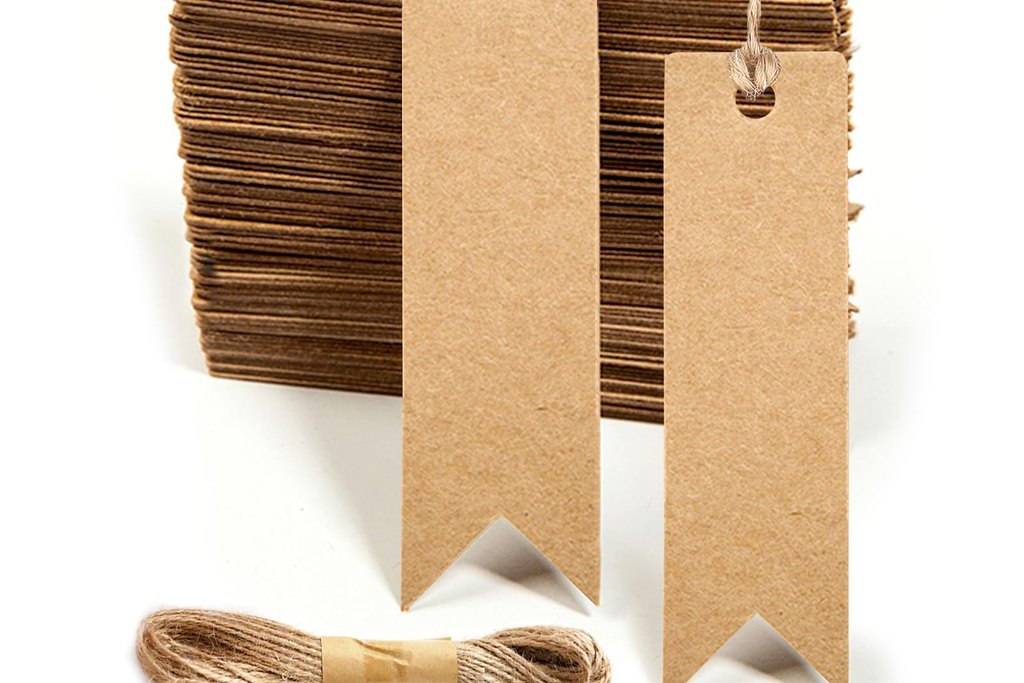
A hang tag is the easiest carrier, but the process changes with it
Pattern three: mixed containers
Several styles and colours in one container. One encoding sequence out of order and the whole container waits for paperwork.
Encode before packing, follow the container list order, and read everything back immediately to generate the manifest. If the manifest does not reconcile, do not seal the container.
Where the dividing line sits
A gown carries a high unit value, so a pressure-sensitive label lands in the low thousandths of that value. What eats margin is rework on encoding, chasing data back and forth, and a container sitting on documents.
By that logic, procurement should attack the frequency of those three events rather than shaving a few cents off the tag. Saving two cents and paying for one rework puts you back where you started.
Decision list
1. Confirm the destination first. The EU, Canada and Japan route needs RFID; other markets still run on the previous rules.
2. Decide between hang tag and care label by asking whether the retailer needs a readable tag in store. Doing half of each helps nobody.
3. Place the encoding station by rework rate. Encoding before packing beats encoding after.
4. Prepare the data before shopping for tags: composition, finishing routes, certificates and audit records. Missing one item stops the shipment.
5. Run a first-article read test across fabrics and sewing positions, and log every failure reason.
A label converter's part in this is getting the hang tag and the care label right: chip clear of fold lines, facestock that does not disturb reading, printing that does not cover the antenna. The other half lives in the paperwork and the process, and that half belongs to the exporter.