

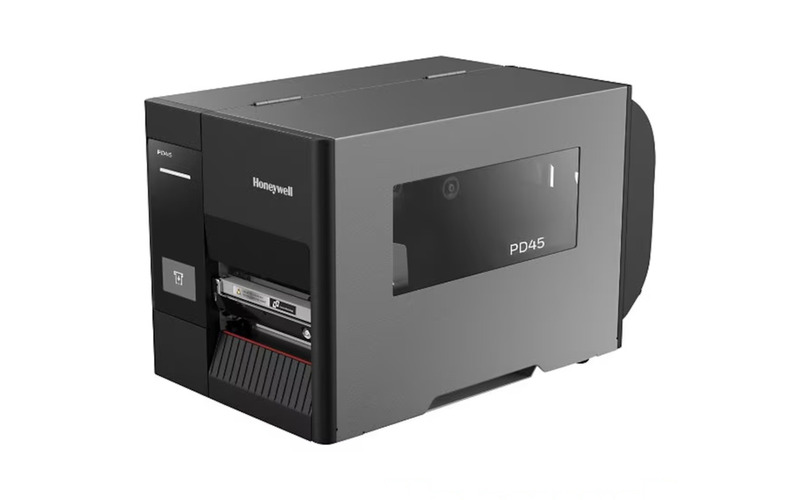
The PD45BBC is the entry variant of the PD45 series. The print engine and printhead match the PD45CCC; what goes is the colour screen, the network port and the expansion capability, and the price drops accordingly.
What was removed
The interface changes from a 2.36-inch colour screen to LED indicators plus feed and pause buttons. Status is still readable: colour and blink pattern map to conditions, and the manual has a page of definitions.
Only USB remains. That is the decisive difference: no Ethernet, no RS-232, no wireless card, no cutter. Confirm whether the station needs network printing before ordering.
What stayed
The all-metal frame is there. In small plants and back-of-store rooms, the difference in service life between metal and plastic bodies shows up quickly.
Dual-sensor dynamic positioning stays too: 5 mm minimum label height, +/-0.75 mm accuracy, identical to the CCC. Print speeds match as well, 200 mm/s at 203 dpi and 100 mm/s at 300 dpi. Five command sets are on board, so migrating from an older printer requires no system changes.
The large clear window and side-loading design remain. Ribbon and label changes happen from the side without turning the machine around, which matters where bench space is tight.
Who it suits
Single-station work with one PC and one USB cable: a fixed station on a small production line, day-to-day store labels, office asset tagging. None of these need networking or a cutter.
For buyers squeezed on budget who do not want a commercial unit, this is the compromise. The industrial foundation is intact and the price sits close to commercial machines. The catch is that adding networking later means a new machine, so think that through first.
The upgrade path
If network, wireless or a cutter becomes necessary, the move is to the PD45CCC. Same chassis structure, same media specification, same 51 to 110 mm ribbon up to 450 m. Seen that way, the BBC is not a wrong purchase, just one that leaves expansion unbought.