Lithium Battery Labels and the Three UN Numbers
A dashed diamond with battery symbols and a UN number is mandatory for lithium shipments. Loose cells, in-device and packed-with-device all differ.
Anyone who has shipped a power bank or a battery-powered device may have noticed that beyond the courier waybill, the carton carries a diamond-shaped label with a dashed border, a battery symbol inside, and a UN number underneath. That label is not a value-added service from the carrier. It is a mandatory requirement of dangerous goods transport rules. Lithium batteries fall into Class 9, and shipments without the mark, or with the wrong mark, get held at sorting hubs routinely.
Three UN Numbers, Three States
The core of the lithium battery mark is the UN number, which declares the state the battery travels in. UN3480 covers lithium-ion batteries shipped alone, such as cartons of cells or power banks. UN3481 covers two situations: batteries contained in equipment, like an instrument leaving the factory with its battery installed, and batteries packed with equipment, a host device and its spare battery in the same box. Each state carries different packaging tests and transport conditions, so applying the wrong UN number amounts to declaring the wrong cargo class to the carrier.
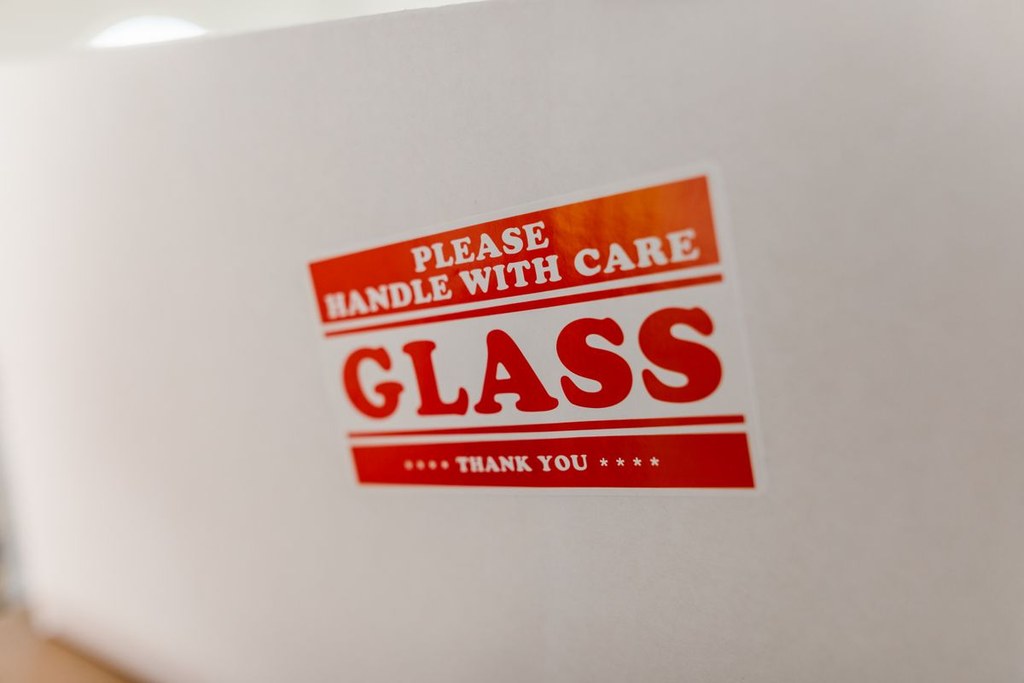
The diamond itself is specified too. The dashed border, the battery and flame symbols, the class number 9 at the bottom, all have defined relative positions and minimum dimensions. Small packages may scale down to the stated floor, but no element may be dropped. Beyond the diamond, packages exceeding certain battery quantities or gross weight thresholds need additional marks and documentation.
What the Label Itself Must Survive
Dangerous goods labels differ from ordinary logistics labels because they carry legal weight, and the demands on the label follow. First, weatherability. Shipments face rain, humidity and sun, and a mark faded to an unreadable UN number counts as no mark. Second, adhesion. Cartons, plastic totes and wooden crates all differ, and a label that falls off leaves the cargo unidentified. Third, print clarity. Every digit of the UN number must be sharp.
The recurring practical failure belongs to companies reusing circulation totes. After several trips, the old dangerous goods label is half-torn off, the new one goes on top, and inspection finds two overlapping marks, which draws a correction request just the same. The correct routine is to remove the old label before applying the new one, or to fully cover the residue with an opaque replacement.
Practical Advice for Shippers
Factories exporting battery products do best turning labels into a fixed process. Determine the UN number from the battery state, the label size from the package dimensions, print on weatherable stock, and place labels away from sealing tape and abrasion-prone edges. Xuzhou HuaiLion Electronic Technology has supplied shipping label kits for battery and instrument customers, stocking UN3480 and UN3481 variants together while the customer's warehouse picks by shipment type, storing dangerous goods marks separately from plain logistics labels to prevent mix-ups. For instrument customers shipping devices with batteries installed, the packing checklist includes a label check item, the packer photographs the finished box, and any problem traces back to a person and a carton.
Placement causes more rejections than printing does. A mark hidden under a pallet strap, covered by a shipping document pouch or wrapped around a corner reads as missing to the person checking the carton. Put it on a flat, clear face where it stays visible after the box is closed and stacked, and keep other stickers away from it. Match the UN number and the package count to the declaration before the consignment leaves, since the paper and the box are checked together. Keep a photo of a finished carton in the job file so repeat orders go out the same way.
Transport rules refresh their details every few years, minimum mark dimensions and exemption conditions among them. Shippers do not need to memorize clauses, but they do need to stay in touch with their carriers or forwarders, and label suppliers need to produce against the current artwork. A three-year-old label on this year's shipment fails inspection the same as no label.