

A Traceability Label That Survives Reflow and Wash
A board-level label rides through reflow, flux cleaning and depaneling. Film, adhesive and symbol placement all have to be chosen against that route.
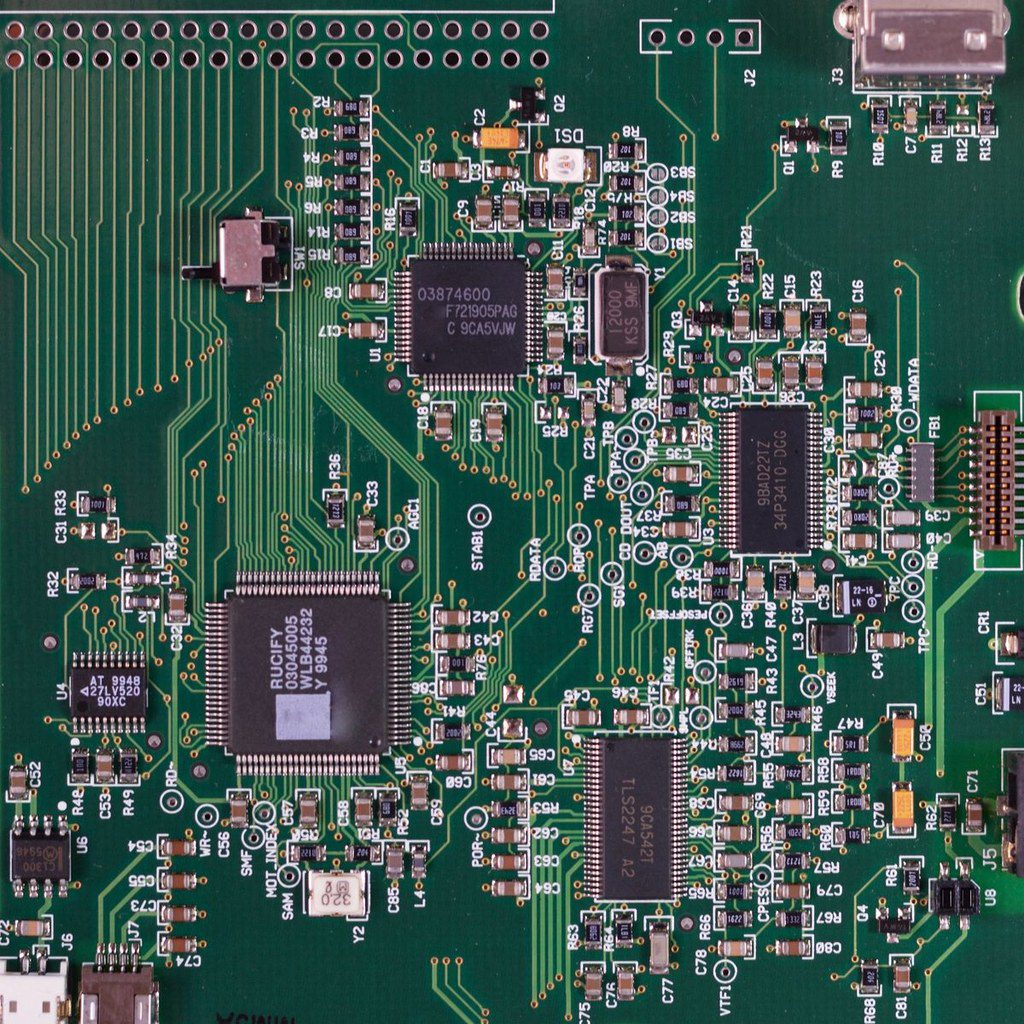
Board-level traceability usually means a small barcode label applied to the PCB, carrying board ID, batch and build time into assembly, test and shipping. It sounds like one sticker, but that sticker goes through a reflow oven, a flux cleaning line, depaneling and possibly rework. A general-purpose self-adhesive label rarely survives the trip, and the code often stops reading before the board reaches the test station.
The oven comes first
Peak temperature and dwell time come from the process card and vary considerably between profiles. Ask the process engineer for those numbers before specifying anything; do not guess from room-temperature experience. Paper face stock yellows and becomes brittle, general hot-melt adhesive softens and bleeds at the edges, and shrinkage deforms the barcode enough to defeat a reader. Board labels normally use a high-temperature film such as polyimide with a matched adhesive, and the exact grade has to be proven against the customer's real thermal profile. A temperature range printed in a supplier datasheet is a screening filter, not a qualification.
Where the applicator sits changes everything
Some plants apply the label after reflow, so it only faces cleaning and downstream handling, which relaxes the material requirement considerably. Whether the station sits before or after the oven is the first question to settle. Many specification disagreements turn out to be two people describing different parts of the same line.
Then cleaning and chemistry
Flux residue has to go, so cleaning agents, deionised water, spray or ultrasonic action all reach the label. An ink or ribbon image that cannot take the solvent will smear. An unsealed laminate edge lets liquid in. Adhesive edges lift first after water or solvent contact. Thermal transfer with a resin ribbon on film stock is generally far more robust than direct thermal, whose coating darkens and blurs with both heat and solvents; direct thermal is essentially ruled out for board-level use.
Dry before the next heat
If drying after the wash is incomplete, moisture trapped under the label turns into bubbles at the next heated step. Run the customer's actual cleaning agent in the trial. A chemical resistance table is only a guide, since a change in concentration or contact time can reverse its conclusion.
Placement causes more failures than material
Keep the label off pads, test points, tooling holes and thermal copper, and clear of edge connectors and gold fingers. On a panelised board, avoid the scoring line and the stress zone around it, since a label crossing the break line tears during depaneling. Space is tight, so the symbol shrinks toward the resolution limit. Raising print resolution or switching to a 2D code is more practical than compressing a linear barcode until it will not read.
Quiet zones and reader geometry
Silkscreen outlines and component frames placed too close to the symbol remove the quiet zone the reader needs. Decide which side the inline reader sits on and in which direction boards travel while the artwork is open, or the label ends up facing away after the oven.
The data has to follow the board
Board ID links to batch, process records and test results. Read once at application and reprint or reject failures. Define how rework replacements are numbered and where retired board records are archived, or the chain breaks at the rework bench. Printing the symbol is easy; keeping every read matched to the same physical board is the actual work.
Qualify along the real route
Apply, reflow, clean, dry, depanel, then inspect appearance and edges and read the code after each step, finishing with a barcode grade. At HuaiLion, board-label projects start with the customer's thermal profile and cleaning agent, followed by two or three face stock combinations sent for an on-line trial. Choosing from a room-temperature sample almost always means rework after the oven. The board is worth far more than the label, so that trial round is not the place to save money.