

The Sticker on a Piece of Fruit Touches Your Mouth
A produce sticker is a food contact material. Adhesive, ink and face stock all have to be chosen for direct food contact, and it still has to apply, peel and stay legible.
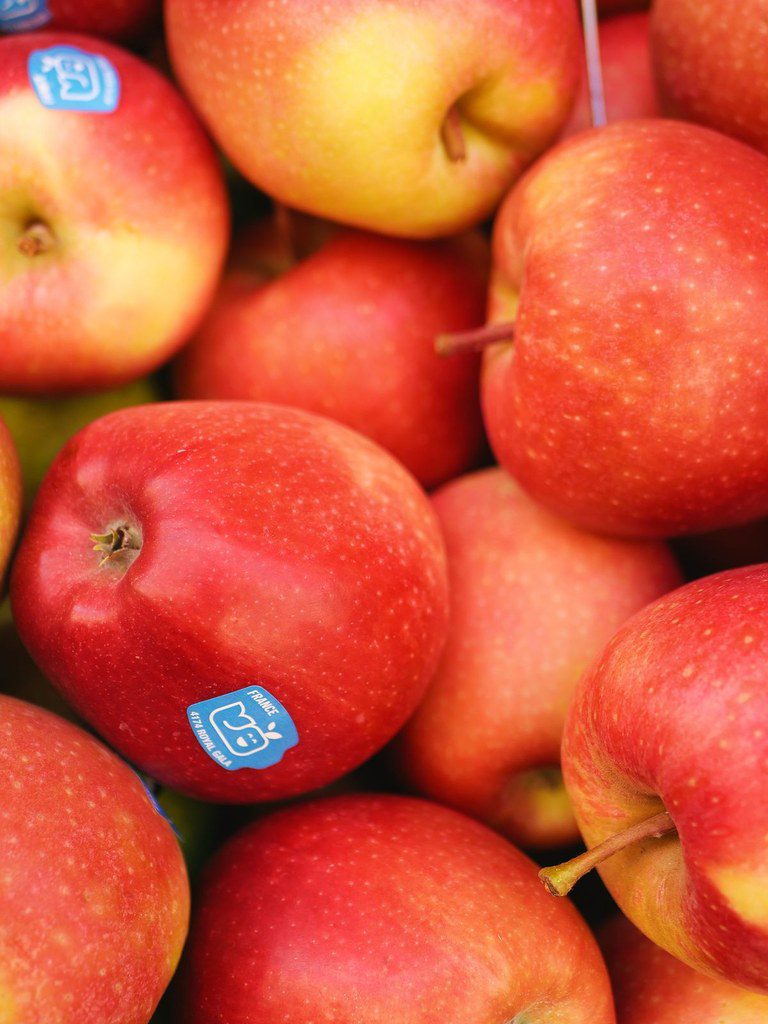
Loose fruit in a supermarket often carries a small round or oval sticker printed with a number, an origin or a brand. It looks trivial, but it sits directly on peel that people eat, which puts it in the food contact category. Adhesive, ink and face stock all have to be selected on that basis. A standard coated paper label from the general-purpose range will not survive the cold chain.
Decide what the sticker is for
The job sets the specification. If the till needs to identify variety and price, it is a PLU code and the digits have to read clearly, without glare or wrinkles across them. If the purpose is origin and batch traceability, the label has to carry variable data, one number per carton. If it is brand presentation, the label is larger and better printed, but it is still a food contact item. These three jobs pull the face stock and ink in different directions, so settle the job before the material and save a proofing round.
The adhesive is where it fails first
Fruit surfaces carry natural wax, very noticeably on apples and citrus, and peaches and plums add a layer of fuzz. A permanent adhesive grabs well on day one, then the edges lift the day after the fruit goes into a cold room and takes up moisture. Produce work usually calls for a low-tack removable adhesive that peels without a visible residue and without tearing the skin. Removable does not mean weak: initial tack and peel strength have to be considered together, because a very soft adhesive gets blown off or dragged out of position on a sorting line.
Migration is the other gate. A pressure-sensitive adhesive intended for direct food contact should come with a declaration of conformity from the supplier, and the ink should be a low-migration system. None of this can be checked by eye, only by paperwork, so ask for the documents at the purchasing stage rather than explaining later.
Face stock and printing
Paper is cheap and goes soft and wrinkled once it takes up water. Film resists water and will not tear, but a thin film is prone to curling on a high-speed applicator. Produce labels are tiny, which pushes type and digits to their limit, and a UV or mild-solvent ink holds sharp edges better than ordinary offset at that size. For variable numbering, thermal transfer is the safer route. Direct thermal smudges with water and abrasion, which is a real risk on a refrigerated delivery.
Test under real conditions
Sticking a label onto dry peel in a lab proves very little. The real route runs from picking or grading, through washing or waxing, cartoning, cold storage, transport and the display shelf. Build the sample trial around that route. Check initial tack after two hours, check edge lift after a day at four degrees, then bring the fruit back to room temperature and peel once more to look for residue. Pass all three and the specification is probably sound. Where possible, test on fruit from the actual season, because bagged and bare fruit behave differently.
Balancing cost and compliance
Removable adhesive, low-migration ink and film stock each add cost. For a high-volume commodity line, paper with a standard removable adhesive keeps the price sensible. For branded or gift packaging, film and specialty inks earn their premium. When HuaiLion specifies produce labels, the first question is how the label goes on, because hand application and machine application demand different stiffness and winding. Choosing the face stock against the applicator saves a rework round.
One more point. A compliant label does not replace good packaging and storage practice. Surface moisture on the fruit, condensation inside the carton and the time spent under stacked weight all affect how the label behaves. Record those variables during acceptance testing, and a later problem can be traced to the right step.